
Fiji can be a rewarding family escape, but the right island, resort and pace matter. For Australian families asking whether Fiji is safe for family travel in 2026, the practical answer is to plan around your children’s needs and keep everyday safety in mind, especially around water and activities.
It’s natural to want more than a beautiful setting: you also want a holiday that feels manageable, comfortable and enjoyable for everyone. Choosing a family-friendly stay and a sensible mix of outings can help turn safety concerns into a plan that works for your family.
This guide explains how to plan a family trip to Fiji, including what to consider when choosing accommodation and activities, and which health and safety points to keep in mind. Use these practical steps to shape your itinerary and travel with greater confidence.
Key Takeaways
- Choose travel dates around your family’s preferred pace and the activities you want to enjoy, then prepare for the conditions of the season.
- Compare family-friendly holidays by looking closely at the stay, transfers, meals and excursions included in each option.
- Build practical safety habits into your plans, especially for outings and time around the water, and keep emergency contact details accessible.
- Think through health preparations before travelling, including your family’s individual needs and how you would access medical care in Fiji.
Choosing when to visit Fiji with children
Choosing dates means balancing your family’s routines, preferred activities and need for flexibility. A relaxed itinerary, suitable travel documents and a plan for changing conditions can all help make the trip more comfortable.
Seasonal trip timing
Choose travel dates that suit your family’s plans and preferred pace. Start with school holidays, children’s sleep routines and the activities you hope to enjoy. A family looking for unhurried resort days may plan differently from one hoping to move between islands. Allow breathing room between travel days and outings, especially with younger children, so the itinerary is easier to adapt if plans change.
Before booking, compare the dates with your family calendar and the kind of trip you have in mind. A longer stay can allow quieter days between transfers, while a shorter visit may suit a single base. Build flexibility into the schedule rather than filling every day with activities. Children have time to rest, and you can adjust plans around local conditions.
Cyclone and severe-weather risks
Cyclone and severe-weather risks are conditions that can affect travel plans, outdoor activities and transport. Cyclones, flooding and severe weather are hazards families should account for in Fiji in 2026; the effects depend on conditions and location during your trip. Keep the itinerary flexible, and make sure children know to stay with an adult if plans change.
Before a beach day or boat trip, consider how weather could affect that specific activity. Heavy rain or rough conditions can change what is practical, so avoid relying on a single outing as the centrepiece of the day. Keep important items together and agree on a simple meeting point at your accommodation. This gives everyone a clear plan if weather disrupts your plans.
Travel documents also deserve attention before you choose dates. The Australian Department of Foreign Affairs and Trade says many countries, including Fiji, require passports to be valid for at least 6 months before entry or departure, including for transit. Check each family member’s passport before booking flights, then allow time to renew any document that won’t meet the requirement. Include children’s passports in the same planning step, even when their travel arrangements match yours.
Family-friendly Fiji holidays and tours
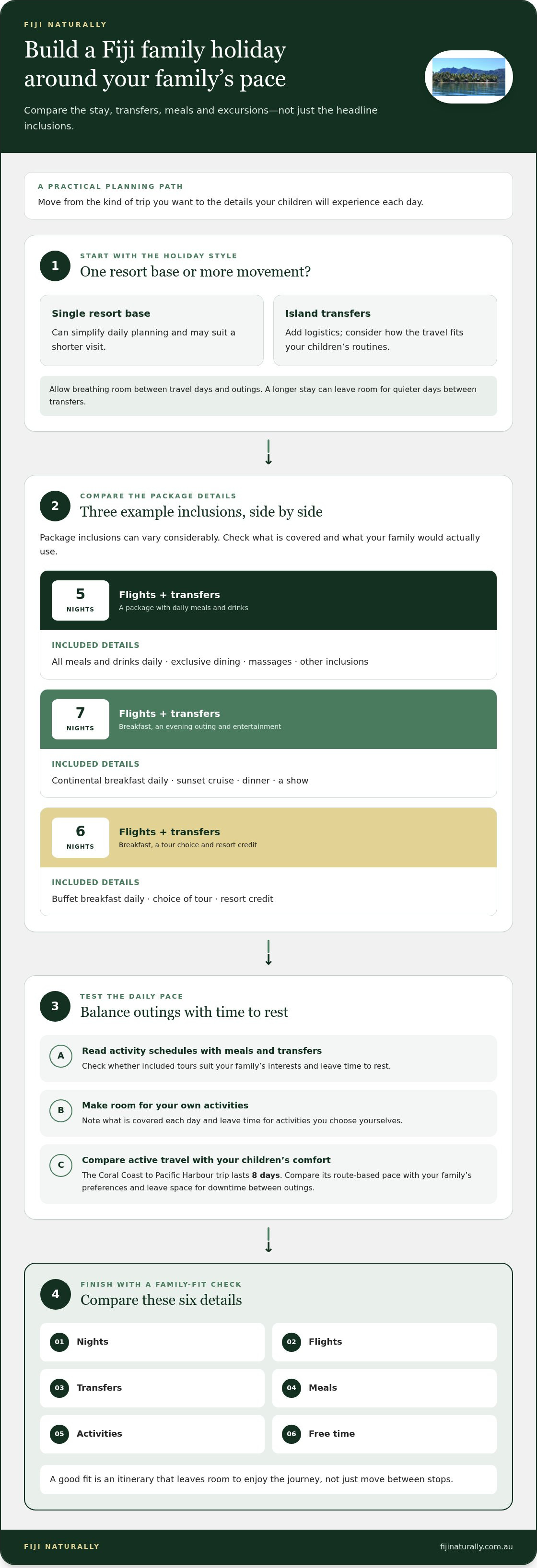
A family-friendly Fiji holiday brings accommodation, transport and activities together around children’s ages and routines. First decide whether your family prefers one resort base or a trip with more movement. A single base can simplify daily planning, while island transfers add logistics. Compare the details of each package, not just its headline inclusions, and consider how the arrangements fit your children’s routines.
Package inclusions can vary considerably. One option includes five nights, flights, transfers, all meals and drinks daily, exclusive dining, massages and other inclusions. Another includes seven nights, flights, continental breakfast daily, transfers, a sunset cruise, dinner and a show. A third includes six nights, flights, buffet breakfast daily, transfers, a choice of tour and resort credit. Compare the details with what your family would actually use.
Read activity schedules alongside meal and transfer arrangements. Check whether an included tour suits your family’s interests and leaves time to rest. A sunset cruise may appeal if you enjoy an evening outing, while a choice of tour offers a different kind of flexibility. Note what is covered each day, and leave time for activities you choose yourselves.
For a more active itinerary, consider how much travel your children are comfortable with before selecting excursions. The Coral Coast to Pacific Harbour trip lasts 8 days, offering a route-based alternative to staying in one place. Compare its pace with your family’s preferences and leave space for downtime between outings. A good fit is an itinerary that leaves room to enjoy the journey, not just move between stops.
Before booking, make a comparison list: nights, flights, transfers, meals, activities and free time. This helps clarify which family-friendly resort option suits your children’s ages and interests. For a curated starting point, explore family-friendly Fiji resort options and consider which holiday style feels right for your family.
Overall travel safety advice
Family safety planning means preparing for entry, transport, health and everyday activities. If you’re asking whether Fiji is safe for family travel in 2026, focus on practical precautions and plans suited to your children.
Entry requirements for families
Entry requirements are the passport and visa conditions that apply to your Fiji trip. Australian travellers travelling from Australia don’t need a tourist visa. The Australian Department of Foreign Affairs and Trade says many countries, including Fiji, require passports to be valid for at least 6 months before entry or departure, including for transit. Check every family member’s passport before departure.
Road safety, child seats, and insurance
Road safety means planning journeys around children’s needs and each trip’s conditions. Australian visitors can drive in Fiji using an Australian driver’s licence for the first 6 months after arrival. Arrange appropriate child restraints for car journeys, and plan how children will travel in taxis or buses. Keep them close and supervised. Travel insurance can help address unexpected travel and medical costs; read the policy terms for relevant activities and cover.
For beaches and water sports, stay close to children, follow local instructions and avoid entering water when conditions appear unsafe. Match activities to each child’s swimming ability. Families asking whether Fiji is safe for family travel in 2026 should also make supervision part of every outing plan.
Health risks and medical care
Health planning means preparing for each family member’s needs before departure. Discuss vaccinations and existing conditions with a health professional familiar with your children’s history and itinerary. Keep a list of allergies and essential medical details accessible. In a consular emergency overseas, the Australian Department of Foreign Affairs and Trade says travellers can call Australia’s Consular Emergency Centre on +61 2 6261 3305.
Drinking water and food precautions
Good food and water habits help families make considered choices while travelling. If you are unsure about water safety, choose sealed bottled water or water treated according to local guidance, including for brushing teeth. Choose freshly prepared food served hot, wash hands before eating and keep snacks covered. Pack familiar options for travel days when children may have limited choices.
What health risks, vaccinations, and medical care should Australian families consider in Fiji?
Health preparation should reflect each child’s needs and your itinerary. Before departure, review children’s vaccination records and discuss travel to Fiji with an Australian health professional. Share information about existing conditions, medicines, planned activities and the places your family will visit. A resort-based stay and a trip involving remote areas may call for different preparation.
Check whether routine immunisations and travel-specific advice are appropriate for your family. Take each child’s vaccination record to the appointment and describe your route and planned activities. Mention allergies, ongoing treatment and any previous reactions. This context helps the health professional give individual advice rather than relying on a one-size-fits-all checklist.
Fiji declared an HIV emergency in September 2026, according to the Fiji Government. This is important public health context, but it does not by itself describe an individual traveller’s level of risk. Families can discuss relevant concerns privately with a health professional and follow current public health advice. Use respectful, factual language when discussing health matters with older children.
Plan what you’ll do if someone becomes unwell during the trip. Before leaving Australia, write down each family member’s medicines, allergies and essential medical details. Keep medicines in their original packaging and carry the details where an accompanying adult can reach them. Save your accommodation information and emergency contacts on a phone, with a separate written copy for travel days.
If your family is visiting more than one area, consider how distance and transport affect access to care. Identify the nearest available medical service for each overnight stop, and decide who will stay with the other children if one child needs help. Choose travel insurance suited to your itinerary and planned activities, and read its medical terms and assistance process before departure. Pack a small health kit for your family’s ordinary needs and review its contents before flying.
Fiji Naturally: Scuba Dive Resorts
Fiji Naturally helps families match their holiday style with a suitable stay, from family time to diving-focused escapes. Its family-friendly resort options are a useful starting point for weighing children’s needs, planned activities and the pace of your trip. Families interested in diving can also explore scuba dive resorts, while Six Senses Fiji is another resort option. Adults-only resorts suit a different kind of holiday, rather than a family stay with children.
When you’ve considered your travel dates and priorities, Fiji Naturally can help shape those choices into a Fiji holiday. For a family trip, start with accommodation and consider how its location fits your plans.
To discuss your Fiji holiday, contact Fiji Naturally or visit fijinaturally.com.au.
Shape a Fiji holiday around your family
Turn your family’s priorities into a considered trip, not an overpacked one. Decide what you want your days to hold: quiet time together, gentle discovery or a little more adventure. Then choose a stay and itinerary that support that rhythm, leaving room for children to rest and plans to change. Finding the right fit matters more than trying to include every possible experience.
If you’re still weighing whether Fiji is safe for family travel in 2026, use your family’s ages, interests and comfort levels to guide the final choices. Fiji Naturally can help you explore a family stay suited to the holiday you have in mind, while its other resort styles serve different kinds of travellers.
Contact Fiji Naturally about family travel to start shaping your Fiji plans. A thoughtful itinerary can leave space for connection, discovery and the easy pleasure of being together.
Frequently Asked Questions
Is Fiji safe for families?
Fiji can suit family travel when the itinerary fits children’s ages and adults plan for close supervision. Before outings, agree on a simple meeting point and make sure each child knows which adult to approach if separated. On a busy arrival day, keep the first activity low-key and give children time to settle into the accommodation before exploring.
What are the main safety risks for families visiting Fiji, including crime and scams?
Take sensible precautions with personal belongings, unfamiliar offers and busy public places. Keep passports and valuables secured rather than visible, and stay together in crowded areas. If an offer or charge seems unclear, pause and ask for details before agreeing. These habits help you respond thoughtfully without letting security concerns dominate the family holiday.
Are Fiji resorts and tourist areas safe for children and families?
Resorts and tourist areas can work well for families when the setting and planned activities suit the children. Consider the accommodation layout, the distance between rooms and shared spaces, and how easily adults can supervise children. Set clear boundaries around pools, shorelines and activity areas as soon as you arrive, and keep children within sight during play.


