
The best-value Fiji escape may fall just outside the busiest months. Fiji shoulder season travel deals are worth exploring for April to May, October to November and early December, while peak travel runs from June to September, as well as Christmas and New Year. These quieter periods can offer more room to choose a stay that suits you, though value depends on your flights, resort and inclusions.
Fiji’s dry-season months are popular for good reason: clear days make it easy to enjoy the water, beaches and islands. Travel outside the peak rush and you may find a different balance: tropical scenery, fewer crowds and more flexibility to shape your stay around what matters to you.
This guide explains when Fiji’s shoulder season falls and how resort offers, flights and accommodation affect the overall value of a trip. It also covers what to compare, from meals and transfers to activities, so you can choose an island escape that suits your travel style.
Key Takeaways
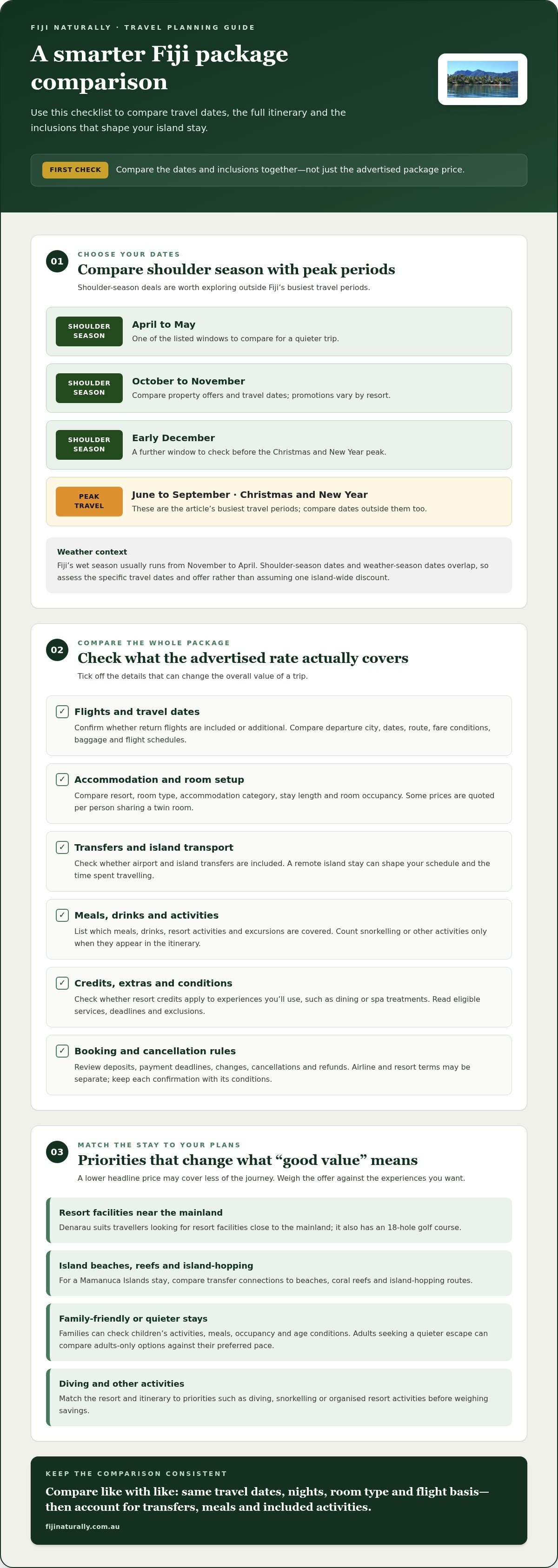
- Compare travel dates in April to May, October to November and early December to find shoulder-season options outside Fiji’s busiest travel periods.
- Look beyond the headline package price: check which meals, transfers, activities and resort credits are included.
- Compare flight-and-accommodation deals on the same basis, noting whether flights and transfers are part of the advertised package.
- Match the resort to your priorities, such as diving, family-friendly facilities or a quieter island stay, before weighing the savings.
What Is included in cheap Fiji holiday packages?
A Fiji holiday package may combine flights and accommodation, with transfers, meals or activities included depending on the offer. Compare a resort-only stay with an itinerary that includes return flights and island transfers. Check the room type, travel dates and inclusions together to see whether the package suits your plans for the beach, diving or the Yasawa Islands.
For Australian travellers, flexibility with dates can help when comparing Fiji shoulder-season travel deals. Shoulder season falls in April to May, October to November and early December. Compare departures outside Australian school holidays with dates during them, then review flight schedules and resort inclusions. Package choices vary with travel dates and accommodation.
For 2027 school holiday packages, focus on what the advertised rate covers before comparing options. Some prices are quoted per person sharing a twin room, and flights may be additional. Families should also compare room occupancy, children’s activities, meals and transfers. A package that includes several practical extras may suit a family better than a room-only offer, depending on their itinerary.
Budget Fiji holiday packages can differ substantially in what they include. Compare the costs of flights, accommodation, transfers, meals and excursions separately. Fiji’s wet season usually runs from November to April, and lower rates can be available outside school holidays. October may bring fewer crowds and potentially lower prices, making it an option for a tropical getaway.
Booking and cancellation rules depend on the flight and accommodation conditions in your package. Before paying, read the terms for deposits, payment deadlines, changes, cancellations and refunds. Airlines and resorts may have separate rules, so changing one booking may not change the other. Keep each confirmation and its terms together in case your plans change.
Resort offers and bonus inclusions
Resort extras can add value when they match your plans. Compare inclusions with your island itinerary, not just the advertised offer.
Resort and Island Stays
Choose between a resort base and an island stay by considering how you want to spend each day. Denarau resorts suit travellers who want resort facilities close to the mainland, and Denarau has an 18-hole golf course. In the Mamanuca Islands, compare how transfers connect your accommodation with beaches, coral reefs and island-hopping routes. Include transfer arrangements when comparing holiday packages, because a remote setting can shape both your schedule and your overall trip.
Bonus Value and Resort Credits
Resort offers may include beach access, snorkelling or cultural events. A resort credit adds value if it applies to experiences you’ll use, such as dining or spa treatments. Read the conditions for eligible services, booking deadlines and exclusions. For an all-inclusive deal, compare the meals, drinks and activities covered, and check whether transfers are included. The label alone won’t tell you how much of your holiday is accounted for.
Shoulder-Season Resort Discounts
Fiji’s shoulder season falls in April to May, October to November and early December. Resort promotions vary by property and travel dates, so compare the offer for each itinerary rather than expecting one island-wide discount. October falls at the end of the good-weather period and may bring fewer crowds and lower prices. Review the stay dates, extras and cancellation conditions together to assess value.
For a considered island escape, compare resort stays by setting, activities and inclusions before choosing. You can compare Fiji resort stay options to help shape a package around the experiences you value.
Fiji flight and accommodation package deals
For Australians, shoulder-season flight costs depend on departure city, dates, route and fare conditions. Compare the return airfare with accommodation and transfers, especially for island stays where onward transport shapes the trip.
Package Prices and Durations
Package totals vary with flight routing, resort, room type, travel dates and stay length. Compare like with like: a flight-inclusive itinerary against another flight-inclusive itinerary, then check whether transfers and meals are covered. A Yasawa Islands stay may involve different transport arrangements from a mainland resort. Review the full itinerary to weigh the price against time spent travelling and relaxing.
Family-friendly packages may include children’s stays, activities, meals and transfers. These extras can change the overall value compared with accommodation alone, particularly for families interested in snorkelling or organised resort activities. Check age conditions, room occupancy and included meals. Adults seeking a quieter Pacific escape can compare adults-only Fiji packages, including their dining, transport and activities, against their preferred holiday pace.
Package Inclusions
Read each inclusion before comparing package prices. Confirm whether flights are return, whether baggage and airport transfers are included, and which accommodation category applies. Then review meals, resort activities and island transfers. A lower headline price may cover less of the trip, while a broader package can bring more of the journey into one itinerary.
For a practical comparison, list each package’s travel dates, nights, room type, flights, transfers and meals. Include snorkelling or other activities only when they appear in the itinerary. This makes family-friendly and adults-only options easier to compare. From Australia, also consider departure airports and connections, which affect flight time and the shape of your getaway.
Off-peak travel and shoulder-season savings
For Australian travellers, Fiji’s shoulder season falls in April to May, October to November and early December. These dates can offer a quieter route to tropical island time.
Off-Peak Savings
Lower rates can be available outside school holidays, while October may bring fewer crowds and potentially lower prices. Compare Fiji shoulder season travel deals by looking at the full itinerary, including flights, accommodation and transfers. For a Mamanuca Islands stay, transfer schedules affect how you reach your resort and spend your time there. A lower room rate may not mean better overall value if transport or meals are separate.
January to March is Fiji’s low season and falls within the wet season, which usually runs from November to April. If value is your priority, weigh that seasonal trade-off against lush tropical scenery and quieter destinations. The right choice depends on whether you prioritise drier conditions, a particular resort or a more flexible adventure.
Shoulder-Season Timing
April to May and October to November are recommended for visiting Fiji with fewer crowds. June to September is peak season, as are Christmas and New Year. For Australians, compare your leave dates with these busier periods, then consider whether your plans centre on beach time, cultural experiences or island exploration.
May to October is Fiji’s popular dry-season window, while November to April is generally wetter. October and November fall across a seasonal transition, so compare travel dates and package inclusions rather than assuming conditions are the same every week. If you’re looking for Fiji shoulder season travel deals, matching dates to your priorities is a practical first step.
Plan your Fiji travel itinerary around the season and stay that suit you.
Fiji Naturally: Scuba Dive Resorts
Fiji Naturally helps travellers plan a Fiji escape around diving, resort style and the experience they want from their stay. Its scuba dive resorts suit travellers who want underwater exploration to guide their choice of island and accommodation. Fiji’s renowned dive sites include Rainbow Reef, the Great White Wall and Namena Marine Reserve.
Fiji Naturally also offers adults-only and family-friendly resort options, including Six Senses Fiji. These choices help narrow your search, whether you’re planning a dive-focused getaway, a family holiday or a quieter retreat. Share your travel dates, preferred activities and resort style to start shaping an itinerary around what matters most.
Contact Fiji Naturally to discuss your Fiji travel plans.
Shape an Island Escape Around What Matters
Start by deciding what you want the trip to feel like: a dive-led adventure, a relaxed break for two or time away with family. Let that priority guide your resort choice and the details you compare. The most rewarding Fiji shoulder season travel deals fit your travel style, rather than simply offering the longest list of extras.
Fiji Naturally offers scuba dive resorts, adults-only resorts and family-friendly resorts, helping you focus your search on the experience you want. Share your preferred dates, resort style and interests to start planning an island holiday that feels considered from the first flight to the final day.
Contact Fiji Naturally about Fiji deals and take the next step towards your island escape. A little planning can make room for more of what you came for: clear water, a slower pace and time well spent.
Frequently Asked Questions
When is the best time to visit Fiji?
May to October is Fiji’s popular dry-season period, while June to September is recommended for the best weather. For a balance of pleasant conditions and fewer crowds, consider May or October. Your ideal dates also depend on your plans: May to October suits snorkelling, April to October is recommended for surfing, and December to April brings lush tropical scenery.
What is the weather like in Fiji?
Fiji stays warm throughout the year, with tropical temperatures around 26-32°C. The usual wet season runs from November to April, bringing rain showers, while May to October is generally drier. For a trip with varied plans, allow flexibility between beach time and indoor activities, particularly if travelling during the wetter months.
What are the best months to visit Fiji for lower prices and good weather?
May and October can offer a balance of favourable conditions and fewer crowds. May begins the dry-season period, while October falls at its tail end and can bring lower prices. September is also among the recommended months to visit, but it falls within the busier June-to-September peak. Compare dates and total package inclusions to decide which trade-off suits you.
Do Fiji resorts include meals, transfers, or activities in shoulder-season packages?
Packages may include meals, transfers or activities, but inclusions vary by resort and offer. Family packages may include children’s stays, meals, activities and transfers; other resort offers may feature snorkelling or cultural events. Before choosing, compare the written itinerary with your plans: check which meals are covered, how island transfers work and whether activities are included.
How does Fiji shoulder-season weather compare with peak season?
Shoulder-season dates fall across seasonal transitions, while peak travel is during Fiji’s drier May-to-October period, especially June to September. April and November are closer to the usual wet-season months, so conditions may feel less settled than during peak dry-season dates. October marks the transition at the end of the dry season. Choose dates based on your preferred balance of weather and quieter resorts.
What are Fiji's rainy season and cyclone risks during shoulder season?
Fiji’s usual wet season runs from November to April, overlapping shoulder season in April, November and early December. Rain is a seasonal consideration, and travelling outside the wet season does not remove the possibility of severe-weather disruption. Keep plans flexible, follow official weather advisories, and review your travel insurance for relevant weather-related cover and exclusions.


