
The cost of bull shark diving in Fiji depends on the trip and what’s included, rather than one price applying to every booking. At Shark Reef Marine Reserve, the boat ride from Pacific Harbour is about 15 minutes, so the site’s location is one practical part of planning. A close encounter with a bull shark can feel intense, making safety just as important to consider as cost.
It’s natural to want a clear idea of the experience before committing. This guide explains what affects the bull shark diving Fiji cost, how boat travel and weather can shape your plans, and which shark sightings you might encounter. You’ll also find practical points to consider when choosing an organised dive, so you can plan for the conditions and underwater experience you want.
Key Takeaways
- Break down the trip beyond the dive itself: boat travel, transfers, accommodation and possible reserve levies can all shape your overall budget.
- Allow flexibility in your plans, as weather conditions can affect whether a dive goes ahead and when you can travel to the site.
- Choose a dive location with the kind of encounter you’re seeking, from bull sharks to a wider variety of shark species.
- Match your resort style to your trip, whether you’re looking for a remote Fijian stay, a scuba diving resort or an adults-only or family-friendly option.
Boat travel to shark sites
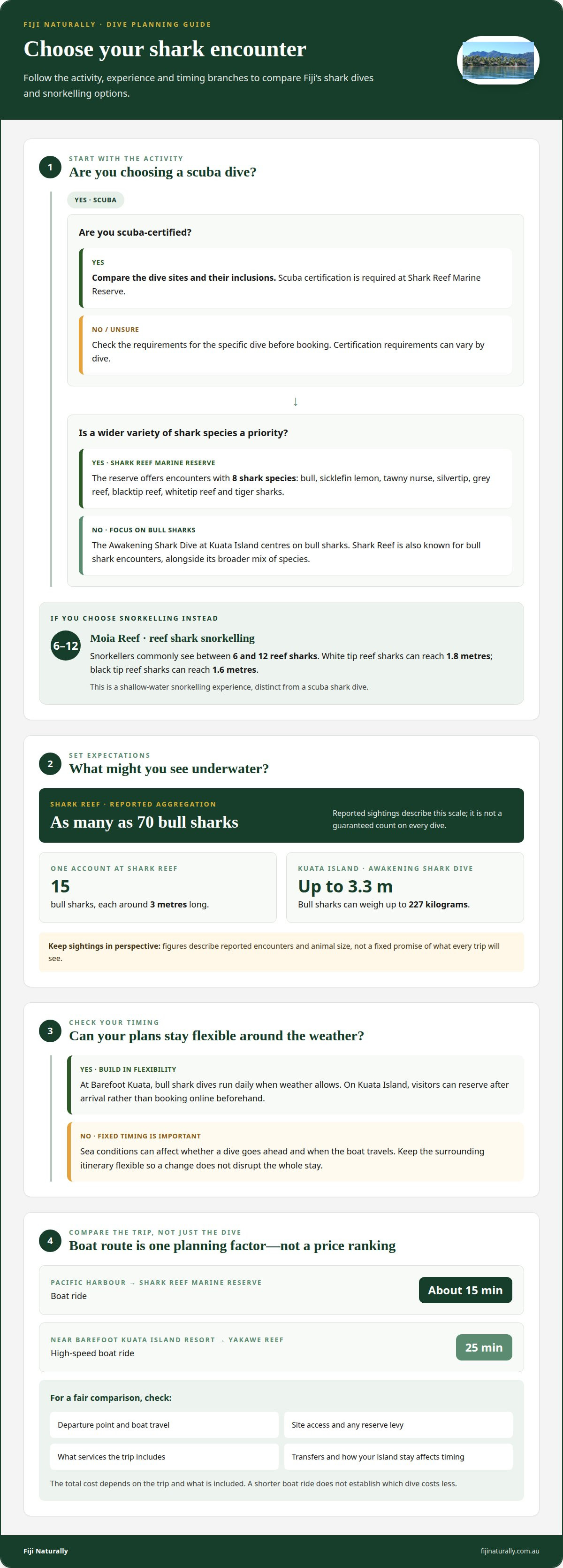
There’s no fixed cost ranking for Fiji bull shark dives compared with other shark dives. Compare the whole trip, including boat travel, site access and inclusions, rather than judging by the shark encounter alone. A shorter boat ride may simplify the day, but it doesn’t establish which dive costs less.
At Shark Reef Marine Reserve, the boat ride from Pacific Harbour is about 15 minutes. The site is known for bull shark encounters, while the journey itself is one practical element of the outing. Ask how boat travel fits into the trip arrangement, alongside any reserve levy or other included services. Those details shape the comparison more usefully than distance on its own.
Other island locations involve different routes. Yakawe Reef, near Barefoot Kuata Island Resort, is a 25-minute high-speed boat ride away. A boat ride to a Fiji bull shark dive site has also been described as roughly 15 minutes. These examples show why departure point and destination matter when comparing itineraries. They don’t, by themselves, reveal the total cost.
Consider the route step by step: where the boat departs, how long it takes to reach the reef, and what the trip includes once you arrive. For an Awakening Shark Dive, the journey to the site is separate from the underwater experience. A reef shark snorkelling trip may take place in shallower water, so it isn’t directly comparable with a scuba shark dive.
For a meaningful comparison, look at trips with similar inclusions and the same type of activity. Check whether the quoted arrangement covers the boat ride and site-related charges, then factor in how your island stay affects transfers and timing. This gives you a clearer picture of the bull shark diving Fiji cost without assuming the quickest route or most dramatic dive is automatically the least expensive.
Booking and weather conditions
At Barefoot Kuata, bull shark dives run daily when weather allows. The planned date alone doesn’t determine whether the boat departs, since sea conditions can affect the schedule. Build flexibility into your plans, especially if the dive is the main adventure of your island stay.
On Kuata Island, visitors can reserve the dive after arrival instead of booking online beforehand. This lets you arrange the experience at the resort, but weather still affects when the trip runs. Keep your dive day flexible so changing conditions don’t disrupt every part of your Fiji itinerary.
For Shark Reef Marine Reserve, scuba certification is required. Certification requirements can vary by dive, so check the conditions before booking. Age and experience need to suit the specific dive conditions; certification alone doesn’t describe a diver’s comfort or readiness. A professional booking can account for the dive profile and the participant’s background.
How many dives are included, and how long does a bull shark dive trip take? A Fiji package from 2022 included four days of two-tank bull shark diving, plus one day of two-tank soft coral diving. That example describes a multi-day itinerary, not the duration of each individual trip.
A little planning helps when you’re booking the wider itinerary. First, decide whether you want one shark encounter or several dive days. Allow for weather-related changes, and consider how your resort location fits the departure arrangements. Tip reef snorkelling is different from scuba diving, so compare similar activities when reviewing what an itinerary includes.
For a calmer plan, align your resort stay with the dive dates and leave flexibility around the boat schedule. Plan your Fiji resort stay around the marine experience you’re hoping to enjoy.
Shark species and expected sightings
Shark Reef Marine Reserve offers more than an encounter with one species. Divers can find eight shark species there: bull, sicklefin lemon, tawny nurse, silvertip, grey reef, blacktip reef, whitetip reef and tiger sharks. This variety gives the dive a broader character, with different species moving through the marine environment.
Bull sharks are the defining sight at Shark Reef. The reserve is known for the world’s largest aggregation of bull sharks, and dive descriptions report encounters with as many as 70 at a time. One account describes seeing 15 bull sharks, each around three metres long. These examples give a sense of scale, not a fixed count for every dive.
At Kuata Island, the Awakening Shark Dive centres on bull sharks. Those encountered there can grow to 3.3 metres and weigh up to 227 kilograms. Size is only one part of the experience: divers can also observe the sharks’ movement and behaviour from behind the designated viewing area. A morning dive places the encounter within the day’s first hours, while the species and number seen remain part of the natural setting.
Snorkelling offers a different perspective from a scuba shark dive. At Moia Reef, snorkellers commonly see between six and 12 reef sharks. White tip reef sharks can reach 1.8 metres, while black tip reef sharks can reach 1.6 metres. The shallow-water encounter is distinct from the deeper bull shark experience, so compare the activity itself when deciding which trip suits your interests.
To set expectations, separate reported maximums from typical descriptions. A figure such as 70 bull sharks describes an exceptional aggregation, while the Moia Reef range gives a common snorkelling sighting. The Awakening Shark Dive focuses on bull sharks; Shark Reef’s appeal includes a wider variety of species. That distinction helps match your plans to the marine encounter you want, without treating any one sighting as a guaranteed itinerary feature.
Are there extra costs for equipment rental, park fees, transfers, or accommodation?
The total cost of a Fiji bull shark dive can extend beyond the time underwater. The price depends on the trip and is provided after a quote request. Key factors include equipment arrangements, reserve contributions, transfers, payment method and accommodation. Comparing each element separately helps clarify what the quoted itinerary covers.
Equipment can affect what you pay directly to the dive operator. If you need rental gear, distinguish equipment hire from the dive itself; if you travel with your own gear, your needs may differ. Ask how essential items such as a mask, fins and buoyancy equipment fit into the trip arrangement. This makes the inclusions clearer.
Divers at Shark Reef Marine Reserve pay a reserve levy, part of which supports the local community. Include it as a separate item when assessing your budget. The levy is for visiting the reserve, not for equipment hire or boat transfers, so account for it when comparing dive arrangements.
Transfers and accommodation also shape the overall trip. A stay close to a departure point can make the route simpler, while an island resort may require additional travel planning. At some island venues in Fiji, card payments incur a surcharge of 2-3.5%. Payment method can therefore affect incidental spending, even when it doesn’t change the dive itself.
Before settling on an itinerary, break down the costs: the dive, equipment hire, reserve levy, transfers, accommodation and payment surcharges. Then compare trips with similar inclusions. This helps you avoid mistaking a lower headline amount for a lower total, particularly when boat routes or overnight stays differ. The bull shark diving Fiji cost depends on these practical details as well as the dive.
For help shaping an island stay around dive logistics, plan your Fiji travel arrangements.
Fiji Naturally: Remote authentic Fijian resorts
Fiji Naturally can help plan a bull shark diving holiday around a stay that suits your travel style. Its remote, authentic Fijian resorts and scuba dive resorts offer options for travellers building a trip around time in the water. Considering your accommodation alongside the dive itinerary helps you plan the whole journey, including where you’ll stay and how the experience fits your holiday.
For a peaceful retreat, explore adults-only resorts; for a shared family holiday, consider family-friendly resorts. The right choice depends on who’s travelling and the kind of Fiji escape you want around the dive. Fiji Naturally can help you shape your resort stay around your interests and plans.
Contact Fiji Naturally to discuss your Fiji resort plans.
Shape your Fiji dive around the kind of escape you want
Let the cost of bull shark diving in Fiji inform your wider holiday, not define it. Start by deciding how you want the days around the dive to feel: focused on time underwater, quiet and restorative, or shared with family. That choice helps turn a dive idea into a more considered Fiji itinerary.
Fiji Naturally offers scuba dive resorts, adults-only resorts and family-friendly resorts, giving you different ways to shape your stay around your travel style. If you’re weighing up where to stay or how the dive fits into your plans, Fiji Naturally can help you consider resort options alongside the experience you’re seeking.
Take the next step at your own pace and contact Fiji Naturally to plan your dive. A thoughtful plan can make room for both the encounter you’re travelling for and the island time that makes the journey your own.
Frequently Asked Questions
Is it safe?
Bull shark diving in Fiji brings you close to large wild animals, so follow the dive briefing and professional guidance carefully. At Shark Reef Marine Reserve, scuba certification is required, and the dive described requires at least a PADI Open Water certificate. Follow the crew’s instructions throughout the trip, and consider whether you’re comfortable with the dive conditions before booking.
What type of Fiji sharks will I see?
Fiji’s Shark Reef dive is known for bull sharks, with other species also reported there, including tiger, grey reef and tawny nurse sharks. Snorkelling at Moia Reef is a different experience, centred on reef sharks. When choosing, consider whether you want a scuba encounter focused on larger sharks or a shallower snorkelling outing.
How many Fijian sharks will I see?
The number varies by site and encounter. Descriptions of Shark Reef include sightings of up to 70 bull sharks at a time, while one account recorded 15. Those figures provide context for the scale of possible encounters, rather than a count to expect on a particular day. At Moia Reef, snorkellers commonly see six to 12 reef sharks.
Is this ethical for the bull sharks?
Ethical choices involve considering both shark welfare and the communities connected to the reef. Divers at Shark Reef Marine Reserve pay a levy, part of which supports the local community. This contribution is one factor to consider when planning a bull shark dive in Fiji, but it doesn’t answer every question about how a dive is conducted. Consider how the experience is managed and how marine life is treated.
How much does a bull shark dive in Fiji cost per person?
The per-person cost depends on the trip and its inclusions, and is provided after a quote request. Equipment arrangements, reserve contributions, boat transfers and accommodation can all affect the overall spend. For a clear comparison, separate the dive from wider holiday costs and consider how the bull shark diving Fiji cost fits your itinerary.
Which Fiji dive operators offer bull shark dives, and what are their current prices?
Fiji’s bull shark dive locations discussed here include Shark Reef Marine Reserve and the site near Kuata Island. A location isn’t an operator, and no current operator price list is provided here. Fiji Naturally can help plan a Fiji stay around scuba diving, with resort choices shaped by your travel style and dive interests.


