

A beautiful Fiji holiday can do more than offer time by the sea. Supporting local communities in Fiji’s tourism industry means choosing experiences and businesses that keep visitor spending connected to island livelihoods, from locally grown food and family restaurants to village organisations and Fijian artisans. Sustainable tourism links travel with community livelihoods and cultural continuity.
It makes sense to want your stay to benefit the people and places that make Fiji memorable. Simple choices matter: what you eat, who guides an experience and where you buy handmade goods all influence how tourism supports local life.
This article explains sustainable tourism in Fiji and how local food, village businesses, community-led activities and traditional crafts can contribute. It also covers how to approach village and cultural settings respectfully, so your time in Fiji feels more connected and considered.
Key Takeaways
- Look beyond eco-friendly claims: sustainable tourism also considers who benefits from visitor spending and how cultural traditions are respected.
- Choose community-led experiences and local businesses to help direct tourism spending towards village livelihoods and priorities.
- Explore locally grown produce and Fijian dishes such as kokoda to connect your meals with local food traditions.
- Buying crafts directly from artisans and dining at family-owned restaurants can support livelihoods while making your trip more personal.
What Is Sustainable Tourism?
Sustainable tourism considers how visitor experiences affect Fijian communities, cultural heritage and the natural places they value. Its cultural dimension includes respectful village visits, community-led experiences and initiatives that sustain traditional skills.
Respectful Village Engagement
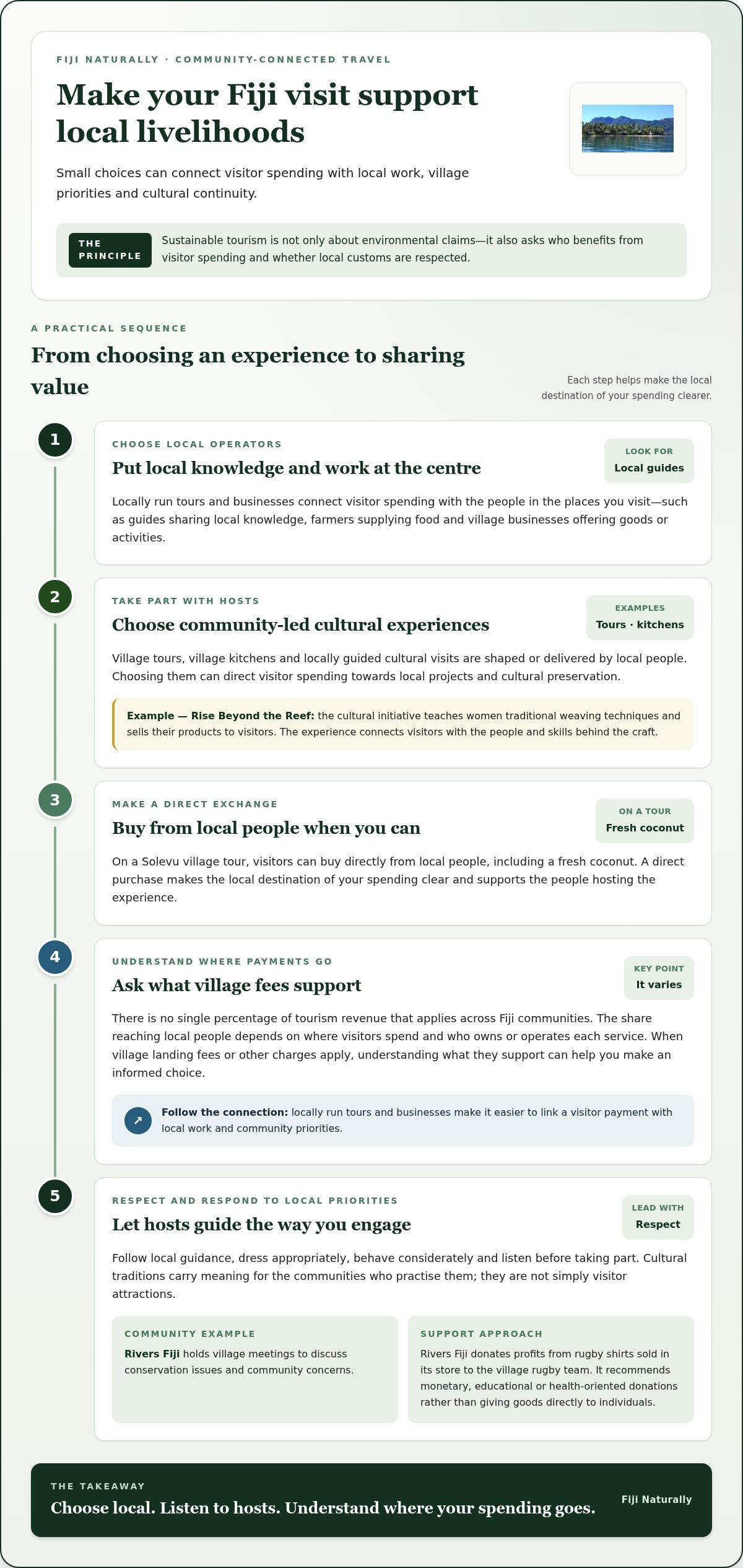
Respectful village engagement means following local guidance and treating customs, cultural spaces and people with care. That can mean dressing appropriately, behaving considerately and listening to hosts before taking part. Cultural heritage is not simply a visitor attraction: traditions carry meaning for the communities who practise them. Respect helps keep an encounter rooted in welcome and shared understanding.
Community-Led Cultural Experiences
Community-led cultural experiences are shaped or delivered by local people, such as village tours, village kitchens and locally guided cultural visits. Choosing them can direct visitor spending towards local projects and cultural preservation. Rise Beyond the Reef is one example of a cultural initiative: it teaches women traditional weaving techniques and sells their products to visitors. The value lies in meeting the people and skills behind an experience, rather than treating culture as a performance detached from its community.
Tourism Risks to Communities and Culture
Tourism can put pressure on Fijian communities when cultural practices are presented without local context or visitors disregard village customs. Community benefits can also be weakened when spending bypasses local initiatives. These risks matter because cultural and spiritual ecosystem services include the identity, knowledge and meaning communities associate with their places and traditions. Visitors can reduce harm by choosing community-led experiences, following hosts’ guidance and approaching cultural heritage respectfully, without expecting every custom to be shared or staged.
Support for village organisations and businesses
Tourism supports village life when visitors’ choices connect spending with local work, organisations and community priorities. How the spending reaches the community matters as much as the activity itself.
Local Guides, Farmers, and Village Businesses
Local guides, farmers and village businesses bring tourism experiences to life while earning from their skills, produce and services. Choosing them helps connect visitor spending with people in the places you visit. A guide can share local knowledge, a farmer can supply food and a village business can offer goods or activities. These everyday transactions can make sustainable tourism more meaningful than simply passing through an island.
Village Tours and Community Support
A guided village tour lets visitors learn from residents while supporting local livelihoods through purchases and activities. On a Solevu village tour, visitors can buy directly from local people, including a fresh coconut. That direct exchange makes the local destination of your spending clear. Follow the guide’s instructions, show respect in village spaces and treat purchases as a way to support the people hosting the experience.
Tourism Revenue and Fair Sharing
There is no single percentage of tourism revenue that applies across Fiji communities. The share reaching local people depends on where visitors spend and who owns or operates each service. To support fairer sharing, choose locally run tours and businesses, and understand what village landing fees or other charges support when they apply. A clear link between visitor payments and community expenses helps travellers make informed choices.
Initiatives for Jobs and Community Development
Community initiatives can link tourism jobs with conservation and village priorities. Rivers Fiji holds village meetings to discuss conservation issues and community concerns. It also donates profits from rugby shirts sold in its store to the village rugby team, supporting community needs and events. Rivers Fiji recommends monetary, educational or health-oriented donations rather than giving goods directly to individuals. For help shaping an island stay around community experiences, explore Fiji island travel planning.
Choosing locally grown food and local dishes
Food choices connect a Fiji visit with the farms and businesses behind each meal. Locally grown produce and familiar dishes offer a tangible way to support local livelihoods.
Local Cooking and Food Experiences
Local food experiences introduce visitors to Fijian ingredients and dishes, including kokoda, a local dish to try. Choosing it can make a meal part of learning about the island’s food culture, rather than simply dining on familiar international options. Ask about the ingredients and how the dish is prepared to add context while keeping local knowledge at the centre.
A village kitchen or restaurant meal can show how food traditions feature in everyday life. Take time to learn which ingredients are local and how they are used. If you’re invited to help prepare food, follow the hosts’ lead and respect their practices. The emphasis is on listening and learning, not treating a recipe as a performance.
Locally Sourced Food and Crafts
Locally sourced food is produce bought from Fijian farmers and suppliers rather than transported from elsewhere. Choosing local fruits and vegetables supports farmers and businesses while reducing the environmental impact associated with importing food. At a resort, ask how much food its operations purchase from local growers. The answer can show how its purchasing practices connect meals with island livelihoods.
Some resorts grow their own food, which can reduce the environmental impact of transporting ingredients. Gardens also make sourcing visible: visitors can see what is grown and how it reaches the kitchen. Food choices sit alongside other sustainability practices, such as attention to energy use and the marine environment. For crafts, buying Fijian-made goods directly from local makers connects your purchase with their work. Choose thoughtfully, and take part in food or craft experiences on the hosts’ terms.
Supporting local artisans and family-owned restaurants
Meals and handmade goods can connect visitors with the people behind Fiji’s local economy. Family-owned restaurants and Fijian-made crafts make these encounters personal and rooted in place.
Local Sourcing from Farmers and Fisheries
Local sourcing means businesses buy ingredients and goods from nearby farmers, fisheries and artisans, connecting visitor spending with local livelihoods. At a family-owned restaurant, ask which ingredients come from Fijian suppliers and what is prepared locally. For seafood, consider sourcing alongside conservation: local origin alone does not explain how a catch was obtained. These details help you understand the choices behind a meal.
An island resort’s accommodation and dining operations can also influence where purchases go. When a resort buys ingredients from local suppliers, guests’ meals connect with producers’ work. Look for specific examples, such as a menu identifying local ingredients or staff explaining sourcing practices. This gives you a clearer basis for choosing businesses whose purchasing supports Fijian communities.
Buying Handicrafts Directly
Buying handicrafts directly means purchasing a Fijian-made item from the artisan who made it. This supports local economic activity and helps sustain traditional crafts and industries. Learn about the materials and techniques behind a piece, then buy directly from artisans when they offer their work. A handmade object can carry a story of skill and heritage as well as serve a practical purpose.
Family-owned restaurants offer another direct way to support local businesses, particularly those serving locally sourced ingredients. Choose a locally run dining spot, ask about dishes made with Fijian produce and take time to enjoy your meal. These choices won’t tell the whole story of a business, but they connect your visit with local work and livelihoods.
Plan an island stay that leaves room for locally run dining and artisan visits through Fiji island travel planning.
Fiji Naturally: Scuba Dive Resorts
Fiji Naturally can help travellers seeking a scuba diving resort choose a stay that fits their interests and travel style. Its specialists have personally visited more than 100 locations, bringing first-hand destination knowledge to planning. This is a useful next step when you’re weighing diving-focused accommodation against other priorities, such as an adults-only retreat, a family-friendly resort or Six Senses Fiji.
Choosing a resort is separate from deciding how to support communities during your stay. Wherever you travel, you can favour locally guided activities, Fijian-made crafts and locally sourced meals. Share your interests, including diving and the community experiences you value, when planning your Fiji trip. For help shaping your plans, contact Fiji Naturally or visit fijinaturally.com.au.
Shape a Fiji stay around what matters to you
Let your values guide the pace and shape of your next Fiji escape. Supporting local communities in Fiji tourism can begin with the experiences you make room for, from a locally hosted outing to discovering a place beyond the resort. Thoughtful decisions can make your holiday feel more connected to the people and places around you.
Fiji Naturally offers scuba dive resorts, adults-only resorts and family-friendly resorts, helping you begin with the kind of stay that suits your travel style. From there, plan a Fiji trip with space for the local encounters that matter to you.
Ready to explore your options? Contact Fiji Naturally to begin planning, and look forward to a more meaningful island escape.
Frequently Asked Questions
How does tourism support local communities in Fiji?
Tourism supports local communities when visitor spending creates income and work connected to Fijian people and businesses. Supporting local communities in Fiji tourism can mean choosing local services, eating at locally run venues and buying goods made by local artisans. These choices also create opportunities to learn directly from residents. The benefit depends on how tourism activity is organised and where the spending goes.
Which community-based tourism experiences are available in Fiji?
Community-based experiences in Fiji include village visits, locally guided cultural activities and opportunities to learn about traditional skills. Some centre on food, storytelling or crafts, while others connect visitors with local conservation efforts. Choose an activity led or shaped by community members, and follow their guidance during the visit. This keeps the experience grounded in local priorities rather than visitor expectations.
How can tourists choose locally owned accommodation and tours in Fiji?
Look for accommodation and tours that clearly identify local ownership, local staff or partnerships with nearby communities. Consider who leads the activity, provides the services and whether local businesses are involved beyond the initial booking. A locally run tour can put you in direct contact with its hosts and their knowledge. Choose options that explain their community connections with concrete examples, rather than relying only on broad sustainability language.
How much do community-based tours and village visits in Fiji cost?
There isn’t one standard cost for community-based tours or village visits across Fiji. Prices can depend on the experience’s length, transport, activities, group arrangements and any village charges. A guided visit with transport and included activities may cost differently from a shorter experience. Check what the quoted amount covers, including transport and any community contributions, so you can compare the experience and its inclusions clearly.
What etiquette and permission rules should visitors follow when visiting a Fijian village?
Follow your host or guide’s instructions, dress appropriately and behave respectfully in village and cultural settings. Ask before photographing people, entering private spaces or joining an activity, because permission and local expectations matter. Be considerate in your voice and conduct, and don’t assume every custom is open to visitors. These small acts help make a village visit a respectful exchange rather than an intrusion into daily life.
How can travellers support local artisans, markets and businesses in Fiji?
Buy Fijian-made goods directly from artisans where possible, and choose locally operated businesses for meals, transport or activities. At a market, speak with the maker or seller and learn about the item’s materials and craft. For dining, look for venues that describe their local suppliers. These choices connect your spending with the people creating, growing or providing what you enjoy during your stay.


