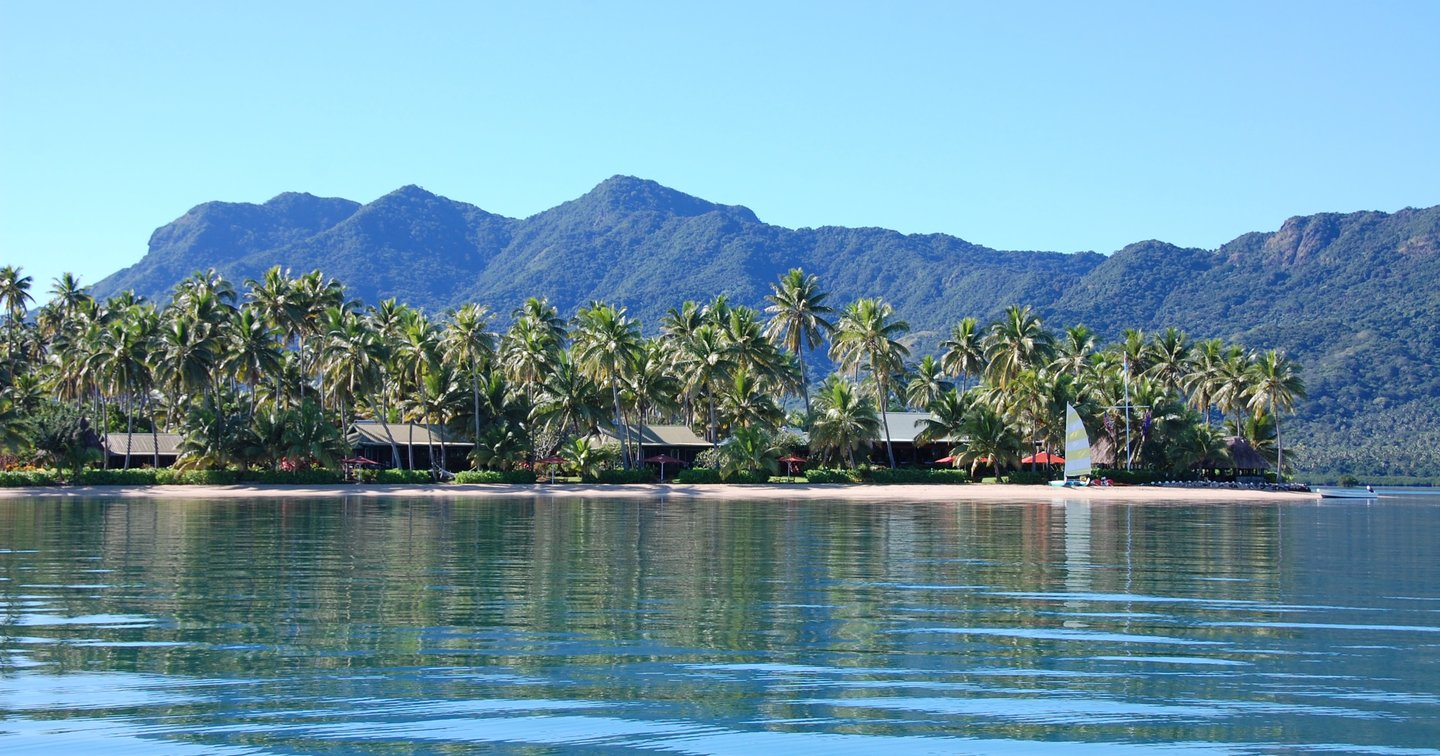

The mainland is the easier base for road-accessible activities and simpler transfers; an island stay brings you closer to quiet beaches, lagoons and reef experiences. For fiji resorts for non-divers, the best fit depends less on whether you dive and more on how you want to spend your days and how much travel you’re happy to add. Fiji has 333 islands, so the setting can shape the whole holiday.
It’s natural to picture a Fiji escape as days spent underwater, but there’s plenty to enjoy from shore, on the water’s surface and inland. This guide compares mainland and island stays, highlights resort activities that don’t require diving, and explains what to consider when choosing family facilities and reef access. You’ll also find a practical way to weigh transfer time against the retreat you want: easy to reach or beautifully removed from the everyday.
Key Takeaways
- Match family facilities to your group’s needs, including age-appropriate activities and options for downtime.
- Compare transfer time and access when choosing between a mainland base and a more secluded island stay.
- Look beyond diving: choose a resort setting that suits how you want to spend time on land and on the water.
- For reef experiences, consider how snorkelling access fits into your stay and use reef-safe sunscreen.
- Compare featured resorts by location, accommodation style and the kind of holiday atmosphere you prefer.
1. Family-friendly facilities and entertainment
Fiji’s 333 islands offer very different family holidays, from a mainland base to a castaway-style island escape. For families choosing a resort, the most useful question is not simply whether children are welcome. Consider how facilities, daily activities and the setting fit your children’s ages, interests and routines. A quiet private beach may suit one family; an organised programme may matter more to another.
Start with a practical facilities check. Look for features your family will use, such as a swimming pool, children’s activities, shaded outdoor space, family-sized rooms and meals suited to younger travellers. Treat each as a decision point, not a feature you can expect at every Fiji resort. A pool makes for an easy afternoon; a suitable room layout gives parents and children space to rest.
Next, match the activities to your children’s ages and energy. One resort may offer a structured programme, while another centres on beach time and unplanned play. Compare the daily rhythm with your family’s holiday style: do the children enjoy group activities, or prefer exploring with parents? With different age groups, look for options that let younger children rest while older ones stay engaged.
Beach access deserves its own check. A wide stretch of sand makes paddling, sand play and shoreline walks easy additions to the day, while a secluded beach can offer a peaceful escape. Consider the route from your accommodation to the water, available shade and places to pause. These details can determine whether a beach outing feels relaxed with small children or needs extra planning.
Location also shapes how much energy remains for family fun. Denarau Island sits about 13 km from Nadi Airport, with a drive of around 20-30 minutes. Momi Bay is approximately 45-50 minutes by road from the airport. These mainland options can reduce transfer time compared with a remote island stay, leaving more of the arrival day for settling in together.
For island stays, build transfer logistics into the family plan. Ferries from Port Denarau to the Yasawa Islands take approximately 2-5 hours, depending on the island. That journey may be part of the adventure for some children, but it can affect nap times, meal timing and arrival-day plans. Compare the transfer with your family’s tolerance for travel before choosing a more secluded beach holiday.
For a final check, list your family’s essential facilities, preferred activities and comfort with transfers, then compare resorts against those priorities. The best family-friendly Fiji resort is the one whose setting and daily rhythm suit your group, not necessarily the one with the longest amenities list. A thoughtful match helps every family member feel at home.
2. Is it better to stay on the mainland or islands of Fiji?
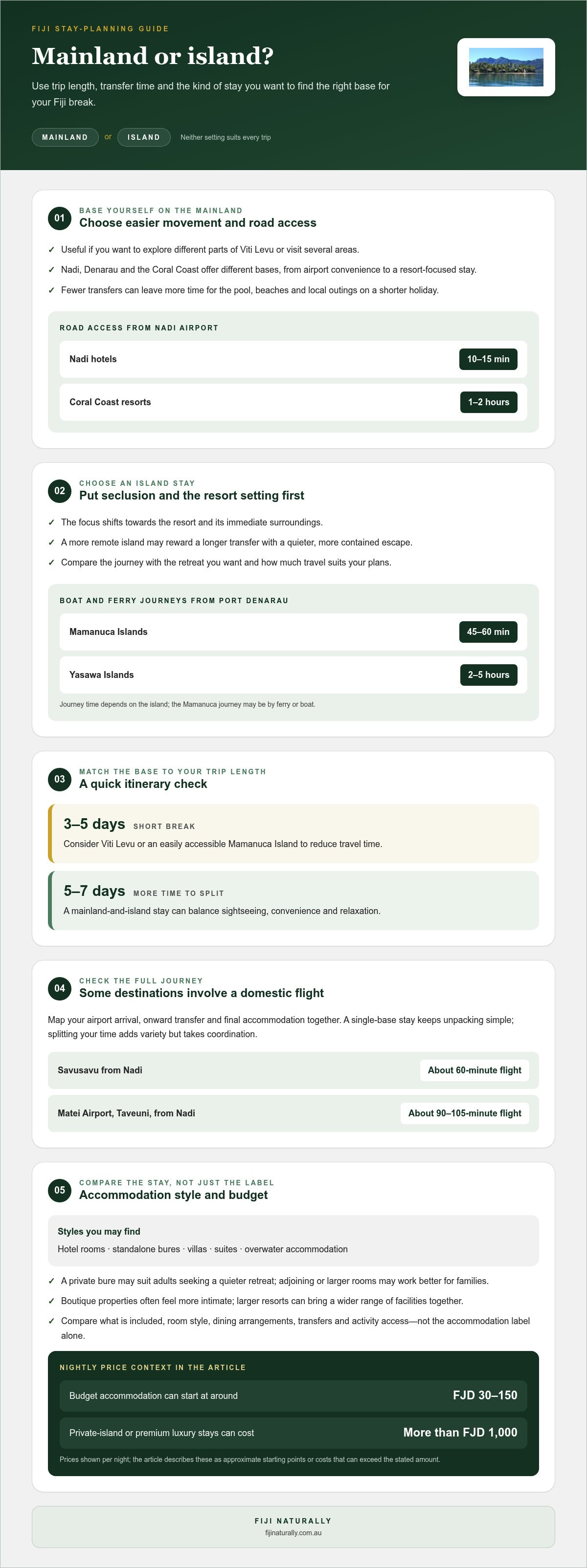
Neither setting suits every trip: the mainland favours easier movement, while island resorts offer a more secluded stay. For a 3-5-day Fiji break, staying on Viti Levu or an easily accessible Mamanuca Island can reduce travel time. On a 5-7-day trip, splitting time between the mainland and an island resort can balance sightseeing, convenience and relaxation.
Accessibility from Nadi Airport depends on the destination and transfer type. Nadi hotels are generally around 10-15 minutes away by road, while Coral Coast resorts take approximately 1-2 hours. Savusavu is about a 60-minute domestic flight, and Matei Airport on Taveuni is approximately a 90-105-minute flight from Nadi.
Choose mainland accommodation if you want road access to different parts of Viti Levu. Nadi, Denarau and the Coral Coast offer different bases, from airport convenience to a resort-focused stay. For a shorter holiday, fewer transfers can leave more time for the pool, beaches and local outings. A mainland base also makes sense if you plan to visit several areas.
An island resort shifts the focus towards the property and its immediate surroundings. The Mamanuca Islands are around 45-60 minutes by ferry or boat from Port Denarau, depending on the island. The Yasawa ferry journey takes approximately 2-5 hours, also depending on the destination. A remote island may reward the longer transfer with a quieter, more contained escape.
Accommodation style shapes a stay as much as location. Options can include hotel rooms, standalone bures, villas, suites and overwater accommodation. A private bure may suit adults seeking a quieter retreat, while adjoining or larger rooms may work better for families. Boutique properties often feel more intimate; larger resorts can bring a wider range of facilities together in one place.
Compare budget and luxury accommodation by what the stay includes and how you plan to spend your days, not by the label alone. Consider room style, dining arrangements, transfers and activity access. A simpler mainland base may suit travellers prioritising day trips, while a premium island stay puts more emphasis on seclusion and time on the beach.
Before settling on an itinerary, map your airport arrival, onward transfer and final accommodation together. A single-base stay keeps unpacking simple; splitting time between the mainland and an island adds variety but takes coordination. Budget accommodation can start at around FJD 30-150 per night, while private-island or premium luxury stays can cost more than FJD 1,000 per night. When booking through Fiji Naturally, you can easily balance your mainland and island plans to suit your preferred holiday pace.
3. Resort activities for guests who do not scuba dive
Fiji resort days can be active without scuba gear: think lagoon swims, beach walks and time on the water’s surface. If you don’t dive, compare activities at the resort with excursions nearby. Location affects whether a day is best spent paddling from shore, joining a boat trip or exploring inland. Couples can balance shared outings with slower afternoons and relaxed dining.
Land-based activities and excursions may include guided walks, village visits, cultural experiences and local sightseeing. A resort on the Coral Coast, for example, can serve as a base for exploring the surrounding area, while a stay in the Yasawa Islands puts island scenery at the heart of the escape. When planning your days, check which activities are guided, which are self-paced and how much time each outing takes.
Resort facilities can make quieter days feel complete. Look for a pool, spa, fitness space, tennis court or shaded lounge, as well as restaurants and bars. Dining options matter if you want relaxed evenings without arranging an outing. For couples, a mix of shared activities and peaceful spaces can suit changing moods, from an active morning to a long lunch beside the lagoon.
Snorkelling lets you experience a reef without scuba certification, while non-motorised activities can include kayaking, stand-up paddleboarding and sailing. These options let you explore the surface at an easy pace. Choose an activity to suit your comfort in the water and the conditions on the day. If you’d rather stay on shore, a beach walk or time by the pool can be just as restful.
Fiji’s dry season runs from May to October, and its wet season runs from November to April. Visitors prioritising good weather and water activities often choose the dry season, though conditions can vary in either season. Plan around the holiday you want: beach time, time on the water or a mix of resort relaxation and excursions.
Before booking, sketch a simple activity plan: one land-based outing, one water activity and one unplanned day. Then compare resorts by their access to the places and experiences that matter most. A lagoon-side stay can put surface-level water activities close at hand; a mainland base may suit exploring Viti Levu. This balance helps make a Fiji escape enjoyable even when diving isn’t on the itinerary.
Reputable Fiji resorts typically provide treated water that is safe to drink. If drinking water is part of your daily routine, ask the property how it is supplied and where you can refill a bottle. This simple check helps you plan what to carry between your room, the pool and planned activities.
4. Snorkelling and reef experiences
Snorkelling offers a reef experience without scuba equipment, but location matters. In the Mamanuca Islands, compare resorts by whether reef outings start from shore or require a boat. In the Yasawa Islands, consider how far you want to travel for water activities. A beautiful Fiji beach is a starting point, not proof that a reef is directly accessible.
Before choosing a Fiji beach resort, separate three questions: where you’ll enter the water, how you’ll reach the reef and what support the outing provides. Shore access can make a short snorkel easy to fit into a relaxed day. A boat outing makes reef exploration a planned excursion. The right balance depends on your comfort in the water and preferred pace.
Ask what the snorkelling experience involves instead of relying on broad descriptions of nearby reefs. Find out whether guests swim from shore or join a guided boat trip, and whether equipment is included. These details help you compare an island resort with villas near a lagoon against a property where reef exploration takes more planning.
Choose a snorkelling day when you have time to enjoy the outing without rushing back to another activity. Follow the guide’s instructions on organised trips and stay within your comfort level. For a slower introduction, consider a calm lagoon and surface-level exploration before planning a longer reef excursion.
Protecting the reef is part of the experience. Use reef-safe sunscreen in Fiji to help protect your skin and coral ecosystems. Pack it before leaving your accommodation and apply it as directed on the product. Choose a snorkelling operator that explains how to avoid disturbing the marine environment, and follow those instructions in the water.
Some of Fiji’s celebrated marine destinations are associated with scuba diving, including Rainbow Reef, the Great White Wall and Namena Marine Reserve. Their reputation doesn’t automatically make them the right choice for a snorkelling day. If you don’t dive, focus on the surface experiences at your chosen location, the journey involved and the guidance offered.
Before booking, compare reef access, whether the activity is shore-based or boat-based, and how it fits your daily rhythm. Choose the Mamanuca Islands, the Yasawa Islands or another Fiji setting according to the experience you want, not just photographs of blue water. A thoughtful match makes reef time an enjoyable part of your stay, even without a dive.
5. Featured Fiji resorts and hotels
The best Fiji resorts for non-divers depend on the stay you want: a beachfront base, an island retreat or accommodation with distinctive design. Likuliku Lagoon Resort and Six Senses Fiji are examples of different accommodation styles. Compare location, room type, dining and activities together, rather than choosing by photographs alone.
Likuliku Lagoon Resort has 45 bures, including 10 overwater bungalows. That gives travellers a clear choice between a traditional bure and an overwater stay. Six Senses Fiji has 24 resort villas and suites. These figures describe accommodation choices, not which resort is best for every guest.
Which Fiji resorts are best for non-divers? Start with properties whose setting and activities fit your plans beyond scuba diving. Likuliku Lagoon Resort and Six Senses Fiji are options to compare, especially if accommodation style matters. Also consider whether you want a beach resort, a private island escape or a base with dining and activities nearby.
No single resort is best for beaches and swimming for every traveller. Compare the beach setting, access to the water and the swimming experience you want, such as a calm lagoon or open shoreline. Ask how snorkelling and other water activities fit into the stay, then weigh those details against room style and location.
Families can start with a family-friendly resort and compare its facilities with their children’s needs. Couples may prefer adults-only accommodation or a quieter island atmosphere. Solo travellers can prioritise activities, dining options and a setting that makes it easy to plan each day independently. These categories help narrow the search without assuming one property suits everyone.
Denarau is another useful point of comparison if you value mainland access. Shangri-La Fiji and Sheraton Fiji are hotel options to consider alongside island properties. Rather than assuming every resort offers the same experience, compare how its location fits your plans for the beach, dining and excursions around Viti Levu.
Use a shortlisting step before you book: write down your preferred accommodation style, the activities you want and the kind of beach or swimming setting you’re seeking. Then compare named resorts against those priorities. A tropical view can set the mood, but location and daily plans determine whether the whole holiday feels right. To compare stays by travel style, explore Fiji resort options.
Fiji Naturally: Scuba Dive Resorts
Fiji Naturally can help narrow your resort search around the stay you want, whether diving is central or just one possible activity. Options include Scuba Dive Resorts, Adults Only Resorts, Family Friendly Resorts and Six Senses Fiji. If you’ve weighed mainland access against island seclusion, Fiji Naturally can help bring location, resort style and travel plans together.
For a family holiday, start with family-friendly options; for a quieter adults-only escape, explore that category. If you’re still comparing resort styles, Fiji Naturally can help you find a fit. Contact Fiji Naturally to discuss your Fiji resort plans.
Shape a Fiji stay around your kind of escape
Choosing among fiji resorts for non-divers is a chance to decide how you want your days to feel, not simply where you’ll sleep. Picture the pace that suits you: unhurried mornings, time together on the beach or a new activity each day. Let that guide your shortlist and choose a setting where those moments come naturally.
Fiji Naturally offers Scuba Dive Resorts, Adults Only Resorts and Family Friendly Resorts, so your trip can reflect who’s travelling and what matters most. Whether you’re planning a family holiday, a couples’ retreat or a stay that leaves room for diving, the next step is to shape those preferences into a plan.
Contact Fiji Naturally to plan your stay, and take the next step towards a Fiji escape that feels like yours.
Frequently Asked Questions
Is it better to stay on the mainland or islands of Fiji?
The mainland suits travellers who want easier road access and a flexible base; an island stay centres the holiday on its resort and surrounding waters. If you plan to move between areas, a mainland base can simplify connections. Choose an island when the resort setting is the main attraction, and factor the onward transfer into your arrival and departure plans.
Which Fiji resorts offer snorkeling, kayaking, paddleboarding, and other water activities?
Fiji Naturally’s resort options include Six Senses Fiji, Kokomo Private Island, and Likuliku Lagoon Resort. It also offers dive and snorkel packages with access to reefs. Kayaking and paddleboarding vary by property, so compare each resort’s activity programme and check whether outings start from shore or require a boat. This distinction helps match water time to your preferred pace.
Which Fiji resorts offer house-reef snorkeling without scuba diving?
A resort may offer snorkeling on a nearby reef, while reaching other reefs may require a boat trip. Fiji Naturally offers dive and snorkel packages with reef access, but package access alone doesn’t mean a resort has a house reef. For shore-based snorkelling, make direct beach-to-reef access your key selection criterion rather than relying on general descriptions of nearby reef excursions.
What should non-divers know about resort transfers, meal plans, and extra activity fees in Fiji?
Plan transfers as part of the itinerary, not as an afterthought: the destination and transport mode determine the journey, and remote stays may involve connections beyond road travel. For meals, compare which options and dining venues are included with your accommodation. Plan activities separately, since inclusions and extra charges depend on the resort and experience selected.
Which Fiji resorts have the best beaches and swimming for non-divers?
Choose a lagoon-side resort or one with a wide sandy beach and easy water access. These settings suit swimming, paddling and time on the shore without diving.


