

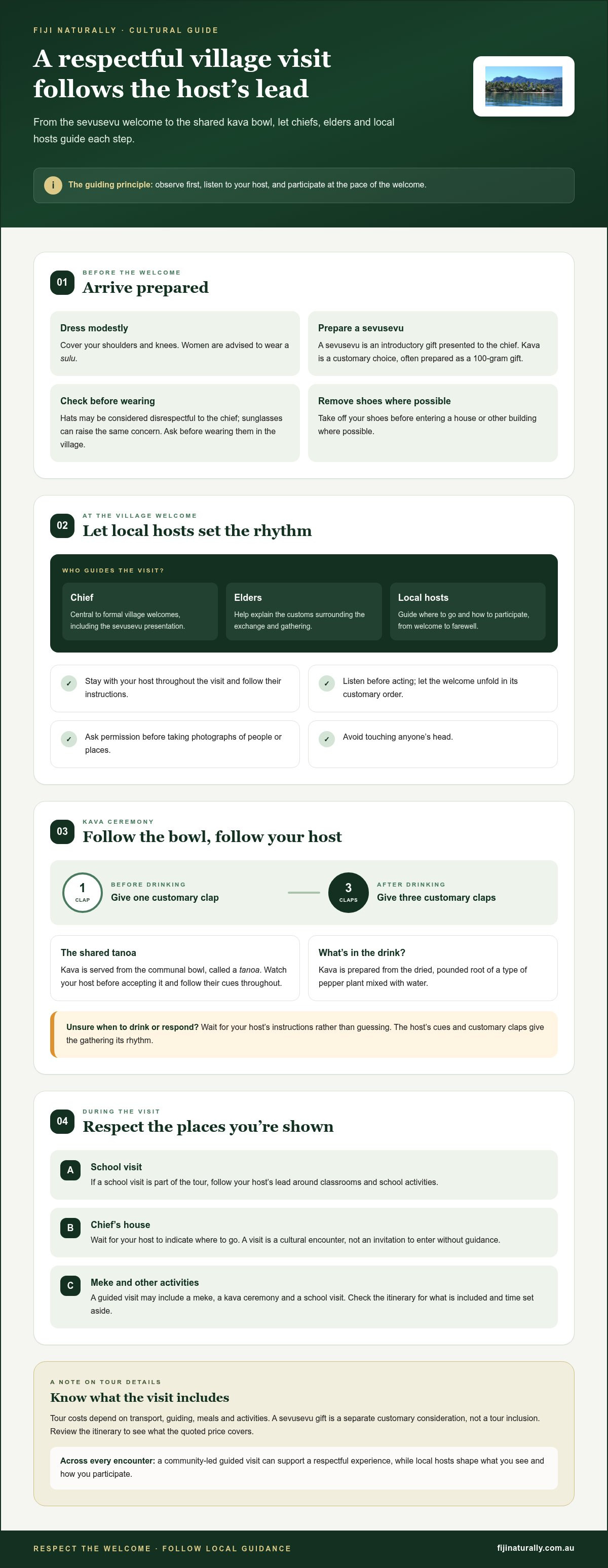
In Fijian village life, chiefs and elders guide customs and welcome visitors, so respectful participation starts with following their lead. For Fiji cultural immersion experiences, expect to present a sevusevu, or introductory gift, to the chief and observe local etiquette rather than treating a village visit as a performance. Dress modestly, covering your shoulders and knees, and ask permission before taking photographs.
It’s natural to look forward to vivid moments: a shared bowl of kava, a lovo feast, songs, dance and stories. The deeper meaning lies in the welcome and the traditions shaping these gatherings. A little understanding helps you participate thoughtfully and enjoy the experience at a gentler pace.
This guide explains how chiefs and elders shape village life, what to expect at a kava ceremony, and how local food, storytelling and meke bring people together. You’ll also find practical guidance for visiting respectfully, so you can arrive prepared and focus on the warmth of the encounter.
Key Takeaways
- Follow your hosts’ lead during a kava ceremony, including the customary claps before and after drinking.
- Approach village visits respectfully: dress modestly, present a sevusevu, and ask permission before taking photographs.
- Discover how shared meals and the slow, underground cooking of a lovo bring people together around local food.
- Listen for the legends and community stories carried through meke, song and dance.
- Choose guided visits led by local communities for a more respectful and supportive cultural encounter.
Why Is the Fiji Kava Ceremony Such an Important Cultural Experience?
For families and first-time visitors, a hosted kava ceremony offers a clear introduction to Fijian customs. Main-island and outer-island experiences differ in setting and community, while tour costs depend on transport, guiding and included food.
A kava ceremony is more than a tasting: it’s a traditional welcome shaped by shared custom. Knowing the basic steps helps you participate respectfully, whether you’re visiting a village or attending a hosted gathering.
Kava Ceremony Etiquette
Watch your host before accepting the communal bowl, called a tanoa, and follow their cues throughout the ceremony. The customary sequence is one clap before drinking, then three claps afterward. These gestures mark your participation in the gathering. If you’re unsure when to drink or respond, wait for your host’s instructions rather than guessing.
Traditional Welcome and Kava
Kava is prepared from the dried, pounded root of a type of pepper plant mixed with water. At a Fijian welcome, it’s served freshly made from the shared tanoa, making the bowl central to the gathering. Your host’s guidance helps you understand when to receive the drink and how to participate. This shared ritual is a highlight of cultural visits.
Kava Tastings and Sevusevu Customs
A tasting gives you a chance to experience kava within its social context, not simply sample a drink. In a village visit, sevusevu is an introductory gift presented to the chief; kava is a customary choice, often prepared as a 100-gram gift. Treat the presentation as part of the welcome, and let your hosts guide the exchange and ceremony.
For visitors comparing cultural tours, the cost depends on what’s included. Transport, a guide, meals and activities shape the total, so a village visit with a shared meal differs from a tasting alone. A sevusevu gift is a separate customary consideration, not a tour inclusion. Review the itinerary details to understand what the quoted price covers.
On Fiji’s main islands, cultural visits may fit into a broader day of activities; outer-island encounters take place in a different island setting. The community, host and planned activities shape each visit, so compare the experience itself rather than assuming every ceremony follows the same schedule. For families, a guided visit with a host-led welcome can make each step easier to follow.
Across Fiji, the kava ceremony welcomes visitors into a moment of shared attention. The tanoa, the host’s instructions and the customary claps give the gathering its rhythm. Follow those cues, receive the bowl respectfully and let the ceremony unfold at the pace set by your hosts.
How Do Chiefs and Elders Shape Village Life?
Chiefs and elders help visitors understand local customs, while hosts guide the visit from welcome to farewell. Across Fiji, guided village tours offer a way to encounter community life; many operators run them daily and pick guests up from resorts.
For a respectful visit, follow your host’s instructions, observe local etiquette and remember that community routines shape what you see. Guided visits led by local communities can support respectful, sustainable tourism, while a homestay offers a more personal invitation into village life.
Village Visits and Cultural Encounters
A guided visit may include a meke, a kava ceremony and a school visit, offering several ways to experience community culture. Check the itinerary to see which encounters are included and how much time is set aside for each. Stay with your host throughout the visit; they can explain where to go and how to participate.
Chiefs, Elders, and Village Leadership
The chief is central to formal village welcomes, including the presentation of a sevusevu, or introductory gift. Elders and local hosts help visitors understand the customs surrounding that exchange and the gathering that follows. Their guidance offers insight into community expectations, so listen before acting and let the welcome unfold in its customary order.
Village Customs, Gifts, and Etiquette
Dress modestly, covering your shoulders and knees, and women are advised to wear a sulu. Consider bringing kava as a customary sevusevu gift when visiting a village. Remove shoes before entering a house or other building where possible, and ask permission before taking photographs. Avoid touching anyone’s head.
Hats may be considered disrespectful to the chief, so ask before wearing one in the village. Sunglasses can raise the same concern. These small choices show you’re attentive to local etiquette, rather than treating a Fijian village as a backdrop for photographs.
School and Chief’s House Visits
A school visit may be part of a village tour, offering a glimpse of community life beyond the welcome ceremony. Follow your host’s lead, especially around classrooms and school activities. A visit to the chief’s house is a cultural encounter, not an invitation to enter without guidance; wait for your host to indicate where to go.
Traditional village life can be experienced through community-led visits across Fiji. To book, choose a guided tour arranged around a village welcome, and establish whether a school visit or homestay forms part of the experience. Daily tours and resort pickups are common, while local hosts shape the visit itself.
Seasonal considerations depend on community schedules and the activities planned for your visit. Respectful access means following the host’s directions, observing village customs and asking permission before photographing people or places. If you’re planning a stay at a remote authentic Fijian resort, consider how a community-led visit could fit naturally into your island itinerary.
Local food and lunch experiences
A shared meal can reveal how ingredients, preparation and hospitality come together in Fiji. Look for the story behind each dish, whether lunch is served during a village visit or included as a buffet in the Fiji Island Cultural Experience.
What to expect at lunch
Traditional Fijian food may include familiar island staples such as dalo, cassava and coconut. A buffet lets you sample several dishes in one sitting, while a hosted meal may focus on what has been prepared for that gathering. Notice how foods are served and shared, and follow your host’s lead on local customs.
Carrying small Australian-dollar notes can make a simple purchase easier, though the seller sets the exchange. Ask before taking a coconut or photographing someone preparing food. These courtesies help keep the interaction warm and respectful.
Local crafts and shell markets
Handmade crafts offer another way to connect with local skills. Shell jewellery, woven items and carved pieces can reflect materials and techniques familiar to the maker. Ask what an item is made from and how it was created, rather than assuming every shell or woven pattern has the same meaning across Fiji.
If you visit a shell market, buy directly from the maker when possible and handle pieces gently. Ask permission before photographing a craftsperson or their work. Avoid collecting shells from beaches yourself; choosing a finished item from a local seller keeps the encounter centred on the maker’s knowledge and livelihood.
Medicinal plants and local knowledge
Plants may come up in conversations about local knowledge, but their uses are best understood through the person explaining them. Ask your guide or host to identify the plant, describe its place in local practice, and clarify whether the explanation is cultural or practical. A plant name alone doesn’t establish how it should be prepared or used.
Keep this encounter observational. Don’t pick leaves, roots or fruit without permission, and don’t treat a traditional explanation as personal medical advice. Instead, listen to how knowledge is shared between generations and how local customs shape the conversation.
For a more vivid food experience, compare a resort buffet with a village-hosted lunch by considering the setting, dishes and interaction included. A buffet offers variety; a hosted meal can bring food preparation and conversation into focus. Either way, ask about ingredients before eating if you have dietary needs, and thank those who prepared the meal.
Lovo feasts and underground cooking
A lovo brings food and a traditional Fijian feast together through underground cooking. The preparation takes a few hours, so understanding the process helps you appreciate the meal beyond its first taste.
Underground Lovo Cooking
A traditional Fijian lovo is a feast cooked in an underground pit. Food cooks slowly for a few hours, making the preparation part of the experience. Ask your host which ingredients are being prepared and how the cooking fits into the gathering. These details help explain the meal’s place in the occasion.
For visitors, the sequence is simple: learn what’s being cooked, understand how long the preparation takes, then enjoy the meal when it’s served. The method differs from a quick resort kitchen lunch because underground cooking takes time. That slower rhythm makes a lovo an opportunity to notice how food, preparation and gathering connect.
Observe the process when your host invites you. The pit is part of the cooking, not a display to approach or handle without permission. If you’re curious about an ingredient, ask before the meal rather than interrupting those preparing it. A question about the cooking can open a conversation about local food customs.
Lovo Feasts and Lunch
A lovo lunch offers more than a meal: it’s a chance to gather around food prepared for a shared occasion. Ask whether lunch is a lovo feast or another style of meal, then find out what dishes are included. The Fiji Island Cultural Experience, for example, includes a buffet lunch, distinct from the underground preparation that defines a lovo.
At a feast, notice how the meal is served and how guests are welcomed to eat. Follow your host’s lead, especially if food is shared communally. If you have dietary needs, explain them before the meal so your host can discuss the ingredients and what you can comfortably eat.
The setting also shapes the encounter. A resort lunch may prioritise convenience, while a lovo experience centres on the cooking method and gathering. Neither description alone tells you the full menu, so ask what’s being served and how the meal fits into the visit. If crafts are part of the same encounter, treat them as a separate opportunity to learn, not as part of the lovo itself.
Across Fiji’s islands, the key detail is the slow underground cooking. Give the preparation time, listen to your host’s explanation and approach the meal as part of a gathering. That attention turns a plate of food into a clearer insight into the occasion and its customs.
Oral storytelling, music and dance
In Fiji, a meke can bring legends and myths to life through song and fire dancing. The performance offers more than a lively moment on a tropical holiday: it carries stories through movement, voices and rhythm. Notice how the performers’ gestures and the song work together, then listen for the story being shared.
Resorts commonly host meke performances at least once a week. A resort performance can offer an accessible introduction, while a community gathering may place music within a broader cultural encounter. The setting matters. In either case, treat the performance as a tradition being shared, not simply entertainment arranged for visitors.
To participate respectfully, follow your host’s cues. Some gatherings invite guests to join in; others are best watched quietly. Wait for an invitation before stepping forward, copying movements or taking photographs. If you’re unsure, observe first. That pause gives you a chance to understand what’s happening before joining the group.
Storytelling can also connect naturally with kava, or yaqona, when a gathering includes both. The drink may be served as part of a welcome, while conversation and performance create a shared setting. These elements aren’t interchangeable: a kava ceremony has its own customs, while a meke centres on story, song and dance. Follow your host’s direction for each part.
For families, a meke can hold children’s attention through movement and music, while giving adults a chance to notice how stories are expressed. Help younger visitors understand when to watch quietly and when participation is welcome. A brief explanation before the performance can help them see fire dancing as part of storytelling, not just spectacle.
After the performance, a thoughtful question can extend the encounter. Ask your host what story the song or dance shared, or what a particular movement represented. Let them choose what to explain; one meke may tell a different legend from another. Listening offers insight that a programme description alone can’t provide.
Approach the evening at the pace of the gathering. Listen to the song, notice the movement, and give the story room to unfold. If you’re planning a Fiji holiday around cultural encounters and island stays, explore Fiji holiday planning as a way to shape a trip with time for both performances and quieter moments.
Fiji Naturally: Scuba Dive Resorts
Fiji Naturally can help shape your Fiji stay around the resort experience that suits your trip. Options include Scuba Dive Resorts, Adults Only Resorts, Family Friendly Resorts and Six Senses Fiji. If cultural encounters are central to your plans, consider how your resort setting fits alongside village visits, local meals and performances in your itinerary.
Turn to Fiji Naturally when you’re ready to bring those priorities together with your accommodation. As a full-service travel agency, Fiji Naturally can arrange resort bookings and wider travel details, including airline tickets and travel insurance. A good starting point is your preferred balance of cultural discovery, relaxation and time on the water.
Contact Fiji Naturally to discuss your Fiji holiday plans.
Make Space for a More Meaningful Fiji Stay
Your next step is to decide what kind of holiday you want your cultural experiences to fit into. Perhaps you’d like unhurried time between community encounters, or a stay pairing island life with days on the water. Thoughtfully planned Fiji cultural immersion experiences feel more connected when the pace and setting suit the way you want to travel.
Fiji Naturally offers Scuba Dive Resorts, Adults Only Resorts and Family Friendly Resorts, giving you different starting points for shaping your stay. Consider who’s travelling, what you’d like to experience, and how much room you want for quiet time alongside cultural discovery. Those choices can bring the details of your Fiji holiday into focus.
If you’re ready to explore an itinerary that reflects your interests, contact Fiji Naturally to plan your visit. Take the first step at your own pace, and look forward to discovering Fiji with curiosity and respect.
Frequently Asked Questions
How Do Storytelling and Music Keep Fiji's Traditions Alive?
Storytelling and music carry legends and cultural memory through performance and shared listening. In a meke, song and fire dancing can express Fijian myths, while performers’ gestures make the story visible. Listen to the words and watch how movement supports them. Afterward, asking your host what a song or gesture represents can help you understand the story beyond the performance.
How Should Visitors Participate Respectfully?
Let your host set the pace and follow their cues before joining an activity. Wait for an invitation before entering a dance or handling something used in a cultural demonstration. Ask permission before photographing people, and keep questions courteous and specific. If a custom is unfamiliar, observe first rather than assuming participation is expected. This leaves room for your host to explain what’s appropriate.
What Can You Expect During a Traditional Fiji Village Visit?
Expect a hosted encounter shaped by community customs and the activities arranged for the visit. A tour may combine a welcome with cultural performances or a school visit, but each itinerary has its own focus. Your host helps you move between activities and explains local expectations. Treat the schedule as a guide to meeting people and learning, not a promise that every village visit follows the same format.
Why Are Shared Meals Central to Fijian Hospitality?
A shared meal gives guests and hosts time to gather beyond formal introductions. Food can be a natural focus for conversation: ask what an ingredient is called, how it was prepared, or when it’s usually served. Follow your host’s lead if dishes are offered communally, and thank those who prepared them. This attention turns lunch into an exchange, not simply a break in the day.
What cultural immersion experiences are available in Fiji?
Visitors can explore village visits, kava gatherings, meke performances, local food and lovo feasts. Some itineraries also include crafts or introductions to local knowledge about plants. Fiji cultural immersion experiences vary by host and setting, so choose based on the encounter you value: listening, tasting, observing a cooking tradition, or meeting community members. A locally guided visit can connect activities with their cultural context.
What is included in a Fijian kava ceremony, meke dance, or lovo feast?
Each experience has a distinct focus. A kava ceremony centres on a freshly prepared drink shared from a communal bowl; a meke uses song and dance to tell stories. A lovo is a feast prepared through slow underground cooking. The host’s role matters in each setting, from guiding ceremony etiquette to explaining the performance or meal. Ask what the gathering involves, then follow your host’s directions.
What etiquette and dress rules should visitors follow when visiting a Fiji village?
Choose modest clothing that covers your shoulders and knees, and wear a sulu if advised for your visit. Remove your shoes before entering a home when appropriate, and ask permission before taking photographs. Avoid touching people’s heads, and ask your host about hats or sunglasses, which may be viewed as disrespectful in some village settings. These gestures show consideration for the chief, residents and local customs.
How can visitors find respectful, community-led cultural experiences in Fiji?
Choose a guided visit led by local community members, and look for an itinerary that clearly describes who hosts the activities. Ask how the visit includes time with residents, rather than treating cultural encounters as a series of photo stops. During the experience, stay with your host and follow their instructions. A community-led approach supports respectful exchange and helps visitors understand the meaning behind what they see.


