
The cost of luxury Fiji group travel packages depends on the resort, room choices, travel dates and what your group wants included. There isn’t one fixed total: accommodation, transfers, flights and activities all shape a quote in Australian dollars. Group size also matters because it influences room arrangements and shared travel plans.
Comparing headline prices alone can leave you with an incomplete picture. A useful quote sets out the room types, dates, included services and additional costs, so your group can see exactly what the trip covers.
This guide explains how resort styles and seasons affect planning, what to consider when choosing accommodation, and how group size can shape the itinerary. You’ll also learn what details to include in a quote request, helping you plan a Fiji escape from the first island stay to the final transfer.
Key Takeaways
- Compare accommodation by room type, inclusions and location, not just the headline package price.
- Match resort style to your group’s priorities, such as adults-only relaxation, family-friendly stays or diving.
- Travel dates can influence accommodation costs, so weigh seasonal conditions against your group’s preferred experience.
- Ask for a quote that clearly separates included services from additional costs, including transfers, meals and activities.
- Share your dates, group size and room preferences to help shape a practical itinerary and a more useful quote.
Accommodation choices and travel costs
For Australians, accommodation, room types, included activities and season all shape the cost of a Fiji group trip. Australian passport holders can visit Fiji without a visa for up to four months, according to Fiji Immigration Department; passports should be valid for more than six months beyond travel. Travellers should also account for Fiji’s current health-entry requirements when planning.
Included Accommodation and Activities
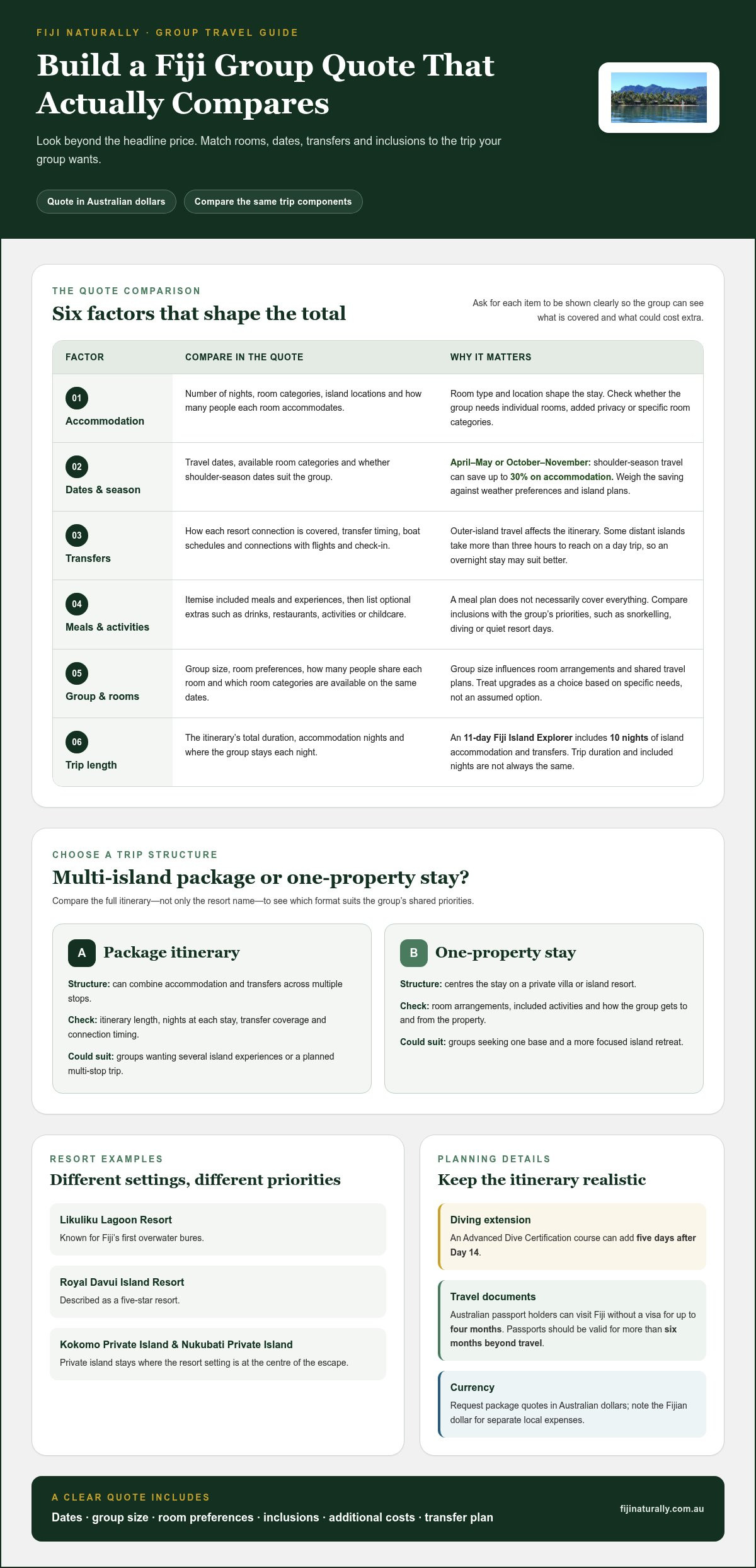
Start by matching the itinerary’s accommodation nights to the group’s actual travel dates. An 11-day Fiji Island Explorer package includes 10 nights of island accommodation and transfers. That distinction matters: the trip duration and included nights aren’t always the same, so identify where each night is spent and how the group reaches each stay.
Next, separate what the package includes from what could add to the total. A Fiji resort meal plan doesn’t necessarily cover drinks, every restaurant, activities or childcare. Ask for the inclusions to be itemised, then compare them with the group’s priorities. A group planning snorkelling, diving or time on the Yasawa Islands may value different inclusions from travellers seeking quiet resort days.
Use a simple comparison for each option:
- Accommodation: list the number of nights, room categories and island locations.
- Transfers: note how each resort connection is covered across the itinerary.
- Activities and meals: distinguish included experiences from optional extras.
Fiji Accommodation Options
Fiji accommodation ranges from guest homes to five-star hotels, giving groups different ways to balance privacy, comfort and time together. For a luxury stay, compare the setting and room category as carefully as the resort name. A secluded island resort can offer a quieter retreat, while a larger property may suit a group looking for varied facilities and dining.
Room types shape both the feel and structure of a group booking. Compare how many people each room accommodates, whether travellers need individual rooms, and which categories are available on the same dates. Treat upgrades as a choice based on specific needs, such as added privacy or a preferred location, rather than assuming every room can be upgraded on the same terms.
Season can alter accommodation costs. Shoulder-season travel in April-May or October-November can save up to 30% on accommodation. Compare those dates with the group’s weather preferences, island plans and available room categories. A lower accommodation rate only helps if the dates work for the whole group and the itinerary still includes the stays and transfers everyone needs.
Luxury Fiji resort options for groups
A package brings accommodation and travel components together in a planned itinerary. A private villa or island-resort booking centres the stay on one property. Compare room arrangements, transfers and activities to see which format suits your group.
Package Options and Prices
Package styles range from multi-island itineraries to stays at a single resort. Costs depend on dates, accommodation, transfers and inclusions. For luxury travel, a quote reflects your group’s dates, room configuration, resort, transfers and included experiences. Compare each itinerary’s length and coverage rather than judging by the resort name alone.
Resort choice should reflect the experience your group wants. Likuliku Lagoon Resort has Fiji’s first overwater bures, while Royal Davui Island Resort is described as a five-star resort. These offer distinct settings, so weigh the accommodation style, island location and activities against your group’s shared priorities.
Packages, Villas, and Island Resorts
A package can simplify a multi-stop trip by bringing accommodation and transfers into one itinerary. A private villa or island-resort booking may suit a group seeking one base and a more focused stay. Compare the full trip structure, including how the group will move between islands and which activities matter most.
Private island stays such as Kokomo Private Island or Nukubati Private Island place the resort setting at the centre of the escape. For a group, compare room arrangements and shared plans before choosing one property over an island-hopping itinerary. The right fit depends on whether everyone prefers one retreat or a journey between different parts of the Pacific.
Transport is part of the resort decision, especially for outer-island stays. Check current boat schedules from Port Denarau when planning transfers to outer islands. Build that departure into the arrival plan and consider how transfers connect with the group’s flights and resort check-in. Some distant islands take more than three hours to reach on a day trip, so an overnight stay may better suit a far-flung destination.
Diving groups can also extend their itinerary with an Advanced Dive Certification course lasting five additional days after Day 14. That changes the shape of the holiday, so consider whether the whole group wants the extra course or whether the itinerary should prioritise shared resort time. A dive-focused resort can help keep the underwater experience central to the trip.
Before choosing, note your group’s preferred resort style, island transfers and key activities. Then compare a single-property stay with a package itinerary, including transfer timing and the length of each stop. This clarifies the choice between a quiet island retreat, several island experiences or a mix of both.
Package prices in Australian dollars
Package costs are easiest to compare when the itinerary, inclusions and booking charges are shown together. For Australian travellers, request a quote in Australian dollars and compare the same trip components across options. Fiji uses the Fijian dollar, so note the currency for any separate local expenses.
Package price and booking fee
The price depends on travel dates, accommodation, room arrangements, transfers and included activities. Check whether the displayed amount includes a booking fee, then note what remains payable separately. This distinction matters when comparing an online package total with a tailored itinerary.
Use a like-for-like checklist before deciding:
- Trip length: compare the number of travel days and accommodation nights.
- Island movements: identify which transfers connect each stay.
- Included experiences: separate scheduled activities from optional adventures.
- Additional costs: note meals, drinks or activities outside the package.
A Fiji Island Hopper itinerary, for example, lasts 14 days and 13 nights, visits five islands and includes at least seven activities. Its first-day stay is at Smugglers Cove. Those details help explain what the package covers, but each traveller should still compare the itinerary against their group’s preferred pace and private time.
Tour package prices
Tour prices vary with duration and itinerary structure. A seven-day, six-night Fiji Island Escape offers a shorter trip format, while a 14-day, 13-night Complete Island Hopper allows a longer island-hopping route. An 11-day Fiji Island Explorer includes 10 nights of island accommodation and transfers. Compare nights with days, since they describe different parts of the travel plan.
The Fiji Island Hopper illustrates why booking-fee treatment matters: its listed price before the online booking fee differs from the total including that fee. Compare the final payable amount rather than assuming a headline figure covers every booking charge. For groups, room configuration and shared transfers also shape an individual quote.
Fiji’s Yasawa Islands and island-hopping routes add variety, but extra stops affect transfers and the time available. A culture-focused trip may prioritise different experiences from a stay centred on water activities. Decide what matters most, then compare packages with matching priorities rather than choosing solely by trip length.
For a private-island stay, the resort and room choices are central cost factors. For a multi-stop trip, the number of stays and transfer arrangements matter more. Before comparing quotes, note your group’s preferred dates, accommodation style and essential inclusions. This makes it easier to understand what each Australian-dollar total covers.
Seasonal travel considerations
Fiji’s tropical climate makes season a practical part of group planning, not just a weather preference. The most popular travel period is May to September, during the dry season. Fiji’s dry season is also described as running from May to October, so consider the exact month alongside resort plans and preferred activities.
Seasonal descriptions give different boundaries for the wet period: one account puts it from October to April, another from November to March. Use your group’s intended travel month when comparing itineraries. For example, October falls within the first description of the wet season and the stated dry-season period, so the seasonal label alone doesn’t tell the whole story.
For an Australian group, flight timing and island connections also shape the plan. A Sydney-to-Nadi flight takes four hours. If the itinerary continues to the Yasawa Islands, the Yasawa Flyer departs Port Denarau every morning at 8:30 am. Align the group’s arrival, transfer arrangements and boat departure rather than treating the airport arrival and island check-in as one step.
Season can influence what your group wants to do on each island. Dry-season conditions are described as suitable for island activities, snorkelling and diving. Build the schedule around those priorities, while leaving room for a slower day at the resort. A group focused on snorkelling may plan differently from one prioritising a village visit, cultural experiences or a cruise.
Use this planning sequence to compare dates:
- Choose the priority: decide whether dry-season activities, a particular resort or shared holiday dates matter most.
- Map the route: place Nadi, Port Denarau and each outer-island stay in travel order.
- Allow for connections: coordinate the 8:30 am Yasawa Flyer departure with the Sydney flight and onward transfers.
- Set the pace: balance snorkelling, village visits and resort time across the itinerary.
October and early November are suggested shoulder-season travel times. Potential accommodation savings may make these dates worth considering, but weigh the cost benefit against your group’s preferred travel conditions and island activities. A date that suits everyone can be more useful than choosing a season by name alone.
For a remote Fijian resort, plan the journey to and from the airport alongside the stay. Boat departures, transfer timing and the chosen island all affect how the itinerary fits together. Mapping these details early helps your group compare a settled resort stay with an itinerary that moves between islands.
Group quotes and travel planning
A useful Fiji group quote shows how dates, room choices and travel arrangements shape the itinerary. Resort group rates or benefits depend on the resort, dates and number of rooms; they aren’t automatic.
Group Quote Planning
Start with a shared outline: preferred dates, group size, room preferences and the islands everyone wants to visit. Then request a quote that identifies room types, travel dates, included services and additional costs. This makes it easier to compare a Mamanuca Island stay with a trip that adds another island, without overlooking transfers or activities.
Group Sizes for Resort Rates
No single group-size threshold guarantees a Fiji resort rate or benefit. The resort, travel dates and number of rooms determine which group arrangements apply. Share the expected room count as well as the number of travellers: this helps distinguish a group needing several rooms from one seeking a shared villa or lagoon-side escape.
Rooming plans are a practical starting point. List who is travelling together, who needs a separate room and whether families or couples have different accommodation preferences. For example, a group spread across several room types may need a different quote structure from one booking matching rooms. Keep the plan flexible enough to compare suitable alternatives.
Flights and island transfers need to align with the resort dates. If the group is travelling onward from Nadi to Port Denarau, the Yasawa Flyer departs every morning at 8:30 am. That makes arrival timing relevant to the itinerary. For a Mamanuca stay, map the flight and transfer sequence so the group can see how each connection fits the holiday.
Ask for the quote to make the following details easy to compare:
- Dates and rooms: record travel dates, room types and the number of rooms.
- Inclusions: identify accommodation, transfers and included services.
- Extra costs: separate additional costs from the quoted package.
- Itinerary: note each island, transfer and planned activity.
A clear itinerary also helps your group choose between one resort and an island-hopping holiday. A beach stay may suit travellers wanting shared downtime, while a route with several stops adds variety and requires more transfer coordination. Set your priorities first, then compare options against the same dates and room plan.
Resort benefits aren’t automatic, so base comparisons on the written quote rather than an assumed group discount. Include the final room count and travel dates in your request, and ask for the inclusions and additional costs to be shown clearly. Request a tailored Fiji group quote to start shaping an itinerary around your group’s rooms, flights and preferred island stays.
Fiji Naturally: Scuba Dive Resorts
Fiji Naturally helps groups match resort choices to the kind of escape they want. Scuba Dive Resorts suit trips centred on underwater exploration, while Adults Only Resorts and Family Friendly Resorts cater to different group needs. Six Senses Fiji is another option for travellers drawn to a luxury island stay.
Turn to Fiji Naturally when you’re comparing resort styles, planning a shared itinerary or looking to make diving central to the holiday. The team’s first-hand knowledge of more than 100 locations helps bring a considered perspective to choosing between island settings and experiences.
To shape your Fiji group stay, contact Fiji Naturally or visit fijinaturally.com.au.
Shape a Fiji Escape Around Your Group
Memorable group trips make space for different ways to experience Fiji: quiet time by the water, shared discoveries and the freedom to explore at your own pace. As you move from ideas to decisions, agree on the feeling you want the group to take home. That shared intention can guide your resort and itinerary choices.
For luxury Fiji group travel packages, Fiji Naturally can help you explore options shaped around your group’s interests. Scuba Dive Resorts suit trips centred on underwater experiences, while Adults Only Resorts and Family Friendly Resorts offer distinct settings for different travellers. Start with the experience your group values most, then build the holiday around it.
Contact Fiji Naturally to plan your trip and take the next step towards a Fiji escape your group can look forward to.
Frequently Asked Questions
What luxury Fiji group travel packages are available from Australia?
From Australia, luxury Fiji group travel packages can be tailored around a resort stay, private-island escape, family holiday or diving-focused trip. Fiji Naturally provides resort recommendations and personal itinerary planning, with airline ticket sales and travel insurance also available. Your group could explore Six Senses Fiji or choose Scuba Dive Resorts, then shape the trip around shared interests such as reef time or cultural experiences.
How much do luxury Fiji group packages cost per person in AUD?
A per-person quote in Australian dollars depends on the resort, dates, room arrangements, flights, transfers and included activities. Compare the total trip cost, not just accommodation, and note how shared expenses are allocated between travellers. For a useful comparison, settle on preferred dates and room arrangements first, then review a quote that separates included services from additional costs.
What is included in Fiji luxury group holiday packages?
Inclusions depend on the itinerary. Fiji Naturally provides personal itinerary planning and resort recommendations, coordinates dive and snorkel activities, and arranges cultural activities. If your group is interested in village visits or reef experiences, make those priorities part of the trip plan. Before paying, compare each traveller’s expectations with the written itinerary, especially if some guests prefer downtime while others want active excursions.
Which Fiji resorts are best for luxury group travel?
The best resort for your group depends on its preferred atmosphere and shared activities. Six Senses Fiji is one option; Likuliku Lagoon Resort, Kokomo Private Island and Jean-Michel Cousteau Resort offer other distinct choices. A family group may focus on Family Friendly Resorts, while adult travellers might prefer Adults Only Resorts. Compare the setting and experience that suit your group rather than relying on a single ranking.
Do luxury Fiji group packages include flights, transfers, meals, and activities?
These elements aren’t automatically bundled together in every itinerary. Fiji Naturally sells airline tickets and coordinates dive, snorkel and cultural activities, but the quote should clarify what each arrangement covers. Treat flights, island transfers, meals and excursions as separate line items unless the itinerary identifies them as included. This helps your group spot gaps and plan shared spending.
When is the best time to book a luxury Fiji group trip from Australia?
May to September is Fiji’s most popular travel period, while April to May and October to November are suggested shoulder-season months. The best timing depends on your group’s date flexibility and preferred activities. Start by agreeing on travel windows, then compare resort and flight arrangements for those dates. October and early November may suit groups considering shoulder-season accommodation savings, alongside their preferred island experiences.
What are the booking, deposit, cancellation, and payment rules for Fiji group packages?
Booking, deposit, cancellation and payment conditions depend on the trip arrangements. Before paying, read the terms for deposit amounts, payment deadlines, cancellation charges and refund conditions. Share those terms with every traveller, especially when one person coordinates the booking. Agreeing how the group will handle payment dates and individual changes can help avoid confusion later.
What risks or extra costs should groups consider when booking a luxury Fiji package?
Allow for costs outside the core itinerary, such as meals, drinks, optional activities and transport between islands. A resort meal plan may not cover every restaurant, drink, activity or childcare. Flight and boat connection timing can also affect the day’s plans, particularly for outer-island stays. Travel insurance is another consideration for Australian travellers planning a trip with multiple bookings and transfers.


