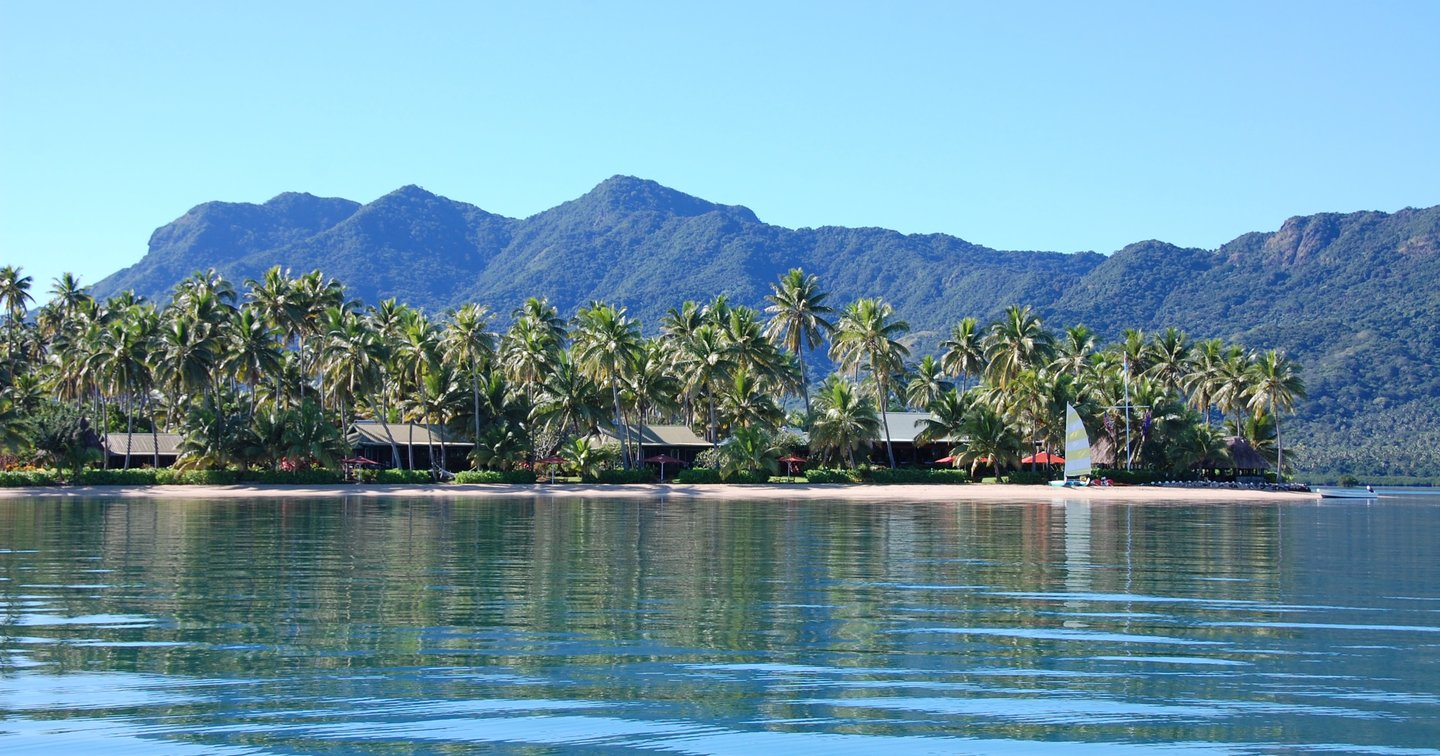

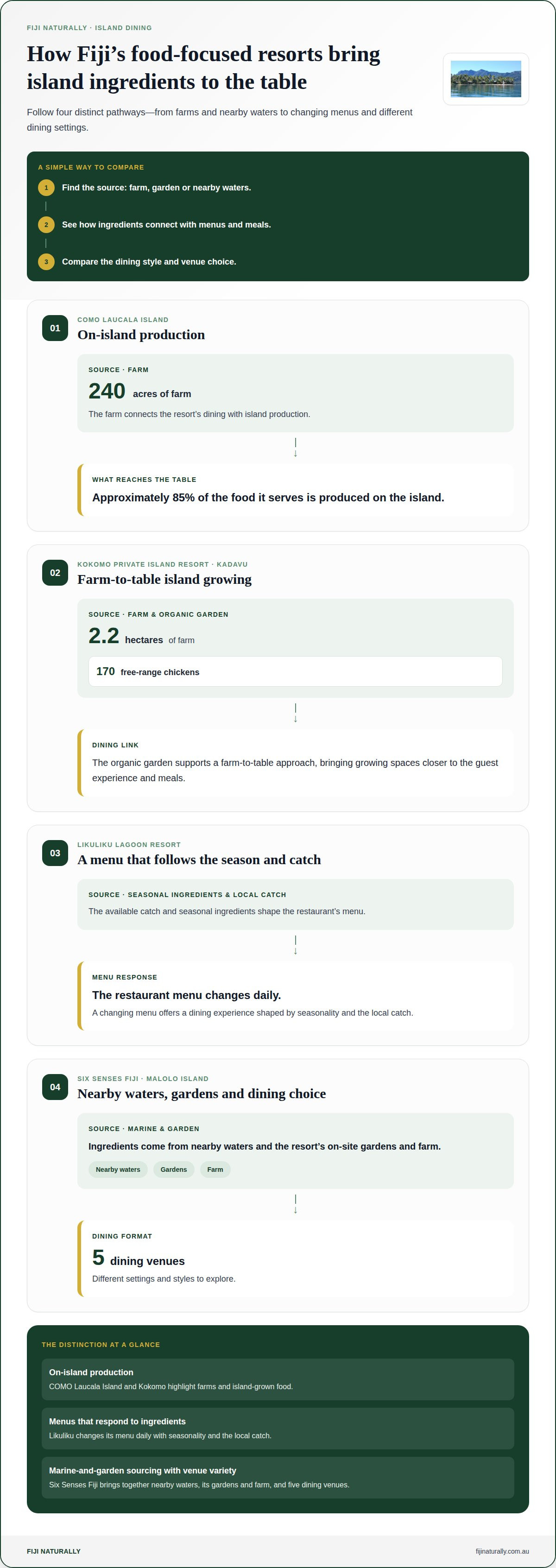
The strongest choices among the best Fiji resorts for foodies include COMO Laucala Island, Likuliku Lagoon Resort, Kokomo Private Island and Six Senses Fiji. COMO produces approximately 85 per cent of the food it serves on the island, while Likuliku changes its restaurant menu daily to reflect seasonality and the local catch. Kokomo’s 2.2-hectare farm and Six Senses’ gardens, farm and nearby waters bring island produce and seafood into the dining picture.
A beautiful setting matters, but so does what arrives at the table: fresh ingredients, menus that change with the catch, and breakfast that suits the pace of your stay. This guide compares how resorts approach dining, helping you focus on the food experience you want.
Explore changing menus, farm-to-table dining, organic produce, fresh seafood and breakfast options. From a secluded private island to a resort with several dining venues, these picks show how food can be part of the Fiji experience, not just a pause between swims.
Key Takeaways
- Compare resorts where menus shift with the seasons and local catch to find a dining experience that feels fresh throughout your stay.
- See how Kokomo’s farm-to-table approach brings island-grown produce into the picture, and what that may mean for meals on a private island.
- Explore the different ways resorts such as Six Senses Fiji connect garden produce and nearby seafood with their dining experiences.
- Use breakfast service, alongside lunch and dinner, to judge whether a resort’s dining rhythm suits the way you want to spend your days.
1. Daily-changing menus and island-fresh produce
For changing menus, Likuliku Lagoon Resort is a clear food-focused choice: its restaurant menu changes daily with the season and local catch. COMO Laucala Island produces approximately 85 per cent of the food it serves on the island. These approaches bring island produce and fresh ingredients into the dining experience, rather than relying on a fixed menu alone.
For food-focused dining, Likuliku and COMO Laucala stand out for daily menu changes and on-island production. These details point to a clear focus on food, rather than an awards ranking or a summary of guest reviews.
For fine dining or chef-led meals, Six Senses Fiji offers five dining venues, giving guests different settings and styles to explore. Likuliku’s daily menu offers another distinctive experience, shaped by seasonal ingredients and the catch.
Meal plans and all-inclusive dining packages differ in what they cover. Compare meals, drinks and venue access with your usual dining habits, especially if you want to try several restaurants rather than eat every meal in one place.
When comparing typical restaurant and meal prices in A$, consider the meal format, menu choices and included drinks. These factors affect the overall cost, so weigh them alongside any dining plan rather than judging a stay by one meal alone.
At Likuliku, the changing menu follows the local catch; COMO Laucala offers a different flavour profile through island-grown ingredients. If you’re seeking Fijian ingredients or a traditional lovo feast, look for menus that identify local produce and cooking traditions rather than assuming every resort serves the same dishes.
In the Mamanuca Islands, Six Senses Fiji on Malolo Island combines nearby waters with its gardens and farm, while Likuliku changes its menu with the catch. Denarau Island and the Yasawa Islands offer different settings, so compare named dining venues, menu variety and meal-plan inclusions. Use the same criteria when considering the Coral Coast.
Guest feedback on food quality and variety varies by meal and personal taste. Use concrete details, such as Likuliku’s daily menu changes or Six Senses Fiji’s five dining venues, to decide which dining style best suits your trip.
2. Kokomo’s organic garden and farm-to-table menus
Kokomo Private Island Resort in Kadavu connects island dining with its 2.2-hectare farm. Its organic garden supports a farm-to-table approach, bringing the growing process closer to the guest experience. The appeal is practical as well as sensory: ingredients can travel from the island’s growing spaces to the kitchen, where chefs shape them into meals.
A connection to the island can make breakfast and other meals feel more rooted in place. Farm-to-table menus can reflect what the property grows or sources, rather than treating every meal as a standalone restaurant service. The produce and flavours can give the menu a closer relationship with its setting.
Kokomo is not the only resort where an on-site farm is central to the food story. COMO Laucala Island has a 240-acre farm, offering another example of luxury dining connected with island production. The scale differs, but both properties give travellers a reason to look beyond restaurant descriptions and consider how produce reaches the plate.
Resort gardens and farms can supply fresh ingredients, while a beehive can support honey production and pollination where a property maintains one. These features shouldn’t be assumed at every resort. For a useful comparison, look for named gardens or farms, clear links to dining, and menus that describe how ingredients are used.
At Kokomo, the farm-to-table theme is a meaningful starting point for choosing a food-focused island stay. Guests who value organic produce can weigh that alongside menu variety, breakfast service and dining settings. Travellers comparing remote island experiences can use Fiji resort planning to bring their food preferences into the wider choice of stay.
3. Organic produce and fresh seafood
Fresh ingredients can shape a Fiji stay as much as the restaurant setting. Six Senses Fiji on Malolo Island sources ingredients from nearby waters and its on-site gardens and farm. This connects the island environment with the food served, including both seafood and garden produce.
Kokomo Private Island Resort in Kadavu brings another practical detail to its food story: it keeps 170 free-range chickens. Alongside its organic garden and farm, this offers a sense of how resort-grown ingredients can support meals. For guests, the value lies in seeing food production treated as part of the private island experience, rather than a detail separate from dining.
Seafood sourcing matters because a menu shaped by nearby waters can change with the catch. At Six Senses Fiji, that link is explicit: its ingredients come from nearby waters as well as the property’s gardens and farm. This gives Australian travellers a useful point of comparison when considering how a resort describes its fresh seafood and produce.
Look beyond the word “fresh” on a restaurant menu. Named ingredients, seasonal dishes and a clear connection to local waters or gardens offer more useful clues about sourcing. A menu that changes with available ingredients can bring different flavours throughout your stay, while a fixed selection may suit guests who prefer familiar choices.
For a food-focused stay, compare how each property describes seafood, garden produce and farm-raised ingredients. Six Senses Fiji highlights nearby waters and its on-site growing spaces; Kokomo pairs an organic garden with free-range chickens. These are distinct approaches to island dining: one combines marine and garden sourcing, while the other draws on a private island’s own food production.
Fijian food experiences can be especially rewarding when the menu reflects its surroundings. Rather than assuming every resort serves the same dishes, use sourcing details and menu descriptions to find a setting that suits your interest in local flavours.
4. Breakfast choices and service
Breakfast shapes the start of a tropical escape, especially at a remote Pacific island resort. Compare the format, setting and included choices to find a stay that suits your travel style. A buffet, table service and breakfast in your room create different mornings. Compare the options offered by each property rather than assuming every Fiji resort serves breakfast the same way.
Ask three practical questions: what does breakfast include, where is it served, and how does its timing fit your plans? Guests heading out early may prefer a different arrangement from those planning a slow morning by the lagoon. For a special occasion, consider whether the setting matters as much as the food. These details help you weigh convenience against a memorable island ritual.
Six Senses Fiji offers in-room dining and destination dining beneath the stars. This shows how setting can shape a resort’s dining experience, but doesn’t define its breakfast service. Compare breakfast options separately, including whether the meal suits your plans and preferred pace.
Restaurant reservations and dress codes depend on the venue and occasion. A special dinner may call for advance planning, while other meals may be more relaxed; each restaurant sets its own dress expectations. Check the relevant restaurant information as you plan, particularly for a celebration or destination dining experience.
Sustainability can also inform breakfast choices. At Kokomo Private Island, the organic garden and farm-to-table approach connect dining with island-grown produce. When comparing resorts, look for clear descriptions of ingredients and how meals fit the property’s setting. For an Australian traveller weighing breakfast service alongside the wider stay, explore Fiji resort options and match the dining rhythm to the escape you have in mind.
Fiji Naturally: Scuba Dive Resorts
Fiji Naturally can help you plan a food-focused island stay around the kind of holiday you want. If diving is part of the trip, its Scuba Dive Resorts help bring your choice of accommodation together with your dining preferences and the experiences you’re seeking.
Fiji Naturally also offers Adults Only Resorts and Family Friendly Resorts, helping couples and families narrow their options based on who’s travelling. Six Senses Fiji is another option for those drawn to its blend of island dining and resort life. Consider what matters most: fresh seafood, farm-grown ingredients, a dive-focused escape or a setting suited to your group.
For a considered shortlist that brings your priorities together, contact Fiji Naturally to discuss your Fiji resort plans.
Shape your Fiji escape around the table
The best Fiji resorts for foodies offer more than an appealing menu. Think about the experience you want each day: leisurely breakfasts, memorable dinners or meals closely tied to the island around you. Knowing your preference can help narrow the options to a stay that feels personal, unhurried and satisfying.
Before choosing, decide which parts of dining matter most to you and your travel companions. Agreeing on priorities makes it easier to weigh resort style against the food experience you want, whether that means discovering new flavours or enjoying a relaxed routine between island adventures.
For help shaping those preferences into a Fiji stay, talk with Fiji Naturally about your dining plans. Let your next escape begin with a table, a setting and a sense of place that feel just right.
Frequently Asked Questions
Which Fiji resorts are best for foodies?
COMO Laucala Island, Likuliku Lagoon Resort, Kokomo Private Island and Six Senses Fiji are strong options for food-focused stays. Each gives you a distinct reason to consider it, from farm-connected dining to menus shaped by local ingredients. If you’re comparing the best Fiji resorts for foodies, start by deciding whether changing menus, island-grown produce or varied dining settings matter most.
Which Fiji resorts cater best to vegetarians, vegans, and food allergies?
Kokomo Private Island and Six Senses Fiji are worth considering for plant-focused dining because of their gardens and farm connections. However, garden produce alone doesn’t establish a resort’s vegan menu range or allergy-handling practices. Compare these separately: look for dedicated vegetarian and vegan choices, clear ingredient information and a process for managing food allergies before choosing a resort.
How do meal plans and all-inclusive dining packages compare at Fiji resorts?
Meal-plan inclusions vary, so compare which meals, drinks and dining venues are covered with your usual dining habits. This is especially useful if you want to try several restaurants rather than eat every meal in one place.
What cuisines and signature dishes do top Fiji resorts offer?
The food details highlighted here focus on ingredient sourcing rather than named cuisines or signature dishes: Likuliku’s menu follows the season and local catch, COMO serves food produced largely on the island, and Six Senses uses ingredients from nearby waters, gardens and its farm.
Which Fiji resorts use local Fijian ingredients or offer traditional lovo feasts?
Likuliku bases its changing menu on the local catch, while COMO Laucala produces approximately 85 per cent of the food it serves on the island. Six Senses sources from nearby waters, gardens and its farm, and Kokomo connects its organic garden and farm with dining.
Which Fiji resorts have the best dining options near Nadi, Denarau, the Mamanuca Islands, and the Coral Coast?
For the Mamanuca Islands, Six Senses Fiji on Malolo Island draws on nearby waters, gardens and its farm, and has five dining venues. Likuliku is 25 kilometres from Nadi International Airport and changes its menu with the local catch; for Denarau and the Coral Coast, compare venues, menu variety and meal-plan inclusions.


