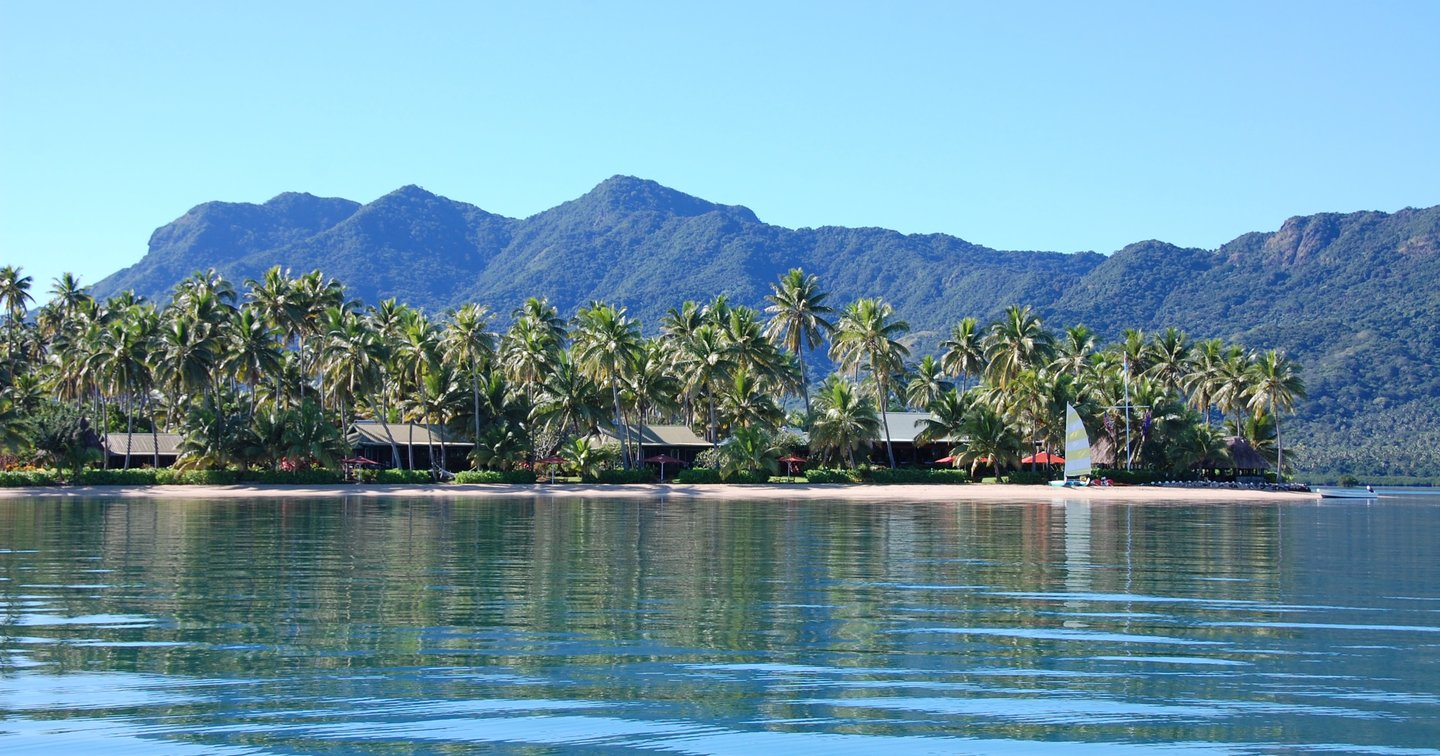

Your Fiji private island rental cost depends on the size of your group, how you reach the island, and what’s included in the stay. A 15% VAT is usually added to private-island rental bills, and Fiji island rentals usually include Service Turnover Tax in addition to VAT. The final picture comes from the details behind the seclusion.
It’s easy to picture turquoise water, quiet beaches and a place that feels entirely your own. The practical question is what the quoted stay includes and how it suits your group. Meals, drinks, boat transfers and facilities can all affect the overall cost, so comparing inclusions matters as much as comparing accommodation.
This guide explains the main factors that influence private island rental costs in Fiji, including exclusive-use stays for small groups, transfers from the mainland, and the difference between included and additional services. You’ll also find what to look for in meal and drink arrangements, facilities and taxes, so you can build a clearer picture of the trip before choosing an island experience.
Key Takeaways
- Use the Royal’s three bedrooms and capacity for six guests as a reference point when considering an exclusive-use stay for a small group.
- Compare island locations and transfer options, including ferry and private seaplane journeys from Nadi, to understand how arrival logistics shape your plans.
- Look closely at meal, drink and facility inclusions, as well as cultural experiences such as a Lovo feast or Kava ceremony.
- If diving is central to your escape, explore Fiji Naturally’s Scuba Dive Resorts alongside private-island and resort options suited to your travel style.
Exclusive-use rental for small groups
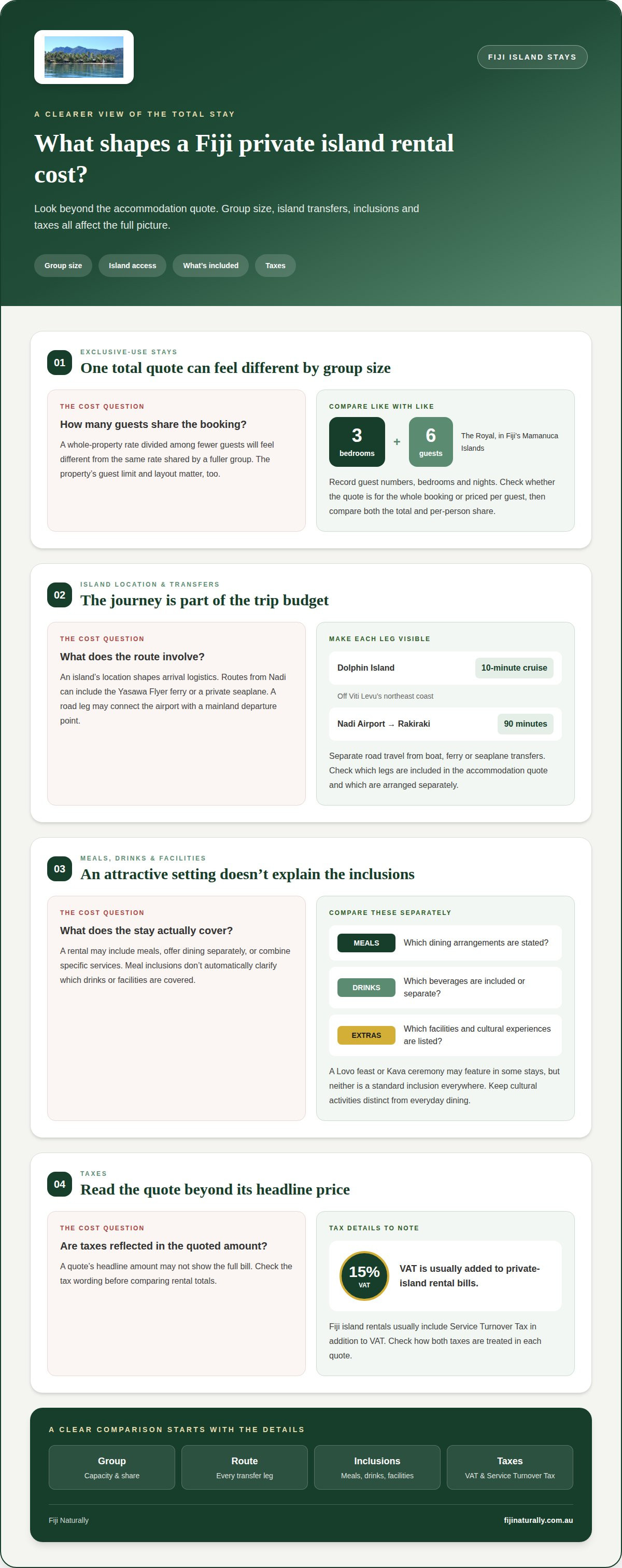
An exclusive-use rental gives your group private access to the island accommodation included in the booking. For a small party, fiji private island rental cost depends partly on how the total quote is shared among guests. A whole-property rate divided between fewer guests will feel different from the same rate shared by a fuller group. Compare both the total and the per-person share.
The Royal, in Fiji’s Mamanuca Islands, offers one example: three bedrooms and accommodation for six guests. This gives groups a reference point for considering how bedroom numbers and guest capacity work together. It isn’t a template for every private island in Fiji. Each property’s layout and stated capacity determine how comfortably your group can use the space.
Before comparing options, note the guest numbers, bedrooms and nights in each proposal. Then identify what exclusive use covers, such as accommodation and shared facilities. Check whether the quote is for the whole booking or priced per guest. These details make comparisons clearer without assuming every island uses the same pricing structure.
- Match capacity: Compare your party size with the island’s stated guest limit.
- Check the layout: Use bedroom numbers, such as the Royal’s three, to assess sleeping arrangements.
- Compare like with like: Align the booking period and included items before reviewing quotes.
For a couple travelling with family or friends, the Royal’s capacity of six offers a useful reference, not a promise of availability or a typical rate. A smaller group should weigh privacy against the cost per person, while a fuller party may share the total differently. The right fit depends on the island’s capacity, your group’s needs and what exclusive use covers.
Island location and boat transfers
An island’s location shapes the journey as well as the stay. Fiji’s private islands can be reached from Nadi by the Yasawa Flyer ferry or private seaplane transfers. The best route depends on the island’s location and the transfer arrangements included with the accommodation. Even an island that looks close to the mainland on a map may require a separate boat journey.
Dolphin Island sits off the northeast coast of Viti Levu, a 10-minute cruise from the Fijian mainland. That short passage offers a clear example of how location affects arrival logistics. Other islands sit farther away, so their access plans can involve different vessels and more coordination. The transfer mode and distance are practical factors to compare alongside the resort itself.
For a land-and-sea itinerary, the road transfer from Nadi Airport to Rakiraki takes 90 minutes. That leg matters if your route connects a mainland pick-up with a boat departure. Build the journey in stages: airport to mainland departure point, then onward transfer to the island. This makes it easier to see which legs are included in the stay and which appear separately in the travel arrangements.
- Locate the island: Note its position relative to Nadi or Viti Levu.
- Identify each leg: Separate road journeys from ferry, boat or seaplane transfers.
- Compare the arrangements: See whether the transfer is part of the accommodation quote or charged separately.
Transfer choices can affect the total trip budget, even when accommodation prices appear similar. A private seaplane and a ferry offer different travel experiences and schedules. Compare the full route, not just the final crossing. For a stay that balances island access with a particular travel style, explore Fiji island stays and consider how each location fits your arrival plans.
Meals, drinks and included facilities
Dining arrangements can shape the overall cost of a Fiji island escape. A rental may include meals, offer dining separately or combine specific services. Compare the written inclusions rather than assuming every stay follows the same format. A group with meals included, for example, will plan each day differently from one arranging meals independently. This distinction also clarifies what the quote covers.
Traditional experiences can add a memorable dimension to an intimate island stay. Some Fijian island rentals may feature a Lovo feast or Kava ceremony, but these aren’t standard inclusions everywhere. Check how each experience is described in the stay’s inclusions, and distinguish a planned cultural activity from everyday dining. This makes comparisons clearer and avoids assuming a special event comes with every booking.
- Meals: Identify which dining arrangements appear in the quoted stay.
- Drinks: Separate included beverages from anything described outside the meal plan.
- Facilities: Note which shared or private facilities the rental covers.
Consider drinks separately when comparing options. Meal inclusions don’t automatically explain which beverages are covered, so check the wording for drinks as well. The same applies to facilities: a description of the accommodation may not list every facility available during the stay. Comparing these categories separately helps show what the rental includes.
To compare two island options, make a simple list with meals, drinks, facilities and cultural experiences as separate headings. Record each stated inclusion beside the relevant heading, then note anything described separately. A Lovo feast, Kava ceremony and everyday dining arrangements serve different purposes, so keep them distinct. This approach helps you compare the full experience, not just the setting.
Private island rentals in Fiji
A luxury island escape involves more than a beautiful setting: booking terms and travel dates shape the overall plan. Compare each rental’s policies, seasonal timing and inclusions before choosing your stay.
Minimum Stay and Booking Policies
Each property sets its own minimum-stay requirements and booking policies, so there’s no single rule for every Fiji island. Read the terms for your dates, including minimum nights, deposit arrangements, final payment deadlines and cancellation conditions. These details show how flexible the booking is and when payments are due. Compare the same dates and stay lengths when reviewing options.
Timing for Lower Rental Costs
There isn’t one cheapest time that applies to every private island in Fiji. Rates depend on each property’s seasonal pricing and your travel dates. May to October is Fiji’s recommended dry-season travel period, but that describes the season, not a guaranteed low-cost window. Compare dates for your preferred island and consider how seasonal demand affects the quote before deciding.
For Australians, deposits and cancellation terms matter because flights and island transfers are also part of the trip plan. Read the booking conditions for deposit requirements, payment milestones and cancellation rules. Arrange travel insurance suited to your itinerary, and review the policy wording to understand which events and costs it covers. This helps you identify potential gaps if plans change.
Fiji private island rental cost depends on the property, travel dates, length of stay, group size and included arrangements. The quote for your trip gives the exact figure, so compare the same dates and inclusions across options.
To shape a Fiji stay around your dates and priorities, explore private island options and bring the booking details together before you decide.
Fiji Naturally: Scuba Dive Resorts
If diving is central to your island stay, Fiji Naturally can help you explore hand-picked scuba dive resorts and plan dive and snorkel activities. After weighing capacity, transfers, dining and booking terms, consider which experiences matter most to your group.
For a different travel style, Fiji Naturally also offers adults-only resorts, family-friendly resorts and Six Senses Fiji. These options let you compare a diving-focused escape with stays suited to adults, families or a particular resort experience.
Share your priorities, such as diving or travelling with family, and explore the Fiji stay that best suits your plans. Contact Fiji Naturally to discuss your trip.
Shape your Fiji escape around what matters
A clearer picture of your Fiji private island rental cost can help you choose an experience that fits how you want to travel, not just a beautiful setting. Think about what you want to bring home: quiet time together, days shaped around diving or a stay designed with family in mind. Let that priority guide your shortlist.
Fiji Naturally offers scuba dive resorts, adults-only resorts and family-friendly resorts. These hand-picked stays help you focus planning on the kind of holiday that suits your group. Bring your travel style and island ambitions together, then shape the details around them with Fiji Naturally’s personal travel planning.
If you’re ready to explore a Fiji stay that feels right for you, contact Fiji Naturally to plan your Fiji stay. A little thoughtful planning can be the beginning of a remarkable island escape.
Frequently Asked Questions
Dreaming of your own private island in Fiji?
Yes, you can plan a Fiji stay around the privacy and pace you want. Decide whether exclusive use, reef access, family time or a quieter adults-only retreat matters most. Then compare suitable island stays by group size, location and inclusions. A clear priority helps narrow the choices and keeps the experience, not just the setting, at the centre of your plans.
How much does it cost to rent a private island in Fiji per night?
There isn’t one nightly rate for every Fiji private island rental. The cost depends on the property, dates, guest numbers, exclusive-use terms and what the stay includes. Transfers, meals and facilities can also affect the overall quote. For a useful comparison, consider the total accommodation arrangement and its inclusions rather than judging a nightly figure without knowing what it covers.
What is the total cost to rent a private island in Fiji for a week?
A week’s total depends on the property’s booking terms, your dates, group size and any included services. Add the accommodation quote to travel arrangements such as island transfers, then account for meals, drinks and activities not included in the stay. Fiji island rental bills usually have 15% VAT added, and Service Turnover Tax is usually included in addition to VAT. The final total is case-specific.
Which Fiji private islands can be rented exclusively, and what are their prices?
The Royal in Fiji’s Mamanuca Islands is one specific exclusive-use example, with three bedrooms and space for six guests. Other named private island stays include Nukubati Private Island and Kokomo Private Island, but their names alone don’t tell you whether exclusive use is available. Rates depend on dates, guest numbers and booking arrangements, so compare the written terms and inclusions for each property.
What is included in a Fiji private island rental price?
Inclusions vary by property and booking, so read the accommodation details as a package rather than assuming every service is covered. Look for the exact meal plan, beverages, facilities, transfer arrangements, and cultural or water-based activities. A Lovo feast or Kava ceremony may be offered as an experience, but shouldn’t be assumed to be part of every rental. Separate included services from additional arrangements.
What extra costs apply, such as transfers, meals, taxes, and activities?
Potential additions depend on what the rental includes. Transfers, meals, drinks and activities can affect the trip total if they sit outside the accommodation arrangement. Fiji private-island rental bills usually have 15% VAT added, while Service Turnover Tax is usually included in addition to VAT. Review each item separately, including the route to the island, so the total reflects your actual travel plans.


