
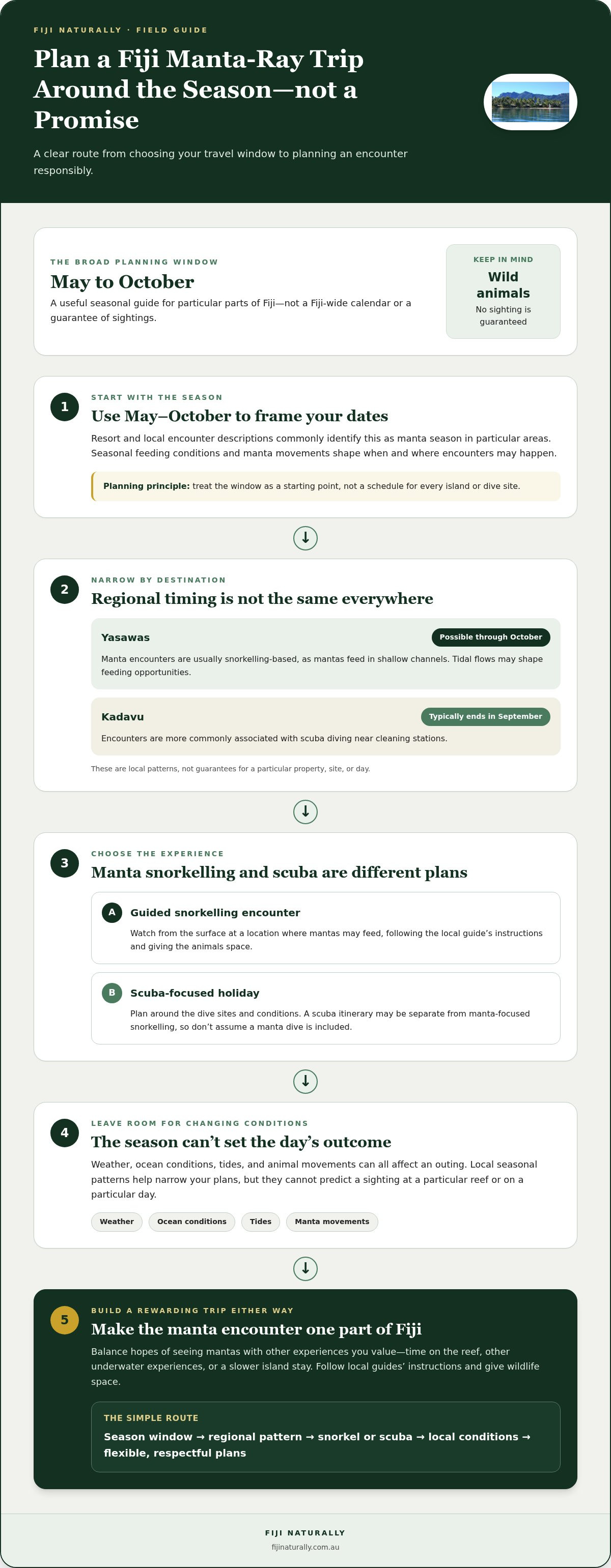
A manta-ray trip to Fiji is best planned around a season, not a promise. The fiji diving with manta rays season generally runs from May to October, with encounters in the Yasawas possible through October and Kadavu’s season typically ending in September. Even in the right window, mantas are wild animals, so a sighting can’t be guaranteed.
It’s worth distinguishing between scuba diving alongside mantas and watching them from the surface. In the Yasawas, encounters are usually snorkelling-based because mantas feed in shallow channels; around Kadavu, divers more commonly visit cleaning stations. The right choice depends on your destination, comfort in the water and the kind of experience you want.
This guide covers practical travel windows for 2026, where encounters happen and how tides and local conditions can shape a day on the water. You’ll also find guidance on respectful encounters and planning a Fiji stay around diving, reefs and island life, so the trip remains rewarding even if the mantas don’t appear.
Key Takeaways
- Use the fiji diving with manta rays season as a starting point for planning, not a guarantee of a sighting.
- Choose between a guided snorkelling encounter and a scuba-focused holiday based on the experience you want.
- Match your travel dates to your flexibility, diving priorities and comfort with wildlife uncertainty, rather than chasing a supposedly perfect month.
- Build flexibility into your plans and follow local guides’ instructions to avoid disturbing manta rays.
- Balance hopes of seeing mantas with other Fiji experiences. Specialist itinerary planning informed by visits to more than 100 locations can help bring those priorities together.
When is Fiji’s manta ray season, and what does the window mean?
Resort information commonly identifies May to October as manta season in particular parts of Fiji. For travellers researching the fiji diving with manta rays season, this is a useful guide for choosing dates, not an official Fiji-wide calendar or a promise that mantas will appear throughout the country.
The window reflects encounters reported at specific locations, where seasonal feeding conditions and manta movements may bring the animals through local waters. Timing can differ between regions: encounters in the Yasawas are possible through October, while Kadavu’s season typically ends in September. These local patterns can help narrow your plans, but they don’t establish a schedule for every island or dive site.
Why May to October is often cited
The May-to-October range comes from resort and local encounter descriptions, rather than a single Fiji-wide calendar. Feeding conditions, including the availability and movement of plankton, can affect where and when mantas are present. In Yasawa channels, tidal flows may also shape feeding opportunities. Use local seasonal patterns to guide your planning, but don’t assume the timing at one site applies elsewhere.
Learning about manta ray species and characteristics offers useful context for understanding these animals, but general information about manta biology can’t predict a sighting at a particular reef. The fiji diving with manta rays season is best treated as a broad planning window, with regional details taking precedence over assumptions about the whole archipelago.
Does the season guarantee a manta sighting?
No. Mantas are wild animals, and no seasonal date can guarantee they’ll be at a particular location on a particular day. A favourable window may make a trip more promising, but weather, ocean conditions and animal movements can all affect an outing. A seasonal pattern is a guide, not a wildlife-sighting promise.
That distinction matters when arranging a long-haul holiday from Australia. Instead of making the entire trip depend on one snorkel or dive, choose a wider Fiji experience that you’ll enjoy even if mantas stay out of view. Consider what else you’d value, such as time on the reef, other underwater experiences or a slower island stay. This keeps the trip rewarding in its own right while leaving room for the possibility of an encounter.
Use the season as one part of your planning, then leave room for nature to set the pace. A well-considered itinerary can reflect your manta hopes without turning them into an expectation. Local knowledge can help you understand how a destination’s encounter patterns relate to your travel dates, but the ocean and the animals set the final terms.
Where manta encounters happen, and how that differs from Fiji scuba diving
Fiji’s manta experiences aren’t all the same kind of ocean outing. Manta-focused resort information commonly describes guided snorkelling, while a scuba holiday is planned around its own dive sites and conditions. Treat these as related but distinct parts of a Fiji trip, not interchangeable ways to see the same encounter.
| Experience | What to expect | Useful planning question |
|---|---|---|
| Guided snorkelling encounter | Enter the water from the surface with a guide at a location where mantas may feed. | Does the itinerary describe a snorkelling encounter at a specific local site? |
| Scuba diving holiday | Explore underwater sites on a dive itinerary, which may be separate from manta-focused snorkelling. | Are you choosing the trip for the wider diving, even if mantas aren’t part of a dive? |
The Yasawa encounter locations mentioned by resorts
Barefoot Manta describes a channel between Drawaqa Island and Naviti Island as a local manta snorkelling site. Keep that detail in context: it describes a particular Yasawa-area encounter, not a Fiji-wide pattern or a promise for every nearby resort. Being close to a site doesn’t guarantee mantas will be there on the day, and one resort’s account shouldn’t be applied to other islands or operators.
Other destinations may offer different ways to explore the water. Manta encounters around Kadavu are more commonly associated with scuba diving near cleaning stations, while prominent Yasawa resort information focuses on snorkelling. These examples illustrate regional differences, but they don’t guarantee access or sightings at a particular property. For a broader look at how dive regions and resort bases can shape an itinerary, explore this luxury Fiji dive resorts guide.
Manta snorkelling versus scuba diving
Snorkelling is the activity commonly presented for manta-focused resort encounters. It lets visitors watch from the surface while following local guide instructions and giving the animals space. The Manta Trust conservation work offers further context on why respectful wildlife encounters matter. A scuba itinerary, by contrast, should be assessed for its own sites, conditions and priorities rather than assumed to include a manta encounter.
A manta-season trip doesn’t automatically mean a manta scuba dive. If seeing mantas is your main hope, distinguish a guided snorkel outing from time spent scuba diving. If your priority is diving, build the trip around the overall underwater experience and treat any manta encounter as a separate possibility. Fiji Naturally’s specialists have personally visited more than 100 locations, bringing firsthand destination knowledge to planning a Fiji stay that balances diving priorities with wildlife uncertainty. Explore Fiji scuba holiday planning to shape a trip around the experiences that matter most to you.
Which part of the manta season should you choose?
May to October is the broad window reported by resort sources, but there isn’t a dependable best month or month-by-month ranking for Fiji. Choose dates that suit your wider holiday, then treat a manta encounter as a possibility within that window, not a result tied to a particular week. The fiji diving with manta rays season can guide your planning, but it can’t remove the uncertainty of wildlife encounters.
Choosing dates within the reported season
Start with the dates you can realistically travel. If your schedule is fixed, use the reported May-to-October window as context, not as a reason to assume your specific dates will be better or worse. If you have flexibility, use it to make room for a longer stay or a broader itinerary rather than relying on an unsupported claim that one month offers better odds.
Keep the location in mind, too. The season described by a resort reflects its local experience; it doesn’t necessarily describe every island or encounter site. A date within one location’s reported window may not translate into the same conditions elsewhere. Let the destination and the kind of trip you want narrow your choices, then leave the sighting to nature.
What else should shape your travel dates?
Think beyond the manta calendar. Your ideal travel window should also fit the diving you want to do, the resort style you prefer and the time you have available. Seasonal timing for mantas is one part of a Fiji holiday, not a substitute for planning the full itinerary.
- Set your main priority. Decide whether scuba diving, a guided manta snorkel or a balanced island holiday matters most. These experiences can shape where you stay and how you divide your time.
- Consider how much flexibility you have. A fixed departure date calls for realistic expectations. More time in Fiji may give you room to enjoy a wider range of experiences, but it still can’t guarantee a sighting.
- Choose a stay that suits your travel style. Think about the resort base and overall pace you’d enjoy, rather than selecting solely around an uncertain wildlife encounter.
- Keep conditions in perspective. Seasonal timing is separate from visibility, weather and conditions at an individual dive site. These can vary, so don’t treat general seasonal guidance as a forecast for your dates.
Before settling on an itinerary, consider whether you’ll enjoy its diving and island experiences even if mantas don’t appear. Local conditions can inform the practical details of a trip, while the broader plan should still feel worthwhile without a sighting. Choose dates guided by the season, shaped by your priorities and open to what the ocean offers.
How to plan a responsible manta encounter and a rewarding dive trip
A thoughtful plan makes room for both anticipation and uncertainty. The fiji diving with manta rays season can help shape your dates, but the trip should offer more than one possible wildlife moment. Set your priorities, choose a suitable base and build a dive itinerary you’ll value whether or not mantas appear.
Prepare for a respectful wildlife encounter
Each outing has its own conditions, so listen carefully to the local guide’s briefing and follow instructions in the water. Keep a respectful distance, move calmly and avoid touching, chasing or obstructing manta rays. These choices help prevent unnecessary disturbance and allow the animals to move naturally through their environment.
Responsible encounters aren’t about getting closer at any cost. They’re about observing without taking over the animals’ space. If conditions change or guides ask participants to adjust their position or behaviour, follow their direction. A calm, attentive approach helps avoid disturbing wildlife and can make the experience more meaningful for visitors, too.
Build a flexible Fiji diving itinerary
Use this sequence to turn seasonal interest into a well-rounded holiday:
- Set your priorities. Decide how much of the trip should focus on scuba diving, a manta snorkelling encounter or time enjoying your island resort. This makes it easier to choose a destination and stay that suit your style.
- Choose dates with realistic expectations. Let the reported seasonal window inform your plans, but don’t treat any date as a sighting promise. Keep other activities in mind as you settle on travel dates.
- Plan the dives separately. Shape your scuba itinerary around the sites and underwater experiences you want to explore. A manta-focused snorkel and a scuba dive may be different outings, so don’t assume one automatically includes the other.
- Allow room for flexibility. Ocean conditions and wildlife movements can affect individual plans. Avoid building the whole holiday around one outing, and leave space to enjoy the resort, reef and island setting in other ways.
Resort style matters as much as the activity list. A private-island stay may suit travellers who value a more secluded base, while other Fiji stays may better match different preferences or trip rhythms. Explore these Fiji private island dive resorts as part of weighing the wider holiday, rather than choosing accommodation on the assumption of a manta sighting.
Fiji Naturally’s travel specialists have personally visited more than 100 locations, bringing firsthand knowledge to balancing diving interests, resort preferences and seasonal wildlife hopes. Plan your Fiji diving holiday around the experiences you’ll enjoy throughout your stay, with mantas as a memorable possibility rather than the only measure of success.
Plan your Fiji manta-season holiday with a dive specialist
A manta-focused trip works best when it reflects more than a wildlife wish. The right island, resort atmosphere and pace can shape how enjoyable the whole holiday feels, from time beneath the surface to unhurried days ashore. Specialist planning can bring those priorities together while keeping expectations grounded: seasonal patterns can guide your choices, but they can’t promise an encounter with wild mantas.
Fiji Naturally’s travel specialists have personally visited more than 100 locations. That firsthand perspective helps Australian travellers weigh resort styles and scuba interests, then bring the practical pieces of a holiday together through full-service planning, including resort bookings, flights and travel insurance.
Match the resort and itinerary to your travel style
Start with a stay you’ll enjoy even if manta rays don’t appear. Consider whether you prefer a private-island setting, a family-friendly resort, an adults-only escape or a base suited to learning to dive. Then think about how scuba diving fits into your days and what kind of island pace feels right. These details help shape an itinerary around your preferences, rather than making an uncertain manta encounter the deciding factor.
Fiji Naturally’s curated dive resorts offer different ways to make underwater exploration part of a wider stay. A specialist can help align the resort choice with your dive priorities and the rhythm of your holiday, without implying that any property guarantees manta sightings or direct access to an encounter site. Small details matter: how much time you want to spend diving, how you’d like to spend the rest of the day and whether you want to settle in one place or include more than one stop.
Turn seasonal research into a considered trip
The reported May-to-October window is a helpful starting point, not a fixed Fiji-wide calendar. Mantas are wild animals, and no travel date or resort choice can guarantee a sighting. Keep the wider itinerary at the centre: the reefs you hope to explore, the comfort and atmosphere you value, and enough island time to enjoy Fiji beyond a single outing.
That balance is especially useful for travellers coming from Australia, where a long journey deserves a rewarding holiday in its own right. A considered plan can make room for seasonal hopes while giving your scuba diving, resort stay and time on the islands their own value. If manta rays appear, the encounter can become a remarkable highlight. If they don’t, the holiday still has plenty to offer.
Plan around what you love about Fiji, then leave space for the ocean to surprise you. Explore a tailored Fiji diving holiday that brings together your underwater interests and the island stay you want, with the manta season as one thoughtful part of the journey.
Make room for the Fiji escape you want
Let the possibility of seeing manta rays inspire your plans, but give the holiday a wider purpose. Think about the underwater moments you’d value even without a manta encounter, the kind of island setting where you’d feel most at ease and how much time you want to leave unscheduled. Those choices can turn a seasonal wildlife hope into a trip that feels personal from the moment you arrive.
Your fiji diving with manta rays season research is a useful starting point, not a script the ocean has to follow. A thoughtfully paced itinerary can hold both anticipation for a remarkable encounter and genuine enjoyment of the reefs, resort and island life around it.
When you’re ready to shape those ideas into a Fiji holiday, plan your Fiji diving escape with a specialist. Make Fiji Naturally your first step towards a diving holiday that balances underwater interests with the island stay you want.
Frequently Asked Questions
Are manta rays in Fiji all year round?
Resort information commonly describes encounters from May to October at particular locations. That’s a seasonal encounter window, not proof that mantas are resident throughout Fiji year-round or absent outside it. If you travel beyond those months, treat an encounter as uncertain and plan around activities and diving that suit the destination independently.
What is the best month to see manta rays in Fiji?
No single month is established as the best. The reported information supports a broad May-to-October window, but it doesn’t provide reliable month-by-month sighting data to rank particular dates. Manta movements and ocean conditions can vary, so a date that suits one outing may not suit another. Choose travel dates around your wider plans and keep expectations flexible rather than relying on a supposedly ideal month.
Can you scuba dive with manta rays in Fiji?
Fiji offers scuba diving, but the resort information describing featured manta encounters promotes snorkelling rather than scuba. These are distinct activities, so a resort’s manta snorkel outing shouldn’t be assumed to include an underwater scuba encounter. If diving is your priority, plan around the broader dive itinerary and treat a manta sighting as a separate possibility, not an automatic feature of a dive holiday.
Are manta ray sightings guaranteed during Fiji’s season?
No. Mantas are wild animals, and sightings can’t be promised, even during a commonly reported seasonal window. They may not be at a particular site on the day you visit, and local ocean conditions can affect an outing. Keep other activities in your itinerary rather than making the whole trip dependent on one manta excursion. That way, a missed sighting won’t define your Fiji holiday.
Where in Fiji are manta rays commonly encountered?
Barefoot Manta describes a channel between Drawaqa Island and Naviti Island as a local snorkelling encounter site in the Yasawas. This is a location-specific description, not evidence that the same conditions apply across the Yasawas or every Fiji island. Use it as context for that particular area, and don’t assume a resort’s proximity to a channel means mantas will be present during your stay.
What should I do if I do not see manta rays in Fiji?
Enjoy the rest of the trip you planned. If mantas don’t appear, a reef dive, time at your resort or an unhurried day enjoying the island can still make the holiday worthwhile. Avoid treating a wildlife sighting as the only measure of success. Choose activities you’d genuinely look forward to regardless, so the itinerary has its own appeal even if the ocean keeps the mantas out of view.
Is snorkelling or scuba diving better for seeing manta rays in Fiji?
For the manta encounters described by resort sources, snorkelling is the activity directly promoted, so it’s the clearest match if your goal is to join those outings. Scuba may suit travellers whose main interest is exploring Fiji’s dive sites, but it’s a different experience and doesn’t automatically include mantas. Consider your comfort in the water, diving experience and overall holiday priorities when deciding which activity to centre your plans on.


