What if the clinical clarity you’ve been chasing actually meant missing out on Fiji’s most soulful underwater spectacles? It's a common dilemma for the discerning diver. You seek the best time to dive fiji to protect your investment, yet you're haunted by the shadow of cyclone season or the fear of a crowded resort. We understand that a true luxury retreat isn't just about the thread count of your linens. It’s about being in the water at the exact moment nature decides to perform.
The rhythm of the reef. The bloom of the coral. The silent passage of a humpback. Finding the perfect window requires an insider's touch. In this seasonal calendar for 2026, you will discover the precise windows for 30 meter visibility, vibrant soft coral blooms, and rare megafauna encounters across the archipelago’s most secluded sites. We provide a clear roadmap of Fiji’s regional micro-climates. This guide ensures you have the confidence to book a journey where environmental harmony and deep relaxation exist in perfect balance.
Key Takeaways
- Contrast the dry season's clinical clarity with the wet season's soulful warmth to determine your personal best time to dive fiji.
- Identify the precise windows for manta ray encounters in the Yasawas and Kadavu to ensure you meet Fiji's giants in total seclusion.
- Understand how the nutrient-rich currents of the Somosomo Strait dictate the health and brilliance of the world's most famous soft coral blooms.
- Map regional micro-climates to choose an archipelago that aligns with your preference for sun-drenched decks or lush, tropical landscapes.
- Discover how professional curation protects your 2026 expedition by coordinating seamless transfers and expert-timed itineraries.
The Seasonal Pulse: Understanding Fiji’s Underwater Rhythms
The ocean has a heartbeat. In Fiji, this pulse dictates the movement of the currents, the bloom of the soft corals, and the arrival of the great ocean wanderers. While many travelers seek a singular "peak" month, the best time to dive fiji is a choice between two distinct moods. It is a balance between the clinical, crystalline clarity of the winter and the nutrient-rich, life-giving warmth of the summer basin. Understanding these rhythms is the first step in protecting your luxury investment and ensuring your time below the surface matches the tranquility of your retreat.
The Dry Season: A Photographer’s Sanctuary
Between May and October, the archipelago enters its most famous phase. During the months of July, August, and September, 40 metre visibility becomes the standard rather than the exception. The water is cooler, resting at a crisp 24°C. This drop in temperature is actually a gift to the reef. Fiji’s famous soft corals, the Dendronephthya, thrive in these conditions. They expand their delicate, translucent bodies to feed, creating the kaleidoscopic "bloom" that earned Fiji its title as the soft coral capital of the world.
However, clarity comes with a sensory trade-off. The Southeast Trade Winds, known locally as the Vakamalolo, are most active now. These winds can create a playful chop on the surface. For the discerning traveler, this is where resort selection becomes critical. Choosing a sanctuary with a sheltered house reef or a high-speed, stable dive vessel ensures that the transition from the boat back to your boutique suite remains seamless and serene. The air is dry and the humidity is low, making the post-dive lounge on your private deck feel particularly refreshing.
The Wet Season: Warmth and Wild Encounters
As November approaches, the rhythm shifts. The wind dies down. The sea becomes a mirror. Fiji's tropical climate brings warmer waters that can reach a balmy 30°C. This is the season of the skin-only dive, where the barrier between you and the blue feels almost non-existent. While visibility may dip to 20 or 25 metres due to increased plankton, this nutrient soup acts as a dinner bell for Fiji's giants. This is the best time to dive fiji if you prioritize intimate encounters with manta rays and the rare, plankton-fuelled appearance of whale sharks.
Many fear the "cyclone window" of the summer months, yet modern forecasting and expert curation have changed the landscape of travel. The wet season is often a time of short, dramatic tropical bursts followed by intense, golden sunshine. The reefs are at their most quiet. There is a profound sense of seclusion during these months, offering a level of privacy that the peak winter season cannot always guarantee. You aren't just visiting a reef; you're witnessing the raw, uncrowded vitality of a thriving ecosystem.
Visibility and the Soft Coral Bloom: The Science of 'Best'
Fiji’s reputation as the Soft Coral Capital of the world isn't merely marketing; it's a matter of marine biology. While the dry season offers that clinical 40 metre visibility, the true magic of the reef depends on the movement of water. The 'bloom' is a physiological response to current-borne nutrients. When the current runs, the soft corals (Dendronephthya) inflate their translucent bodies with seawater to catch passing plankton. Without this movement, the reef can appear dormant. Understanding this intersection of seasonality and tide is what separates a standard trip from a connoisseur's expedition.
Seasonal light penetration also plays a quiet but vital role. Between June and August, the sun sits lower on the horizon. This casts a specific spectrum of light that illuminates the deep-water hues of the Great White Wall. This is the best time to dive fiji if you wish to see the lavender and icy-white corals in their most ethereal, glowing state. It is a moment of pure, unadulterated beauty that requires precise timing.
The Somosomo Strait and Rainbow Reef
The Great White Wall is a vertical masterpiece. To see it at its peak, you must look beyond the month and toward the moon. Spring tides, occurring around the full and new moon, create the strongest currents in the Somosomo Strait. This is when the wall truly breathes. During the dry season, the Southeast Trade Winds can make surface conditions lively, yet curated dive resorts in Viani Bay provide a sheltered haven. This secluded bay allows for quick, comfortable access to the Rainbow Reef even when the open water is restless. Planning your dive around the lunar cycle ensures maximum coral expansion and a truly immersive experience.
Bligh Water and the Vatu-I-Ra Passage
In the central archipelago, the Vatu-I-Ra Passage acts as a funnel for nutrient-rich currents. This area, often called the 'Heart of Fiji', offers a year-round kaleidoscope of colour. However, the summer months bring a unique advantage for wide-angle photography. The warmer water and increased plankton activity attract massive schools of anthias and fusiliers that cloud the pinnacles. Vibrant. Translucent. Alive. While visibility might be 25 metres instead of 40, the sheer density of life creates a more dramatic frame. It is a trade-off of clarity for vitality. The best time to dive fiji in these current-swept pinnacles is when you are prepared to embrace the lush, nutrient-dense energy of the summer sea.
The Megafauna Calendar: When to Meet Fiji’s Giants
Beyond the swaying gardens of soft coral lies a world of silent, muscular power. For the connoisseur, the best time to dive fiji is often defined by a single, heart-stopping encounter with a giant of the blue. Between July and October, the underwater landscape is filled with a haunting, ethereal melody. These are the months of the Humpback whale migration. To feel their song vibrating through your chest while suspended in the crystalline winter water is a soul-stirring experience. It is a moment of deep connection that defies the jargon of traditional travel.
As the waters warm in the summer months, the nutrient-rich basins bring a different visitor. Whale sharks, though rare, are most frequently sighted between November and February. They follow the plankton blooms, moving with a slow and deliberate grace. It is a seasonal gift for those who embrace the tropical moods of the summer. The rush of the current. The silver flash of a fin. The steady beat of the heart. These encounters are never guaranteed, yet the expert timing of a 2026 expedition places you in the path of possibility.
The Manta Migration
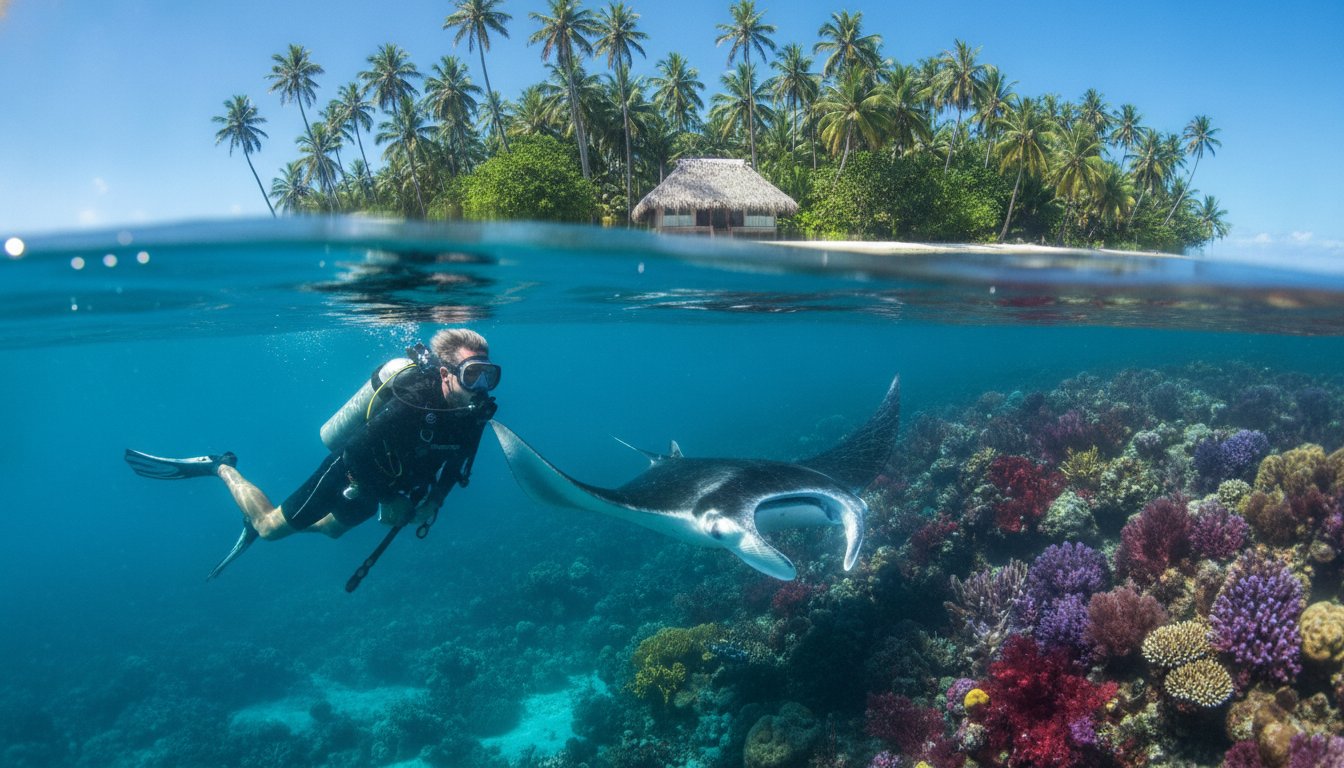
Manta rays are the undisputed ballerinas of the Great Astrolabe Reef. From May to October, they frequent the cleaning stations of Kadavu and the Yasawa Islands with remarkable consistency. Choosing a remote authentic Fijian resort, such as Oneta Resort or Kokomo Private Island, provides immediate, private access to these sacred sites. The experience is intimate. Personal. Unhurried. During the dry season, the ride out in a Zodiac is crisp and exhilarating; in the wet season, the sea is often a mirror of glass. We prioritize operators who adhere to strict interaction ethics, ensuring your presence protects the sanctuary of these graceful giants for generations to come.
Apex Predators and Resident Reef Sharks
While some encounters follow the calendar, Fiji’s shark populations offer a year-round surge of adrenaline. Beqa Lagoon remains the premier destination for those seeking the raw power of bull shark encounters. In 2026, these resident populations continue to thrive, offering a consistent thrill regardless of the month you choose to visit. For a more diverse underwater tapestry, the Namena Marine Reserve serves as a permanent sanctuary for scalloped hammerheads and grey reef sharks. This protected area proves that the best time to dive fiji for apex predators is whenever you feel the call of the wild. It is a place of ecological harmony and fierce beauty, far removed from the crowded tracks of mass-market tourism.

Regional Nuance: Choosing Your Archipelago by the Month
Fiji is not a monolith. To treat the archipelago as a single climate zone is to miss the subtle textures that define a perfect expedition. While the national averages tell one story, the leeward shadow of the main islands tells another. This regional nuance is the secret to finding the best time to dive fiji, especially when navigating the transition between the seasons. Your choice of island should be a reflection of your tolerance for the tropical mood and your desire for specific marine encounters.
The most frequent concern we hear involves the summer months. "Will it rain the whole time in February?" The answer is rarely a simple yes. Tropical showers are cinematic events. They are brief, heavy, and cooling. They clear the air and leave the islands glowing in a saturated, emerald light. In the west, these showers are even more fleeting, while the north embraces the moisture to maintain its lush, "Garden Isle" identity. Embracing this cycle is part of the soulful connection to the natural world we celebrate.
The Northern Stars: Taveuni and Qamea
Taveuni and Vanua Levu are the rain-fed jewels of the north. This moisture is essential; it creates the verdant landscapes that frame your surface intervals. For those seeking the Rainbow Reef, the windows of May through October offer the calmest crossings. During these months, the sea is often settled, allowing for precise navigation of the Somosomo Strait. For a specialist's experience, Taveuni Dive Resort provides the technical expertise and local knowledge required to time these dives perfectly. It is a base for those who value depth and authenticity over surface-level glitter.
The Sun-Drenched West: Mamanuca Islands
If your heart is set on the summer months, the Mamanuca and Yasawa archipelagos are your sanctuary. Situated in the leeward shadow of Viti Levu, these islands remain significantly drier than their northern cousins. The visibility remains consistent, protected from the runoff that can affect coastal reefs. In this region, Six Senses Fiji offers a masterclass in combining luxury wellness with easy-access reef diving. It's an ideal choice for families or fair-weather divers who prefer sun-drenched decks and gentle surface conditions. To find the perfect balance for your 2026 trip, you can explore our curated resort selections to match your preferred travel window.
Kadavu and the South
The south is remote. It is rugged. The Great Astrolabe Reef is a frontier that demands respect. Because of its exposure to the southern swells, this region is best explored during the calm of the dry season. From June to August, the water is at its clearest, and the surface is most predictable. It is a destination for the diver who seeks seclusion and a raw connection to the natural world, away from the hum of more developed regions. The pace here is slower, the reefs are untouched, and the sense of discovery is absolute.
Crafting Your Bespoke 2026 Dive Expedition
A truly bespoke dive expedition is a symphony of moving parts. It isn't found on a generic booking platform. It’s curated. It’s intentional. It’s personal. While identifying the best time to dive fiji is the foundation of your journey, the execution requires an insider’s precision. In 2026, the demand for intimate, high-end experiences continues to rise. For the most exclusive boutique resorts, we recommend securing your space at least 12 months in advance. This ensures your sanctuary is waiting for you at the precise moment the reef is ready to perform.
Coordinating the logistics of an archipelago is an art form. It involves more than just a hotel stay. It's about the seamless transition from international arrival to a remote island deck. Navigating domestic transfers, from the scenic heights of a seaplane to the reliability of Fiji Link flights, requires careful timing. Beyond the flights, protection is paramount. Utilizing a Fiji travel insurance checklist protects your investment against the unpredictable nature of tropical travel, ensuring your focus remains entirely on the blue.
The Full-Service Travel Experience
Choosing a Fiji Virtuoso travel agency offers an advantage that generic search engines cannot replicate. We offer access. This means securing exclusive reef access and personally vetted resorts that align with your specific underwater goals. From the private island luxury of Kokomo to the specialist focus of Viani Bay, every location is chosen for its integrity and soul. We craft bespoke itineraries that balance world-class diving with authentic Fijian resort experiences, ensuring your surface intervals are as meaningful as your bottom time.
Your Next Steps to Paradise
The best time to dive fiji depends on what you wish to see, feel, and experience. Are you chasing the clinical clarity of the winter or the nutrient-rich vitality of the summer? To find your perfect window, you should consult with a specialist who has personally visited over 100 Fijian locations. We help you finalise your 2026 dates based on the intersection of lunar cycles, seasonal weather patterns, and regional micro-climates. When you are ready to begin, Enquire with Fiji Naturally to start the curation of your next great underwater discovery. The reef is waiting.
Your 2026 Underwater Odyssey Awaits
The ocean doesn't keep a strict schedule, yet it follows a profound and ancient rhythm. You now understand that the best time to dive fiji is less about a single month and more about your personal connection to the sea. Whether you seek the clinical 40 metre clarity of the winter or the nutrient-rich vitality that brings the giants of the summer, the archipelago offers a sanctuary for every soul. From the current-swept pinnacles of Namena to the glowing lavender walls of the north, your perfect window is a balance of science and intuition.
Navigating these waters requires more than a map. It requires an insider's heart. As a Virtuoso-affiliated agency, we've personally vetted over 100 Fiji resorts to ensure your retreat is as pure as the reef itself. We're specialists in the delicate currents of the Rainbow Reef and the untouched beauty of the Namena Marine Reserve. Let our specialists curate your 2026 Fiji dive escape to ensure every detail is timed to perfection. The islands are calling. The reef is breathing. Your journey into the deep begins now.
Frequently Asked Questions
Is it safe to dive in Fiji during the cyclone season (November to April)?
Diving during the cyclone season is safe and often rewarding, as modern forecasting allows for precise itinerary adjustments. While November to April carries a higher chance of rain, these months often feature calm seas and uncrowded reefs. It is the time of tropical moods and warm basins. We recommend choosing a resort with sheltered house reefs to ensure your dive days are protected regardless of the weather.
What is the water temperature in Fiji for diving throughout the year?
Water temperatures fluctuate between a crisp 24°C and a balmy 30°C throughout the year. The cooler window occurs during the dry season, from May to October, which triggers the vibrant expansion of soft corals. In contrast, the summer months feel like a warm bath. This thermal shift is a fundamental part of the reef's natural rhythm, influencing everything from coral health to the arrival of migratory species.
When is the best time to see manta rays in Fiji?
Manta rays frequent the cleaning stations of the Yasawas and Kadavu most reliably from May to October. This coincides with the arrival of cooler, nutrient-rich currents that draw these graceful giants from the deep. Staying at a remote, authentic resort provides the most intimate access. These encounters are a masterclass in silent, muscular power, occurring most frequently when the winter swells begin to push against the Great Astrolabe Reef.
Can I see whale sharks in Fiji, and if so, when?
Whale shark sightings are rare but most probable during the summer months of November through February. These gentle giants are drawn to the plankton-fuelled waters of the wet season. While visibility might be slightly reduced, the density of life increases significantly. This is often considered the best time to dive fiji for those who prioritize rare megafauna encounters over the clinical clarity of the winter months.
Do I need a thick wetsuit for diving in the Fiji dry season?
A 3mm or 5mm wetsuit is the standard choice for the Fiji dry season when water temperatures dip to 24°C. While the air remains warm, multiple dives a day can lead to a chill. In the summer months, many of our guests transition to a simple 1mm skin or even dive in swimwear. This choice depends on your personal thermal comfort and the depth of your planned 2026 expedition.
What is the best month for underwater photography in Fiji?
July, August, and September are the premier months for underwater photography due to the legendary 40 metre visibility. The low humidity and dry air create the perfect conditions for capturing the ethereal glow of the Great White Wall. This period is the best time to dive fiji for wide-angle enthusiasts. However, if your focus is macro life and vibrant reef activity, the nutrient-rich summer months offer a more crowded, life-dense frame.
Are the dive sites in Fiji suitable for beginners year-round?
Fiji offers world-class diving for beginners year-round, with many resorts featuring sheltered lagoons and gentle coral gardens. Sites like the Mamanucas are particularly well-suited for those learning to dive. While the more advanced passages and current-swept pinnacles of the north require experience, every archipelago has a range of depths. Our curated specialists ensure your itinerary matches your certification level while still offering a sense of discovery.
How far in advance should I book a luxury dive resort in Fiji?
We recommend booking your luxury dive resort at least 12 months in advance for 2026 travel. Boutique sanctuaries like Kokomo and Nukubati have limited capacity and fill quickly during the peak visibility months of July and August. Coordinating seaplanes and domestic transfers also requires early planning. Securing your dates early ensures your investment is protected and your preferred sanctuary is available for your chosen seasonal window.


