

What if the resort rate is the easiest part of budgeting for Fiji? The hidden costs of a fiji vacation often sit between the airport and the island retreat: transfers, meal arrangements, activities and other expenses that can be easy to miss when comparing headline rates.
It’s natural to focus on where you’ll stay, especially when a clear nightly price makes one resort seem like the obvious choice. But the full trip cost depends on what that rate includes and how you’ll get around. A lower room rate may not offer better value if key meals, transfers or experiences are priced separately.
This guide explains common costs to factor into a Fiji holiday, from island connections and dining to activities, travel insurance and possible payment surcharges. You’ll learn how to compare resort offers on a like-for-like basis and build a budget with fewer surprises. Drawing on founder Rachel Cleary’s firsthand experience of Fiji’s resorts, we’ll also look at how thoughtful itinerary planning can bring the moving parts together, leaving more room to enjoy the reef, the warmth and the welcome.
Key Takeaways
- Look beyond the room rate: transfers, meals and activities can shape the full cost of an island stay.
- Review airfare conditions and inclusions as part of your trip budget, rather than treating flights as an afterthought.
- Use a simple comparison table to mark stays, meals, transfers, activities, flights and insurance as included, separately arranged or not part of your plans.
- To account for the hidden costs of a fiji vacation, separate essential arrangements from optional experiences before deciding where to spend.
- Thoughtful itinerary planning can bring resort recommendations and other trip components into one view, making it easier to plan with fewer surprises.
Why the headline price may not show the full cost of a Fiji vacation
A room rate can make a Fiji escape look beautifully straightforward: choose a resort, select your dates and picture the lagoon just beyond your verandah. But accommodation is only one part of the journey. Your complete plan may also involve getting to the resort, arranging meals, choosing activities and coordinating flights with other travel details. These components can be presented separately, making the total less obvious at first glance.
A hidden cost is a trip expense that’s easy to overlook or difficult to compare consistently between offers. It isn’t necessarily an unexpected fee. It may be an arrangement priced separately, described differently or simply not relevant to one traveller’s plans. The Economy of Fiji overview highlights tourism as an important part of the country’s economy, but that broader context doesn’t mean every resort stay is priced in the same way. Resort style, inclusions, transfer arrangements and chosen experiences all shape the spending picture.
A resort rate prices the stay; your Fiji vacation budget needs to account for the whole journey. Keep that distinction in mind when comparing offers, rather than judging value by the headline figure alone.
What a resort rate tells you, and what it may leave open
An accommodation rate gives you a starting point: the cost of the stay as it’s presented. By itself, it may not tell you how meals, transfers or planned experiences fit into your holiday. Those details vary by offer, so don’t assume they’re always included or always extra. Read each arrangement on its own terms and note what’s covered, what’s separate and what you’ll organise independently.
For example, a resort stay may suit your plans even if you arrange some experiences separately. Another offer may bring more of the holiday together. The useful comparison isn’t simply “What’s the room rate?” It’s “What will I need for the trip I actually want?”
Why trip style changes the spending picture
Different holidays call for different arrangements. An adults-only escape may centre on a quiet stay and time to unwind; a family-friendly trip may involve planning around everyone’s needs and preferred activities. A value stay may prioritise meaningful experiences, while a dive-focused holiday needs careful thought about dive arrangements and suitable travel insurance. The right comparison depends on who’s travelling and what you hope to do.
Remote accommodation adds another planning consideration: how you’ll reach the resort and coordinate the onward journey. Here, logistics aren’t a footnote to the stay. They’re part of how the holiday works. Value isn’t simply the lowest rate. It’s the fit between the inclusions, the experiences you care about and the arrangements needed to enjoy them. Start by getting the full trip into view, then decide where to spend and where to keep plans simple.
Which hidden costs can shape a Fiji resort holiday?
The journey to a resort can involve more than the flight and the room. Airfare conditions, island transfers, meal arrangements and planned experiences each form part of the itinerary. Their importance depends on where you’re staying and how you want to spend your time. This is especially true for remote accommodation, where the onward journey needs to be considered alongside arrival and departure flights.
Review airfare details as a separate planning category. Note what the fare includes and any conditions that matter to your plans, such as how changes are handled. This doesn’t mean a particular charge will apply. It helps you compare flight options on their terms and see how they fit with your resort dates and transfer arrangements.
Transfers, meals, and drinks beyond the room
Map the route from your arrival point to your accommodation, including each planned transfer and its timing. If an onward boat or other connection is part of the journey, consider how its schedule aligns with your flight and resort check-in. For a remote stay, that coordination is central to the itinerary, not a detail to leave until later.
Read meal descriptions just as closely. Note which meals, snacks or drinks are included and what you expect to organise separately. Then compare those details with your daily plans: a full day out may shape your dining needs differently from a slower day at the resort. The aim is to understand the arrangement you’re choosing, rather than assume one meal plan suits every traveller.
Activities, travel protection, and everyday spending
Give diving, snorkelling and cultural experiences their own place in your plan. An activity may be included in an offer, arranged separately or not part of your holiday priorities. For dive-focused travel, also consider travel insurance as a distinct budget item and read the policy terms to understand what protection it provides. Don’t assume every policy covers every activity or situation.
Everyday spending can be easy to overlook amid the larger bookings. Think about how you’ll manage currency and access to funds, and whether carrying some Fijian dollars suits your plans. Keep your working budget in Australian dollars (A$), while recording any costs quoted in Fijian dollars separately. Don’t assume a particular payment method will be accepted everywhere; plan around the arrangements relevant to your itinerary.
Before booking, compare airfare conditions, transfers, meals and drinks, activities, travel insurance, and everyday spending. This checklist turns a scattered set of decisions into one view of the trip. Fiji Naturally’s personal itinerary planning brings hand-picked resort recommendations and practical trip components together, drawing on firsthand destination experience. Explore Fiji itinerary planning as you shape your arrangements.
How to compare Fiji resort offers beyond the nightly rate
A useful comparison starts with the holiday you want, not a race to find the smallest room rate. Choose options with a similar travel style and experience priorities, then map the practical arrangements alongside the stay. This gives you a clearer view of what each offer covers and which parts of the itinerary you’ll organise separately.
Use this simple table as a working guide. For each option, record one status: included, separately arranged or not part of my plans. Add notes about any conditions or details that affect your itinerary.
| Trip component | Offer A | Offer B |
|---|---|---|
| Stay | Included / separately arranged / not planned | Included / separately arranged / not planned |
| Meals | Included / separately arranged / not planned | Included / separately arranged / not planned |
| Transfers | Included / separately arranged / not planned | Included / separately arranged / not planned |
| Activities | Included / separately arranged / not planned | Included / separately arranged / not planned |
| Flights | Included / separately arranged / not planned | Included / separately arranged / not planned |
| Insurance | Included / separately arranged / not planned | Included / separately arranged / not planned |
Compare like with like, not just room rates
Keep the comparison fair by matching the kind of holiday and the experiences that matter to you. For a family, relevant inclusions may relate to the needs of travelling together; an adults-only escape may prioritise a different pace and setting. A dive-focused itinerary calls for attention to dive arrangements, while a remote stay makes transfers a central part of the picture. Don’t count an experience as included simply because it’s available at the resort. Separate what the resort offer covers from transport or activities you’ll arrange independently.
Read package and booking details with care
Descriptions can use different wording, so read the stated inclusions, exclusions, conditions and arrangements rather than relying on a package label. Record airfare conditions separately from resort details, including how the flight fits your dates and onward connections. Treat travel insurance as its own planning item, too. It’s separate from resort arrangements, and the policy terms determine what protection it provides. Review the policy wording for relevant activities, exclusions and conditions before you decide whether the cover fits your trip.
An itinerary with more inclusions may make planning feel more seamless by bringing more components into one arrangement. That convenience doesn’t automatically mean it costs less or suits every traveller. The hidden costs of a fiji vacation become easier to assess when you compare what you’ll actually use, what you’ll need to organise and what you can leave out. Next, turn those notes into a budget that reflects your priorities.
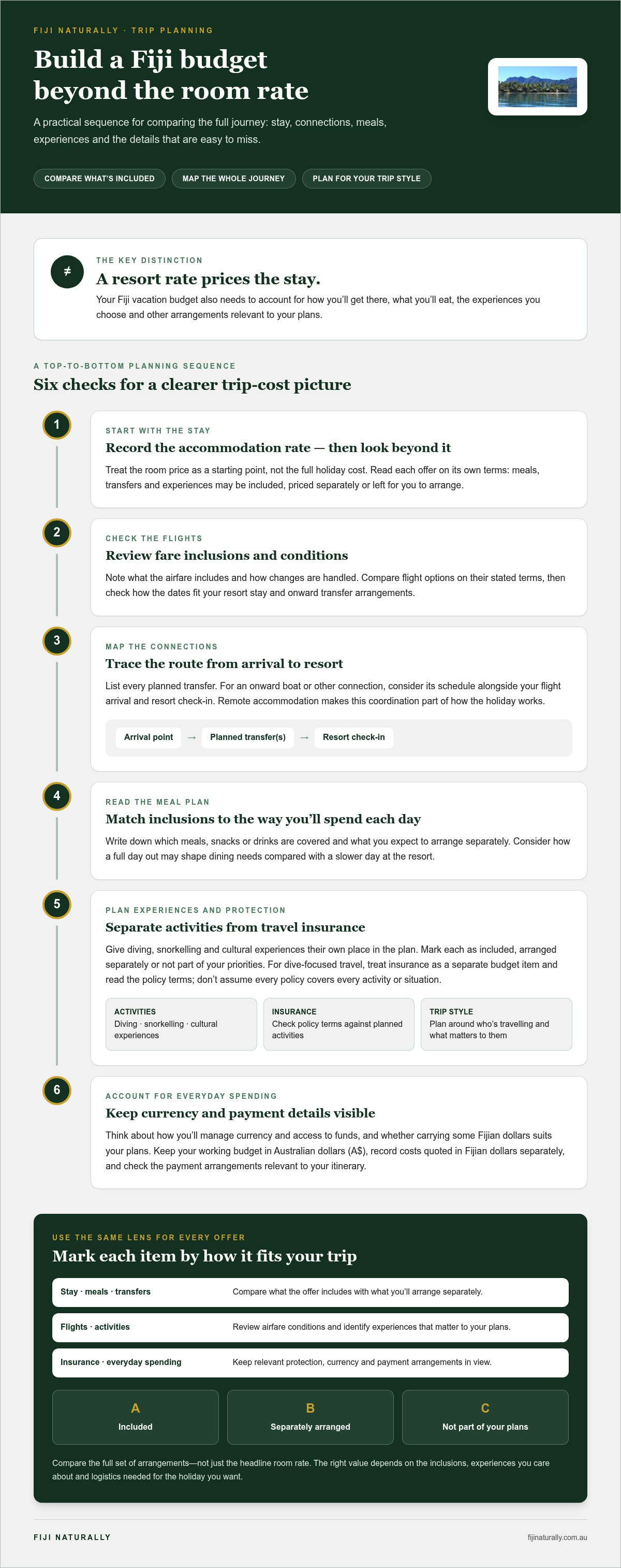
How to build a realistic Fiji vacation budget before you book
A useful budget is more than a list of prices. It’s a picture of the holiday you want, the arrangements that make it possible and the choices you can leave flexible. This step-by-step process helps turn a resort idea into a plan you can review before booking, without assuming every traveller needs the same experiences or inclusions.
Create a trip-cost checklist around your priorities
Start with your intended travel dates and preferred stay style. These give your planning a shape without assuming that one season or resort type will suit everyone. Then build your budget in order, so the essentials are clear before you decide how much room to leave for optional experiences.
- Define your priorities. Decide who’s travelling, what kind of stay you’re looking for and which experiences matter most. A remote retreat, a family holiday and a dive-focused trip may need different arrangements.
- List the trip components. Create separate lines for flights, accommodation, transfers, meals, activities and travel insurance. Add other itinerary needs that matter to your plans rather than hiding them inside a general “extras” category.
- Mark each item’s status. For every line, write “included,” “separately planned” or “not relevant.” If something is included, note any conditions or limits described in the booking details. For separately planned items, leave space to record the arrangement and its cost in Australian dollars (A$).
- Review the gaps. Look for blank lines and unanswered questions in your plan. Consider whether the resort’s location affects your transfer sequence, whether meals fit your days and whether your planned activities are reflected in the budget.
Keep your main budget in A$ so your planned spending is easy to view. If part of your trip is quoted in Fijian dollars, record the original amount and the exchange rate used to convert it, along with the date of conversion. That way, you can see the basis of your estimate and revisit it as needed, rather than comparing amounts in different currencies as if they were the same.
Leave room for experiences and changing plans
Before weighing up arrangements, choose which reef, cultural or relaxation experiences you most want to make time for. Mark these as priorities, then separate them from activities that would be enjoyable but aren’t essential to the trip. This makes trade-offs more intentional: you can see what to protect in the plan and what could remain flexible.
Include a contingency line for personal spending or changes to plans, but set it according to your own circumstances rather than relying on a generic amount. A clear allowance gives you room to make choices during the holiday without confusing discretionary spending with the arrangements already needed to reach and enjoy your stay.
For a more personal starting point, explore personally experienced Fiji stays and itinerary ideas. Fiji Naturally’s hand-picked resort recommendations and itinerary planning can bring accommodation and trip components into one view as you shape a holiday around what matters to you.
Plan a Fiji vacation with fewer cost surprises through thoughtful curation
A well-considered Fiji itinerary connects your stay to the journey around it. Resort recommendations, flights, transfers and experiences can be viewed as parts of one plan, helping you spot where arrangements fit together and where more planning is needed. That perspective won’t remove every change or uncertainty, but it can make decisions clearer before you book.
What specialist planning can bring together
Personal itinerary planning can bring hand-picked resort recommendations together with flight bookings, dive and snorkel coordination, cultural activity arrangements and other trip components. The aim is to shape those choices around your priorities, whether you’re drawn to quiet time, time on the water or a deeper connection with Fijian culture. Rachel Cleary has visited Fiji for over 40 years and explored over 100 resorts. That firsthand perspective informs hand-picked recommendations, while the best fit still depends on what you want from your holiday.
This joined-up view can be especially useful when your preferred stay is remote or your holiday has several moving parts. Rather than considering accommodation in isolation, you can see how it relates to the onward journey and the experiences you hope to enjoy. The hidden costs of a fiji vacation are easier to identify when each component has a place in the itinerary, even if you ultimately choose to arrange some elements separately.
A more considered next step for your Fiji trip
Thoughtful curation is about fit, not simply choosing the most elaborate arrangement. Hand-picked boutique resorts, private islands and eco-retreats offer different ways to experience Fiji. Authentic cultural experiences may also shape what matters most to you. Compare each possibility with your priorities and budget, and keep the full journey in view as you decide.
Planning support can also be valuable when dates or other arrangements feel tight. In a client testimonial, Kelly Bethel praises Rachel’s professionalism and management of tight timelines. That’s her experience, not a promise that every itinerary can be arranged on any timeline. It offers a personal example of the care involved in coordinating trip details.
With resort recommendations and itinerary planning shaped around your interests, you can move from a list of possible expenses to a considered Fiji escape. If you’re ready to bring your ideas together, plan a personally curated Fiji escape with Fiji Naturally.
Shape your Fiji escape around what matters most
A thoughtful budget isn’t a restraint on a Fiji holiday. It’s a way to make room for the moments you’ll remember: a quiet morning by the water, time spent exploring the reef or an experience that brings you closer to local culture. With the hidden costs of a fiji vacation in view, you can make choices with intention and feel more settled as your plans take shape.
Let your priorities guide the itinerary, rather than trying to fit every possibility into one trip. A clear sense of what matters most can help you choose a stay and experiences that feel personal, while keeping the practical arrangements connected to the bigger picture. Fiji Naturally offers hand-picked resort recommendations and personal itinerary planning to help bring those ideas together.
Ready to turn your ideas into a journey that feels distinctly yours? Plan a personally curated Fiji escape and take the next step towards island days shaped around what you love.
Frequently Asked Questions
What are the hidden costs of a Fiji vacation?
The hidden costs of a Fiji vacation are trip expenses that may be easy to miss when you first look at a room or package rate. To spot them, follow your booking from departure to return and note where each arrangement begins and ends. Separate the resort booking from the journey to it, then track any experiences or personal spending you’ll handle independently.
How much spending money should I budget for Fiji?
There’s no single spending-money amount that suits every Fiji traveller. Your plans might cover most meals and activities in advance, or leave more choices to make during the holiday. Separate prepaid arrangements from flexible day-to-day spending, then consider how often you expect to pay for meals, drinks or experiences independently. Keep your estimate in Australian dollars, and record the exchange-rate basis if you convert Fijian-dollar amounts.
Are meals included in Fiji resort stays?
Some resort arrangements include meals, while others may describe food and drinks differently, so check the terms for your specific booking. Look for which meals are covered and whether the arrangement applies throughout the stay. Also consider arrival and departure days, when your travel schedule may affect where you eat. This helps you avoid planning around a meal that isn’t part of the arrangement you selected.
Do Fiji resort holidays include airport and island transfers?
Transfer arrangements vary by itinerary, so an accommodation booking alone doesn’t tell you how the full journey is organised. Trace your route from arrival to your stay and note who or what connects each leg. For an island resort, consider how onward travel fits with flight arrival and departure times. A clear sequence helps reveal whether your plans allow enough time between connections without assuming every resort uses the same transfer setup.
Should I buy travel insurance for a Fiji vacation?
Travel insurance is worth considering as a separate part of planning, particularly if your itinerary includes activities such as diving or snorkelling. Read the policy wording for the activities and situations relevant to your trip, including any exclusions or conditions, rather than assuming cover is identical across policies. Fiji Naturally offers travel insurance alongside its travel planning and bookings. Choose cover based on your own circumstances and the policy terms.
Is Fiji an expensive destination for a holiday?
Whether Fiji feels expensive depends on the kind of holiday you’re planning and what you value in a stay. A remote island escape, a resort with more arrangements brought together and a trip centred on independent activities can have very different spending patterns. Instead of judging by the room rate alone, think about the overall experience you want and how its arrangements fit your budget and priorities.
What currency should I plan for when visiting Fiji?
Fiji’s currency is the Fijian dollar. For an Australian travel budget, keep your main plan in A$ and note Fijian-dollar amounts separately where needed, recording the conversion basis so your estimates stay clear. Before departure, consider how you’ll access spending money and review the payment arrangements relevant to your stay. Don’t assume the same payment methods or conditions will apply throughout every part of your itinerary.


