
What if the most expensive way to reach your island is actually the most efficient investment in your holiday? While the initial fiji seaplane transfers cost can feel like a premium addition, it often pays for itself in the currency of time, comfort, and breathtaking perspective. You've likely spent months dreaming of the Mamanucas or the Yasawa chain. Azure waters. Whispering palms. Total seclusion. Yet, the reality of managing luggage limits or waiting for ferry schedules can quickly cloud that vision. It's the difference between a five hour transit and a thirty minute flight over the world's most vibrant reefs.
We understand the hesitation. Between shifting weight restrictions for your diving gear and the uncertainty of tropical weather, booking a transfer feels complex. This guide clarifies those logistics while justifying the spend for reaching sanctuaries like Kokomo or Royal Davui. You'll learn how to evaluate the 2026 landscape of operators, manage your baggage without stress, and why a specialist's touch ensures your arrival is as seamless as the Pacific horizon. We'll help you move past the confusion and into the air, where the true holiday begins.
Key Takeaways
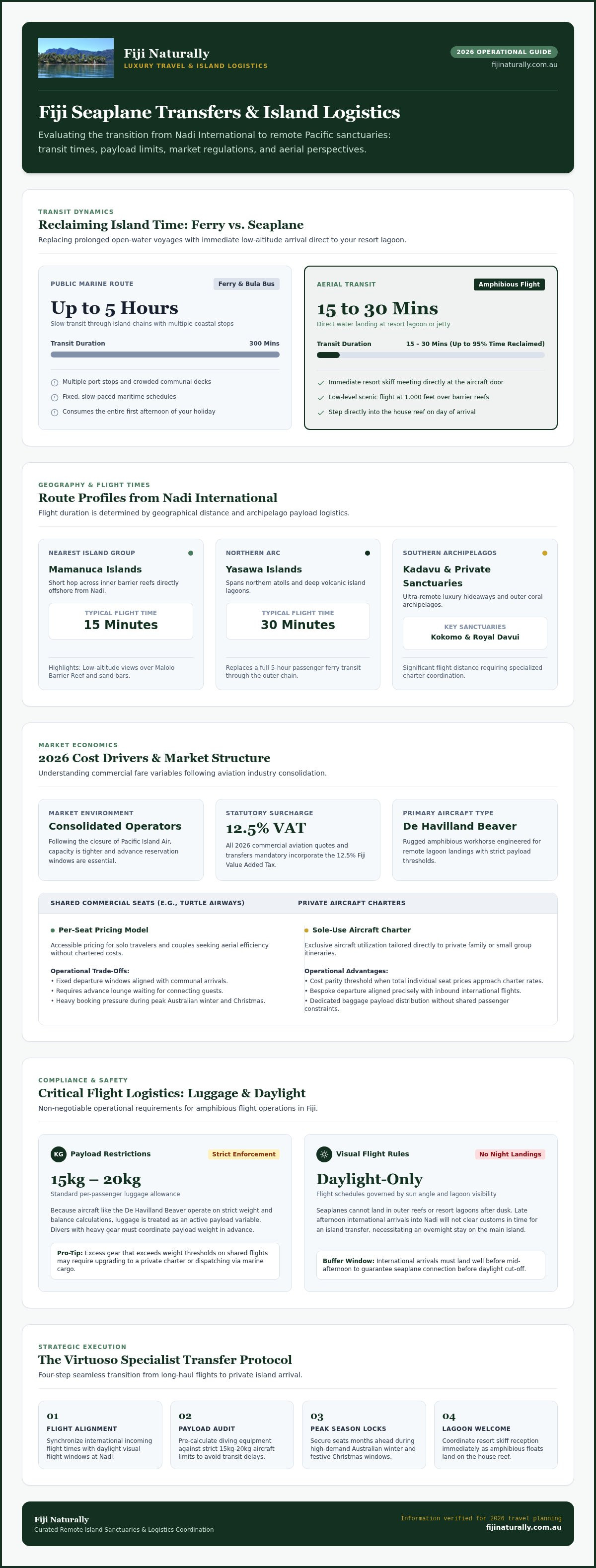
- Realise the value of time saved by swapping a five-hour boat journey for a breathtaking 15-minute aerial arrival at your resort.
- Master the 2026 fiji seaplane transfers cost by understanding the price gap between shared commercial seats and private resort charters.
- Learn the essential logistics of the 15kg to 20kg luggage limits and daylight-only flight rules to avoid unexpected overnight stays in Nadi.
- Discover how a Virtuoso specialist coordinates your entire journey, from international flights to the final seaplane landing on a remote beach.
The Aerial Gateway: Why Seaplanes are the Essential Entry to Fiji’s Remote Sanctuaries
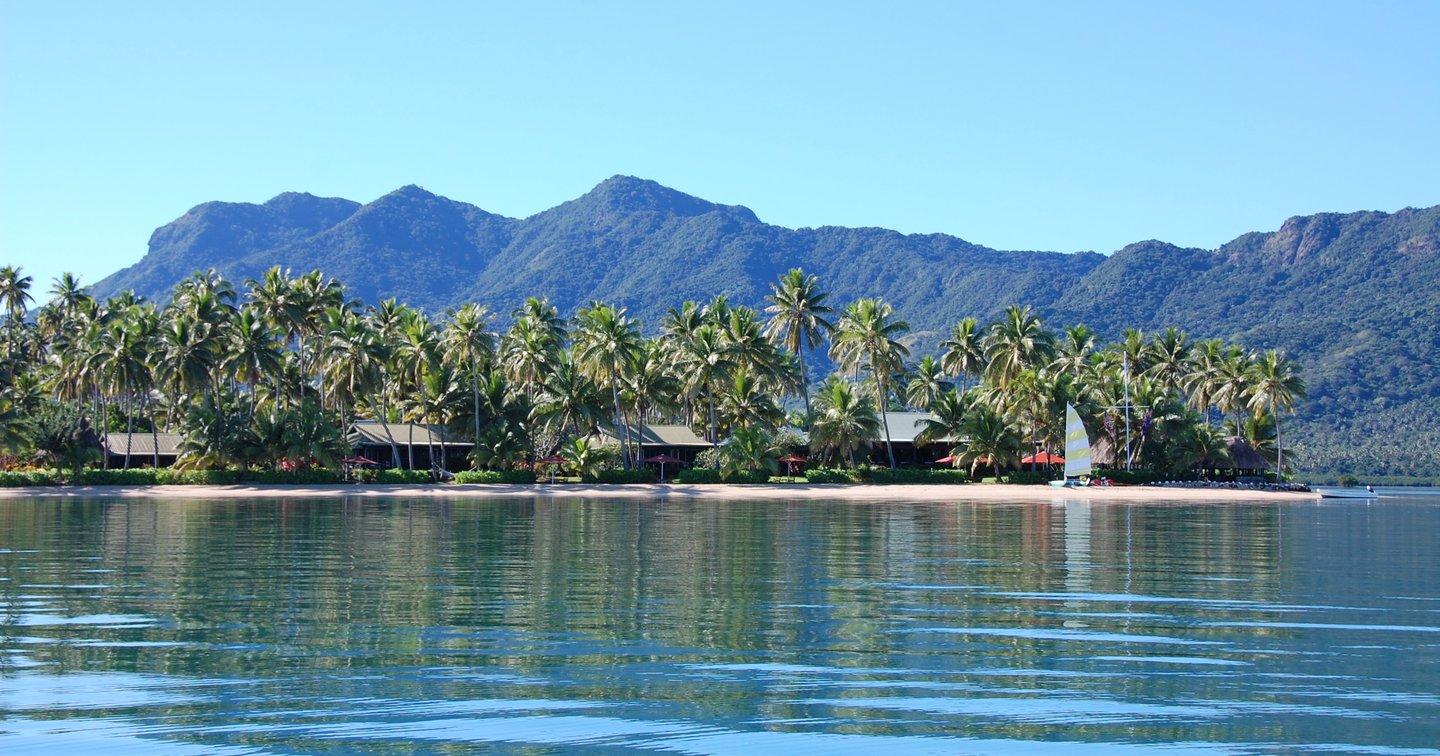
The journey begins before your feet touch the sand. While many see the hop from Nadi International as a logistical hurdle, the seasoned traveler views it as the first chapter of the retreat. A seaplane isn't just a vehicle; it's a vantage point. From 1,000 feet, the Malolo Barrier Reef reveals its secrets. Deep indigo trenches. Electric turquoise lagoons. White sand ribbons. This aerial perspective transforms a transfer into a private reef tour, a value often overlooked when calculating the fiji seaplane transfers cost.
Time is the ultimate luxury in the South Pacific. Opting for the air reduces a five-hour boat journey through the Yasawa chain to a mere 30 minutes of weightless discovery. It's about reclaiming your afternoon. Instead of watching the coast slowly recede from a crowded ferry deck, you're already submerged in the house reef or sipping a welcome cocktail at a boutique sanctuary recommended by Fiji Naturally. The intimacy of landing directly in a secluded lagoon, where the resort skiff meets you at the plane door, ensures the bustle of the airport is forgotten before the engines even cool.
The Sensory Experience of an Island Arrival
The transition is visceral. One moment, you're navigating the humid pulse of the airport; the next, you're suspended in a silent, sun-drenched world. The pilot banks, and suddenly, the resort jetty appears like a tiny needle in a vast blue quilt. The descent is a slow dance with the wind. The engines hum softens as the amphibious seaplane aircraft meets the water with a gentle hiss, carving through the glass-like surface. Light. Water. Silence. It's an arrival that feels earned, intimate, and entirely personal.
Seaplanes vs. The "Bula Bus" and Ferry Mentality
Consider the alternative. The "Bula Bus" and the large-scale ferries offer a communal, often predictable start to a holiday. They're reliable, but they demand your time and patience. A long journey on the public ferries involves multiple stops and the slow grind of coastal transit. For those seeking the seclusion of high-end private islands or the raw beauty of remote outer atolls, every saved hour is an hour spent in the water. The psychological shift into "island time" happens the moment the floats leave the tarmac. You aren't just moving; you're ascending into a different state of mind.
Fiji Seaplane Transfers Cost: Factors Influencing Your 2026 Budget
Understanding the fiji seaplane transfers cost requires looking beyond a single ticket price. It's a calculation of distance, privacy, and the precise weight of your discovery. In 2026, the pricing landscape reflects a consolidated market following the closure of Pacific Island Air, with all commercial quotes now incorporating the 12.5% Fiji VAT rate. Whether you're heading to a nearby reef or a distant sanctuary, your budget is primarily dictated by how far you fly and how much of the aircraft you claim as your own.
Distance is the most consistent variable. A flight to the Mamanuca Islands is a short, 15 minute hop, while reaching the northern Yasawa Islands or the remote Kadavu archipelago involves significantly more fuel and flight time. Beyond distance, the strict payload limits of aircraft like the De Havilland Beaver mean your luggage is more than just a suitcase; it's a weight variable that can influence whether you fit on a shared flight or require a private charter. Standard allowances typically hover between 15kg and 20kg, a crucial detail for those visiting remote authentic Fijian resorts with heavy dive gear.
Shared Transfer Pricing Models
For many travelers, a shared seat is the most logical path. Operators like Turtle Airways offer per-seat pricing that makes luxury accessible, though it requires alignment with fixed departure windows. In 2026, booking these seats months in advance is essential, particularly during the peak Australian winter months or the Christmas period. The trade-off for the lower cost is a lack of bespoke timing; you may find yourself waiting in a lounge for other passengers to arrive before your island journey begins. If you're looking for a seamless transition, our specialists can help coordinate these windows to minimize your time on the ground.
The Premium of Private Charters
A private charter transforms the transfer into a purely personal experience. It's the preferred choice for families or small groups where the total fiji seaplane transfers cost for individual seats begins to approach the price of an exclusive flight. This option offers "on-demand" departures, meaning the pilot waits for you, not the other way around. Dedicated luxury properties often facilitate this through their own aviation assets, as seen in Forbes Travel Guide's profile of Kokomo Private Island, which highlights the seamless nature of resort-owned transfers. A private seaplane charter for standard Mamanuca routes in 2026 typically starts from approximately A$3,100 per flight depending on the specific resort distance and payload requirements. This exclusivity ensures your holiday starts the moment you clear customs, without a minute wasted.
Logistics and Practicalities: Navigating the Fine Print
The transition from a long-haul international flight to a small-craft seaplane requires more than just a ticket; it requires a respect for the physics of island travel. When you evaluate the fiji seaplane transfers cost, you aren't just paying for the view. You're paying for a highly specialised operation that moves within the strict boundaries of South Pacific geography and safety. By leveraging our connections within the Virtuoso luxury travel network, we coordinate these moving parts so you don't have to worry about the gears grinding behind the scenes.
Timing is the most critical element of your arrival. Because seaplanes operate under Visual Flight Rules, they only fly during daylight hours, typically between 7:00 AM and 5:00 PM. If your flight into Nadi lands after 3:00 PM, the window to clear customs and reach the seaplane base at Wailoaloa Beach narrows significantly. We always recommend a two-hour buffer. It's the difference between a sunset cocktail on your private deck and an unexpected night in a transit hotel.
Mastering the Luggage Constraint
Payload is everything in a De Havilland Beaver. A fully loaded aircraft has a rigid maximum combined passenger and luggage weight limit of 460kg. This is why the standard individual baggage allowance is strictly capped between 15kg and 20kg. For guests heading to a luxury fiji dive resort with heavy underwater kits, this requires a curated approach to packing. We suggest a few insider strategies to manage these limits:
- Utilise Nadi Storage: Most luxury operators provide secure valet storage at the airport for heavy suitcases or city attire you won't need on the island.
- Pre-purchase Weight: If you're carrying professional camera gear, pre-purchasing an extra weight allowance is essential to avoid jetty-side stress.
- Dress for Flight: Wear your heaviest travel layers and shoes on the plane to keep your bag weight within the limit.
Weather and Scheduling Realities
Nature remains the ultimate arbiter of flight. Tropical squalls can appear and vanish in minutes, sometimes forcing a temporary hold on departures. Safety protocols for sea-state and visibility are non-negotiable. If weather prevents a water landing, we immediately pivot to "Plan B" logistics. This might involve a helicopter transfer to a resort helipad or a private speedboat from Port Denarau. Ensuring your travel insurance covers these specific island transfer disruptions is vital. It protects your fiji seaplane transfers cost investment and ensures that even if the clouds gather, your journey to tranquility continues without financial friction.
Resort-Specific Transfers: Reaching Fiji’s Premier Islands
Every destination in the archipelago has its own rhythm. Reaching the Mamanucas is a swift, sensory awakening; reaching the deep south is a voyage of discovery. The fiji seaplane transfers cost is an investment in that specific rhythm. It ensures the transition from the international terminal to your resort jetty is as seamless as the Pacific horizon. Whether you are seeking the family-focused luxury of Six Senses Fiji or the raw, untouched beauty of the Yasawa chain, the air remains your most elegant corridor.
Further north, the Yasawa journey demands more from the aircraft. The 35-minute flight to these remote authentic Fijian resorts is a masterclass in aerial sightseeing. You soar over the Blue Lagoon, where the water turns a shade of turquoise so deep it feels like a dream. For those heading to Royal Davui in the Beqa Lagoon, the aerial arrival bypasses the winding roads of the Coral Coast. It is a direct, private entry into a sanctuary of silence.
Kokomo and the Great Astrolabe Reef
The flight to Kadavu is widely considered one of the world’s most scenic. For guests of Kokomo Private Island, the experience begins in a dedicated private lounge at Nadi. You board a bespoke Twin Otter, a dual-command aircraft that feels more like a private jet on floats. The 45-minute journey over the Great Astrolabe Reef is a prelude to the underwater opulence that awaits. Integrating these transfer costs into a total private island dive holiday ensures your focus remains on the reef, not the logistics. In 2026, a shared seat for this ultra-luxury transfer is approximately A$1,230 per adult, reflecting the exclusivity of the resort's private aviation fleet.
The Mamanuca Loop: Six Senses and Likuliku
Short-hop efficiency is the hallmark of the Mamanuca experience. For resorts like Likuliku Lagoon or Tokoriki, a 15-minute flight maximizes your pool time on arrival day. When you compare the fiji seaplane transfers cost to a private water taxi, the air often wins on both speed and perspective. A one-way seat for these routes in 2026 is approximately A$320 per adult. This is particularly beneficial for families. Small children find the novelty of a water landing far more engaging than a long boat transit across open swells. It turns a transit into a highlight, ensuring the holiday starts the moment the floats leave the tarmac. Let us design your arrival with the precision your holiday deserves.
The Virtuoso Advantage: Why a Specialist Agent is Essential for Transfers
Luxury is the absence of friction. While a booking engine can provide a ticket, it cannot anticipate the nuances of a South Pacific afternoon. The true fiji seaplane transfers cost is more than a line item on an invoice; it is an investment in certainty. As a Virtuoso-affiliated agency, we don't just book flights. We orchestrate a holistic transition. Alignment. Precision. Peace. We ensure your international arrival from Australia connects seamlessly with the daylight windows of the seaplane base, protecting you from the logistical gaps that often swallow a traveler's first day.
When you book through Fiji Naturally, you gain an advocate. If a tropical squall grounds a flight or a mechanical delay shifts a schedule, you aren't left standing on a jetty. We manage the re-bookings, the luggage transfers, and the resort notifications in real time. This expert vetting ensures you only fly with the safest, most reliable 2026 operators, keeping your journey as serene as the destination itself.
Beyond the Booking: The Human Touch
A Fiji luxury travel specialist understands that no two arrivals are identical. We anticipate the needs of a professional photographer carrying heavy underwater housings or a family traveling with multi-generational needs. By customising your transfer, we solve payload issues before you even reach Nadi. This personal touch extends to exclusive Virtuoso benefits, where our relationships often translate into value-adds or preferred boarding, ensuring your transition to the island is as elevated as the stay itself.
Final Recommendations for 2026 Travelers
Choosing a seaplane is a decision to value your time and your perspective. It is the essential choice for reaching remote sanctuaries like Nukubati or the far reaches of the Yasawas without losing days to transit. Before you finalise your 2026 budget, consider this checklist:
- The Daylight Buffer: Ensure your international flight lands before 3:00 PM to avoid a night in Nadi.
- The Payload Plan: Account for the 15kg to 20kg luggage limit by utilizing secure storage for non-essential gear.
- The "Plan B" Strategy: Verify that your travel insurance specifically covers island transfer disruptions.
- The Specialist Quote: Always look for integrated quotes that include the 12.5% Fiji VAT and fuel surcharges.
Your arrival should be a highlight, not a hurdle. We invite you to contact Fiji Naturally for a curated quote that aligns your fiji seaplane transfers cost with a perfectly managed itinerary. Let us handle the complexity while you focus on the horizon.
Ascending Toward Your Private Sanctuary
The journey to Fiji’s most secluded corners shouldn't be defined by logistical stress. By understanding the fiji seaplane transfers cost, you aren't just budgeting for a flight; you're investing in an extra afternoon of tranquility. We've explored how these aerial paths turn a transit into a discovery, from managing the strict payload realities to the bespoke arrivals at Kokomo or Six Senses. It’s about reclaiming your time and starting your retreat the moment you leave the tarmac.
As a Virtuoso-affiliated agency, we specialise in the fine details that make remote island travel seamless. Our team provides expertly vetted resorts and operators, ensuring every connection is managed with the precision of a passionate insider. We bridge the gap between your international landing and the resort jetty, handling the complexities of weather and weight limits so you don't have to. This specialist in remote island logistics is your advocate in the South Pacific.
The islands are waiting. The reef is clear. Let Fiji Naturally curate your seamless island arrival and transform your 2026 escape into a masterpiece of effortless discovery. We look forward to welcoming you to the air.
Frequently Asked Questions
How much does a seaplane transfer in Fiji typically cost in 2026?
Industry seat fares for the Mamanuca chain in 2026 typically start from approximately A$250 per adult, while the longer journey to the Yasawa Islands ranges between A$310 and A$670. These rates include the legislated 12.5% Fiji VAT. When calculating your total fiji seaplane transfers cost, remember that these are shared commercial rates. Private charters offer greater flexibility for larger groups but come with a higher entry price for exclusive use of the aircraft.
What is the luggage weight limit for Fiji seaplanes?
The standard luggage allowance for most operators is strictly 15kg to 20kg for checked bags and 5kg for carry-on. These limits are non-negotiable due to the rigid 460kg maximum payload capacity of the De Havilland Beaver aircraft. If you're arriving with international business class allowances of 32kg, you'll need to utilise secure storage at Nadi airport. We coordinate these valet solutions for our clients to ensure a seamless transition to the island.
Are seaplane transfers more expensive than helicopters?
Shared seaplane seats are usually more affordable than helicopter transfers for individual travellers. However, helicopters offer the advantage of landing on resort helipads, which is useful when sea conditions are too rough for a water landing. Both modes of transport offer breathtaking aerial views, but seaplanes provide that iconic splashdown experience in the lagoon. The choice often depends on your specific resort's infrastructure and your personal preference for an aerial arrival style.
Can I book a private seaplane charter for my family?
Private charters are an excellent option for families seeking a bespoke schedule that matches their international flight arrival. Most commercial seaplanes accommodate up to six passengers, making them ideal for small groups. A private flight removes the wait time associated with shared transfers and ensures your family is the only group on board. This exclusivity allows for a more intimate "reef tour" experience as you descend toward your chosen private island sanctuary or boutique resort.
What happens to my seaplane transfer if my international flight is delayed?
Safety regulations require seaplanes to land before sunset, which means a late international flight often necessitates an overnight stay in Nadi. If your arrival is delayed past the 3:00 PM check-in window at the seaplane base, we immediately pivot to your pre-arranged "Plan B" logistics. This might involve re-booking your flight for the following morning or arranging a private speedboat transfer if sea conditions allow. Our Virtuoso status ensures you have an advocate during these disruptions.
Is a seaplane transfer worth the extra cost for a Mamanuca resort?
Investing in the fiji seaplane transfers cost for a Mamanuca resort is highly recommended for those looking to maximise their holiday time. While the ferry is a communal experience, the fifteen-minute flight provides a private aerial tour of the Malolo Barrier Reef. It saves you several hours of coastal transit, allowing you to be in the water or at the resort bar before the ferry has even left the harbour. It is the ultimate arrival for luxury seekers.
Do seaplanes fly at night in Fiji?
Seaplanes in Fiji don't fly at night because they must operate under Visual Flight Rules. This means pilots require clear visibility and daylight to navigate water landings and coral reef structures safely. Flights generally occur between 7:00 AM and 5:30 PM. If your international flight arrives in the evening, you'll need to spend a night on the main island before taking the first available seaplane departure to your resort the next morning.
Can I take my scuba diving gear on a seaplane?
You can certainly bring your scuba diving gear, but it must be factored into your strict 15kg to 20kg weight limit. For divers heading to remote authentic Fijian resorts near the Rainbow Reef or Namena Marine Reserve, we recommend packing light or pre-purchasing additional weight allowances. If your gear is exceptionally heavy, we often arrange for it to be sent separately via boat or coordinate secure storage for non-essential items at the Nadi seaplane base.


