
A Fiji holiday during cyclone season isn’t automatically a holiday at risk, but it does call for thoughtful planning. This fiji cyclone season travel advice starts with the key dates: the season runs from November 1 to April 30, with the highest cyclone risk typically between January and March. A cyclone isn’t guaranteed, but weather can affect flights and island transfers.
It’s understandable to wonder whether travelling then is worth the uncertainty, especially if a disrupted connection could reshape carefully planned days. The season also brings heat, humidity and rain, so flexibility matters as much as choosing your dates. Before booking, consider how you would manage a delayed transfer, a changed activity or an extra night away from your planned destination.
Here, you’ll learn what cyclone season means for a Fiji trip, how to build breathing room into your itinerary, and what to check in your travel insurance policy rather than assuming cyclone-related disruption is covered. We’ll also point you towards the Fiji Meteorological Service for weather warnings and Smartraveller for current Australian travel advice. With clear information and a plan that can adapt, you can make a more confident decision about when and how to explore Fiji.
Key Takeaways
- Fiji cyclone season travel advice is about preparing for change, not assuming a cyclone will affect your holiday.
- Weather can disrupt flights, boat transfers and excursions even when your destination isn’t directly affected, so leave room in your itinerary to adapt.
- Check your travel insurance policy for its specific terms on cyclone-related disruption; don’t assume you’re covered.
- Use a practical checklist to prepare before departure, confirm your resort’s arrangements and know which official updates to monitor.
- Consider how your resort’s location, transfer needs and travel style shape your plans, and choose arrangements with flexibility where practical.
Fiji cyclone season: when it occurs and what travellers should know
Seasonal conditions don’t mean a cyclone affects Fiji every day. They do mean travellers should understand the timing, keep an eye on official updates and allow for plans to change. Useful Fiji cyclone season travel advice starts by separating a general seasonal risk from a forecast for a particular place and time.
When is Fiji’s cyclone season?
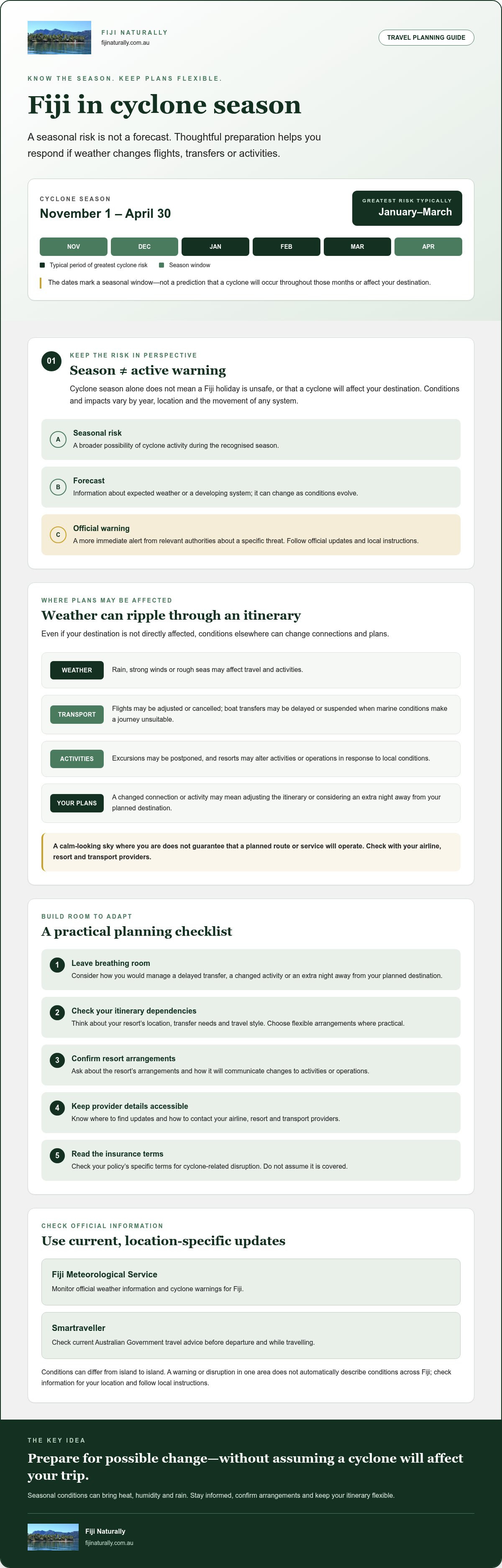
The Fiji Meteorological Service recognises the South Pacific cyclone season as running from November 1 to April 30. The period of greatest cyclone risk is typically January to March, but activity and weather patterns vary from year to year. A past season can offer context, not a prediction. For example, this recent cyclone season example records the timing and intensity of storms, including Severe Tropical Cyclone Yasa.
The dates mark a seasonal window, not a forecast that a cyclone will occur throughout those months. Rain, heat and humidity may shape conditions, while any cyclone’s path and effects depend on its actual movement. Islands can experience different weather and impacts, so conditions on one island don’t necessarily describe those elsewhere. For your travel dates, check current forecasts rather than relying on seasonal averages or a past year’s pattern.
Does cyclone season mean Fiji is unsafe to visit?
No, the season alone doesn’t mean a Fiji holiday is unsafe or that a cyclone will affect your destination. It does call for sensible preparation. Whether travel is right for you depends on current official advice, your itinerary and your personal circumstances, including how comfortable you are with possible changes to transport or activities.
A seasonal risk is the broader possibility of cyclone activity during a recognised part of the year. A forecast gives information about expected weather or a developing system and can change as conditions evolve. An active official warning is a more immediate alert from the relevant authorities about a specific threat. Follow Fiji Meteorological Service updates and local instructions, and check the Australian Government’s Smartraveller advice before departure and while travelling.
Cyclone season is a window of increased possibility, not a forecast that a cyclone will affect Fiji on your travel dates. Keeping that distinction in mind helps you make informed choices without treating either the calendar or a reassuring forecast as a guarantee.
How cyclones and changing weather can affect a Fiji holiday
A holiday can feel peaceful and sunlit on one island while weather elsewhere changes the day’s travel plans. Even without a cyclone directly crossing your destination, rain, strong winds or rough seas may affect flights, boat transfers and planned excursions. Disruption isn’t inevitable, but it’s useful to understand how one part of an itinerary can depend on conditions elsewhere.
What can change when severe weather approaches?
Airlines may adjust or cancel flights, while boat operators can delay or suspend services if marine conditions make a journey unsuitable. Excursions may be postponed, and resorts may alter activities or operations in response to local conditions. There’s no guarantee that a particular route or service will keep running. Follow updates and instructions from your airline, resort and transport providers, and check directly with them about current schedules and next steps.
Official warnings inform the picture, operators assess conditions and make operational decisions, and your itinerary may need to change. Keep booking details and provider contact information accessible. Check where to find updates and how to contact each provider, rather than assuming a planned transfer will operate because the weather looks calm where you are.
Why conditions can differ across the islands
A cyclone’s track, local weather and sea conditions shape its effects, so impacts can vary from island to island. A warning or disruption affecting one area doesn’t automatically describe conditions across Fiji. Equally, a destination that appears unaffected may still experience travel changes if a connecting route or activity is impacted.
Check location-specific updates rather than relying on broad assumptions about which islands are safer. The Fiji Meteorological Service shares Fiji's official cyclone warnings; for transport and resort operations, confirm details with the provider serving your route or destination. This is practical fiji cyclone season travel advice: use current information and ask about the specific parts of your trip, not just Fiji as a whole.
If your plans include several islands or time-sensitive connections, consider how much flexibility the itinerary allows. For example, think about what you would do if a transfer delay affected your next booking, and check the relevant change terms before you commit. A Fiji specialist can help you think through resort location, transfers and trip style when arranging bookings; Fiji Naturally’s team has personally visited more than 100 locations. You can discuss Fiji trip planning with them as one option while weighing what arrangements suit you.
Is Fiji safe during cyclone season? Separate the risk from the myths
Fiji can be visited during cyclone season, but no article can promise what the weather will do on your travel dates. Seasonal travel calls for preparation, not certainty: the possibility of severe weather is real, yet it doesn’t mean a cyclone will affect every trip or that all travel to Fiji is unsafe during this period.
Make your decision using current official advice and your own circumstances. Consider how you’d manage a delay or a changed transfer, whether your plans have fixed dates, and how much flexibility you have. A traveller with spare time in the itinerary may find it easier to adapt than someone with a tightly timed connection or an event they can’t miss. Neither choice is automatically right for everyone.
What should I trust when reports conflict?
For local weather alerts and emergency instructions, prioritise information from the Fiji Meteorological Service and Fiji’s National Disaster Management Office (NDMO). Australian travellers should also check Smartraveller’s Fiji advice before departure and monitor it during their stay. Follow instructions from local authorities and your resort or transport operator.
Social posts and old news reports can lack context or refer to a different place or event. Treat them as unverified until an official source confirms the information. The U.S. Embassy in Fiji also provides a useful traveller cyclone preparation checklist; use it as supporting guidance, while giving local alerts and Australian Government advice priority.
When might another travel window suit you better?
You might prefer different dates if your schedule is inflexible, your itinerary relies on multiple transfers, or uncertainty would make it difficult to enjoy the trip. That’s a personal planning choice, not proof that Fiji is unsafe during cyclone season. Travelling at another time can’t guarantee clear skies or uninterrupted services either, so weigh your priorities rather than expecting a completely weather-proof month.
For diving-focused holidays, the resort’s location, planned activities and transfer arrangements can all shape how the trip feels. Compare options in this best Fiji dive resorts guide, then consider which itinerary gives you enough room to adapt. Thoughtful fiji cyclone season travel advice means balancing current official updates with your own tolerance for change, not relying on blanket claims or guarantees.
How to prepare for Fiji cyclone season: a practical traveller checklist
A little preparation can make changing plans easier to manage. Use this checklist from the first booking through your time in Fiji. Flexibility helps, but don’t assume a provider will waive change fees or offer a refund. Check the terms that apply to each reservation before booking.
- Before booking, think through your itinerary. Consider how tightly timed your flights, island transfers and activities are. Where practical, allow breathing room between connections. If a delay could affect a later flight or booking, check whether there is a way to adjust the sequence or allow more time. Confirm change and cancellation conditions for flights, accommodation and transfers directly with each provider.
- Read insurance policy documents before you buy. Compare the wording with your travel dates, planned activities and concerns about weather-related disruption. Check relevant cover, exclusions, waiting periods and claim requirements. Don’t assume cyclone disruption is covered; if wording is unclear, ask the insurer through its official channels and keep its response.
- Save essential details in one place. Keep booking confirmations, policy documents, provider contacts and emergency information somewhere you can access offline, such as downloaded files or printed copies. Add your insurer’s claim contact details and instructions for making a claim. Make sure everyone travelling with you knows where to find the information.
- Review official information as departure approaches. Check Fiji Meteorological Service forecasts and warnings, Fiji NDMO updates, and the Australian Government’s Smartraveller advice. Recheck airline, resort and transfer updates directly, since operational decisions may change as conditions develop.
- Prepare your devices and travel essentials. Keep your phone charged and consider bringing a power bank. Save key information before leaving reliable internet access, and make sure the people travelling with you know where to find it.
- If a warning or disruption occurs, follow local direction. Follow Fiji NDMO instructions, local authorities and your accommodation staff. Contact transport providers and your insurer through their official channels to confirm next steps. Don’t travel into hazardous conditions to protect an itinerary or make a connection.
This is the practical heart of fiji cyclone season travel advice: plan for the possibility of change, stay informed and put safety ahead of schedule. For help considering resort choice, flights and travel insurance together, discuss your Fiji trip plans with Fiji Naturally, an Australian-based specialist agency whose experts have personally visited more than 100 locations.
Plan a Fiji cyclone-season holiday with informed, flexible support
A thoughtful Fiji itinerary balances what you want to experience with arrangements that can adapt if conditions change. Use current official information when making decisions, and leave room to adjust where practical. Resort location, the number of transfers and how tightly your dates are fixed can all influence how much flexibility your trip allows.
Match your itinerary to your priorities
Start with the kind of holiday you want. A diving-focused trip, a family stay or a quiet escape on a more remote island may call for different resorts and transport arrangements. Consider how you’ll reach your accommodation, whether the itinerary depends on boat transfers, and what you’d do if an activity or connection had to change.
Resort choice is about fit, not a promise of protection from weather. Explore the authentic Fiji resort experience guide if you’re comparing styles and settings. Then verify transfer arrangements and operational details with the relevant providers, especially if your plans involve multiple islands or time-sensitive connections.
When specialist planning can make the details clearer
Bringing resort, flight and travel insurance bookings into the same planning conversation can help you see how the pieces of an itinerary fit together. Fiji Naturally is an Australian-based specialist travel agency that arranges these bookings, and its experts have personally visited more than 100 locations. Specialist knowledge can help you weigh resort location and trip style, but it can’t guarantee weather, uninterrupted services or a particular insurance outcome.
Before you commit, confirm current booking terms and operating arrangements with each provider. Read the insurance policy wording for the cover, exclusions and claim requirements that apply to your trip; don’t assume cyclone-related disruption is covered. Continue checking official updates as your departure approaches.
Good fiji cyclone season travel advice comes down to informed choices and enough room to adapt. If you’d like help shaping an itinerary around your priorities, plan your Fiji holiday with a specialist.
Make your Fiji plans with confidence
Fiji’s cyclone season is a period to plan thoughtfully, not a reason to assume a cyclone will affect your holiday. Check official updates for current conditions, allow flexibility around flights and island transfers, and read your travel insurance policy carefully rather than assuming disruption is covered.
Good fiji cyclone season travel advice comes down to making informed choices that suit your dates, itinerary and comfort with change. Resort location and transfer needs can shape how much room your plans have to adapt.
For support bringing the details together, Fiji Naturally offers specialist Fiji travel planning, with experts who have personally visited more than 100 locations. Its full-service bookings include resorts, flights and travel insurance, with policy terms to be checked for your circumstances.
Plan your Fiji holiday with a specialist and take the next step towards an island escape shaped around your priorities. With current information and considered planning, you can look forward to the journey with greater confidence.
Frequently Asked Questions
When is cyclone season in Fiji?
Fiji’s recognised cyclone season runs from November 1 to April 30, according to the Fiji Meteorological Service. The highest risk is typically between January and March, but weather and cyclone activity vary from year to year, and seasonal dates can’t predict conditions on your travel dates. For current forecasts and warnings, check Fiji Meteorological Service updates as your trip approaches and while you’re in Fiji.
Is it safe to travel to Fiji during cyclone season?
Travelling to Fiji during cyclone season isn’t automatically unsafe, but it calls for preparation and flexibility. Seasonal risk doesn’t mean a cyclone will affect every island or holiday. Consider current Australian Government Smartraveller advice, your itinerary and how you’d manage possible delays or changes. Travellers with fixed dates, complex connections or limited flexibility may want to weigh those factors carefully before deciding whether the timing suits them.
What happens if a cyclone affects my Fiji holiday?
A cyclone or related weather may lead to flight changes, delayed or cancelled boat transfers, postponed excursions or temporary changes to resort operations. The effects depend on the system’s track and local conditions, and disruption may occur even if a cyclone doesn’t directly affect your destination. Follow updates from your airline, accommodation and transport providers, and check your booking terms to understand the options available if plans change.
Does travel insurance cover cyclones in Fiji?
It depends on the specific policy, so don’t assume cyclone-related disruption is covered. Before purchasing, read the policy wording for relevant cover, exclusions, waiting periods and claim requirements, and compare these with your travel dates and planned activities. If a term is unclear, ask the insurer directly and keep its response. Fiji Naturally can arrange travel insurance bookings, but coverage depends on the policy you choose.
What should I do if a cyclone warning is issued while I am in Fiji?
Follow instructions from Fiji’s National Disaster Management Office (NDMO), local authorities and your accommodation staff. Keep informed through official updates, and contact your airline or transport provider through its official channels before making onward travel plans. Don’t travel into hazardous conditions to preserve an itinerary or connection. Keep your phone charged and booking details, emergency contacts and insurance information accessible, including offline if internet access is disrupted.
Should I change my Fiji travel dates because of cyclone season?
That depends on your comfort with uncertainty, the flexibility of your dates and the complexity of your itinerary. If missing a connection or changing plans would be especially difficult, you may prefer to consider other dates. No travel month guarantees favourable weather or uninterrupted services, so compare your priorities and check current official advice before deciding. Fiji cyclone season travel advice should help you assess the trade-offs, not make the choice for you.
How can I check Fiji cyclone warnings before my trip?
Check the Fiji Meteorological Service for weather forecasts and cyclone warnings, and review Fiji NDMO information for local alerts and instructions. Australian travellers should also consult Smartraveller for current destination advice before departure. Recheck these official sources as your trip approaches and during your stay. Treat social media posts and old news reports as unverified until confirmed by an official source, especially if they refer to a specific island or route.


