
The right Fiji cooking stay isn’t necessarily the resort with the fullest activity calendar. When comparing fiji resorts with cooking classes, look for an experience that suits how you want to connect with the food, whether that means preparing a dish yourself or learning through a wider cultural food experience.
It can be hard to tell a hands-on lesson from a demonstration, a feast or simply a memorable dinner. The format matters, as does the care taken to give Fijian food traditions context rather than turning them into a holiday spectacle.
This guide compares experiences including kokoda-making lessons at Six Senses Fiji and InterContinental Fiji Golf Resort & Spa, traditional cooking lessons at Plantation Island Resort, and immersive open-fire culinary sessions and local food safaris. Each offers a different way into the flavours of Fiji.
Here at Fiji Naturally, we’ll clarify what guests can take part in, how cooking classes differ from broader food experiences and which styles may suit your trip. That way, you can choose a stay where food, island life and time to unwind belong together.
Key Takeaways
- Learn what makes an activity a participatory cooking class, rather than a chef demonstration or a meal at the resort restaurant.
- Compare fiji resorts with cooking classes by participation, cultural context and the kind of traveller each experience may suit.
- Use class length, guest ages, dietary needs and transfer arrangements to shape a more comfortable island itinerary.
- Choose a food experience that feels respectful and engaging, then build in time to enjoy the resort and its setting.
- See how specialist trip planning can bring resort stays, flights and travel insurance together around your Fiji holiday.
What to look for in Fiji resorts with cooking classes
A resort cooking class is a participatory lesson where guests prepare food or practise a cooking skill, rather than simply eating a restaurant meal or watching a chef cook. The distinction matters because a resort activity may be a demonstration, tasting or cultural food experience without inviting guests to cook.
Formats vary. A class might introduce ingredients, demonstrate preparation techniques, involve guests in cooking, or finish with a shared tasting. Before choosing, look for a clear description of what guests do, how the food is presented and whether cultural context is included. These details make comparisons between fiji resorts with cooking classes more useful.
What counts as a hands-on Fijian cooking class?
Guest participation is the key. Preparing ingredients or helping cook a dish is different from observing a chef’s demonstration. A meal at the resort restaurant is dining, not a class. The activity description should explain what guests take part in, rather than leaving you to infer it from a menu or cultural programme.
A thoughtful lesson also treats iTaukei food traditions as living knowledge, not a performance staged for visitors. Ingredients and techniques can offer a starting point for learning. Consider whether the experience explains who shares the knowledge, how the dish fits into food traditions and what guests are invited to understand.
Which Fijian ingredients and dishes might shape the experience?
Cassava is a starchy root crop, while coconut milk brings richness to many Pacific dishes. Kokoda, a well-known Fijian dish, is made with raw fish marinated in citrus and combined with coconut milk or cream. These examples give a flavour of the ingredients guests may encounter, but menus and availability can vary between resorts and with the season.
For broader context, the overview of Fijian cuisine covers local ingredients and cooking traditions, including the influence of Indo-Fijian foodways. A lovo is a traditional earth-oven method in which food is cooked using heated stones in a ground oven, often for a shared feast. It’s distinct from a standard cooking lesson. Guests may learn about or take part in a lovo experience, but that doesn’t automatically make it a hands-on class.
When comparing resort activities, focus on the format and setting, not just the dish named. Knowing whether you’ll cook, watch or share a meal helps you choose an experience that suits your curiosity and gives Fiji’s food traditions room to speak for themselves.
Fiji resort cooking-class shortlist: compare confirmed experiences
A useful comparison starts with what guests actually do. The options below distinguish participatory cooking lessons from dining and other food activities. Check the listed timing and participation details against your preferred holiday pace.
| Resort | Verified experience | Participation | Best fit |
|---|---|---|---|
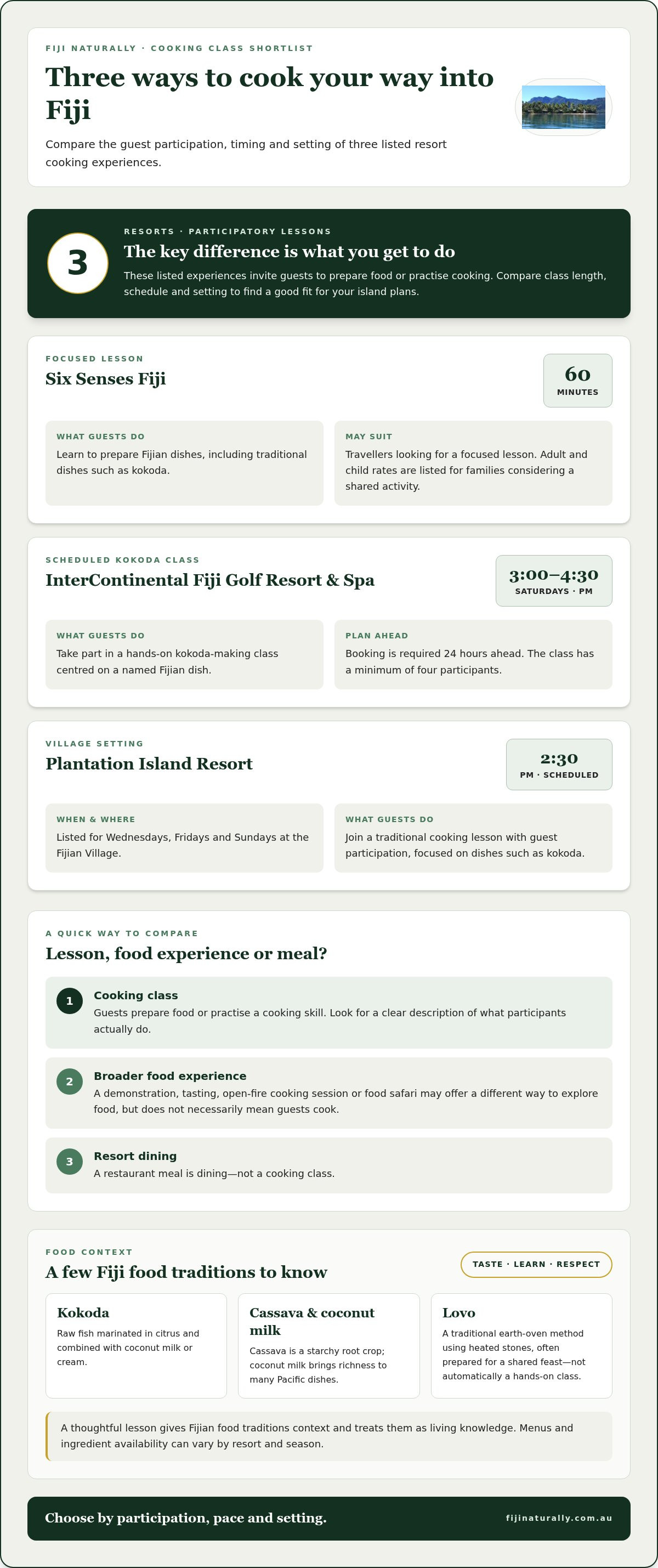
| Six Senses Fiji | Fijian cooking class, including traditional dishes such as kokoda; 60 minutes | Participants learn to prepare dishes | Travellers after a focused lesson. The resort lists adult and child rates, which may interest families considering a shared activity. |
| InterContinental Fiji Golf Resort & Spa | Kokoda-making class, Saturdays from 3:00 pm to 4:30 pm | Hands-on cooking; booking is required 24 hours ahead, with a minimum of four participants | Guests who want a scheduled class centred on a named Fijian dish. |
| Plantation Island Resort | Traditional cooking lessons focused on dishes such as kokoda, at the Fijian Village | Guest participation; listed for Wednesdays, Fridays and Sundays at 2:30 pm | Resort guests looking for a scheduled cooking activity during their stay. |
How to read the shortlist
These classes share a focus on preparing food, but their timing and setting differ. Six Senses offers a shorter lesson, while the InterContinental class has a longer scheduled session and a stated minimum group size. Plantation Island’s lesson takes place at the Fijian Village. Use these practical differences to find an activity that fits comfortably alongside the rest of your plans.
Nanuku’s open-fire Warrior Cooking Class and Fijian Food Safari offer other food-focused experiences to consider. Compare the activity format with your priorities: a cooking class centres on preparing food, while a food safari may offer a broader way to explore food and its setting. Fiji Naturally’s resort portfolio includes properties such as Matangi Island Resort, Jean-Michel Cousteau Resort and Kokomo Private Island, giving you a range of resort styles to weigh against the activities that matter to you.
Match the setting to your travel style
A shorter class may suit travellers seeking one food-focused activity, while a scheduled session can work well for guests who prefer to plan a day around a set time. Families may find the child rate at Six Senses relevant, though suitability depends on individual ages and interests. For ideas on choosing a stay with a strong sense of place, explore authentic Fiji resort experiences. Fiji Naturally’s specialists bring first-hand knowledge of more than 100 locations to resort and itinerary planning. Explore Fiji resort planning for a considered culinary escape.
Cooking class, cultural food experience, or resort dining: what is the difference?
Food activities can sound similar in a resort itinerary, but they offer different kinds of involvement. A restaurant meal lets you enjoy a finished dish; a cooking lesson invites you to help make one. A demonstration puts the chef in the lead, while a market or ingredient experience may focus on where food comes from and how it is used.
Participating means you help prepare or cook; watching means the chef does the preparation while you observe. This distinction helps you decide whether you want to learn by doing, watch a shorter presentation or simply savour a meal.
| Experience | Participation | Cultural learning | Time commitment | Likely fit |
|---|---|---|---|---|
| Hands-on cooking class | Guests prepare ingredients or cook | Can explore a dish and its context when the lesson includes it | Allow for a scheduled lesson; verified examples in this guide run for 60 to 90 minutes | Travellers who want to learn by doing |
| Chef demonstration | Guests watch the preparation | May offer insight into ingredients or technique, depending on the presentation | Often easier to fit around other plans, though timing varies | Guests who prefer observing or have limited time |
| Market or ingredient experience | Participation may involve exploring ingredients; cooking may not be included | Can connect food with its ingredients and setting | Varies with the activity | Curious travellers interested in food beyond the finished dish |
| Resort dining | Guests select and enjoy prepared food | Menus may introduce local dishes, but dining alone isn’t a lesson | Fits into a meal period | Anyone who wants to enjoy the cuisine without a class |
What a hands-on class adds
Preparing ingredients yourself can draw attention to texture, sequence and the small decisions involved in a dish. A shared tasting brings those details back to the table. The value is in taking part and noticing more, not in assuming you’ll leave with a particular skill or level of cultural access. That depends on the class and how the resort describes it.
Don’t infer a lesson from a restaurant, a local-food menu or an all-inclusive dining description. Those may make a stay delicious, but they don’t establish that guests can cook.
When another food experience may suit better
A demonstration or ingredient-focused outing may work well if your schedule is full or you’d rather watch than cook. Families can weigh the activity’s duration and age suitability against children’s interests and the pace of the holiday. For more ideas on choosing a stay around family needs, explore Fiji family resort options.
As you compare fiji resorts with cooking classes, keep the format in view. A meal, demonstration and participatory lesson can each be rewarding, but they suit different travel moods.
How to plan a Fiji resort stay around a cooking class
A cooking class works best when it fits the rhythm of your holiday, not when the whole itinerary has to bend around it. Use these four steps to choose an experience that feels enjoyable, practical and in keeping with your time on the islands.
- Choose the experience format. Decide whether you want to cook, watch a demonstration or explore food and ingredients in a broader activity. This helps you compare similar experiences.
- Match the format to the resort. Use the resort’s activity information to identify the class style and setting. A short lesson may suit a relaxed day, while an experience involving food sourcing or a feast may call for more room in the itinerary.
- Plan the stay around your group. Consider the stated class duration, who will participate and whether the activity suits the ages in your group. Read property-specific information on dietary requirements and accessibility to assess whether the experience fits everyone’s needs.
- Confirm the practical details. Review the current class information and fit it around your arrival, departure and any transfers between islands or resorts. Avoid placing an activity too close to a travel connection, and leave space for plans to change.
Match the class to your group and holiday pace
Families may prefer an activity whose format and age suitability align with their children, while couples might choose a class as one unhurried highlight among days of swimming and rest. Mixed-age groups can consider how long everyone will want to participate. Dietary needs and accessibility are also personal, so use the relevant property details to assess fit rather than assuming all classes accommodate the same requirements.
Keep breathing room around the activity. A cooking lesson, a leisurely meal and time to enjoy the resort can make a satisfying day without a packed schedule.
Build a food-led stay without overplanning
Place the class alongside, rather than on top of, your other plans. If the experience has a set start time, leave room before and after it for meals and downtime. For island stays, account for transfer arrangements in the wider itinerary. Travel between properties can shape how easily an activity fits, even when exact journey times vary.
If a quieter couples’ escape is the priority, explore serene adults-only Fiji resorts. Fiji Naturally’s specialists have personally visited more than 100 locations and can help bring resort choices, flights and the pace of a food-led holiday into one considered plan. Plan your Fiji resort stay with specialist support.
Plan a Fiji culinary escape with a specialist travel advisor
A memorable food experience is one part of a well-shaped Fiji holiday. Start with a cooking class whose format is clearly described, choose a resort that suits your group and preferred pace, then build the rest of the itinerary around the activity instead of squeezing it into an already full schedule.
What a specialist can bring to a resort comparison
Comparing fiji resorts with cooking classes means looking beyond the name of a dish. Participation, setting, cultural context and the overall feel of the stay all matter. Fiji Naturally’s team has personally visited more than 100 locations, bringing first-hand destination knowledge to the comparison of resort experiences and the places around them.
As a Virtuoso-affiliated travel agency specialising in Fiji, Fiji Naturally can help connect your preferred food experience with a resort that fits the holiday you have in mind. The team can plan the wider stay alongside the class, including resort bookings, flights and travel insurance.
Turn the shortlist into a coherent Fiji itinerary
Once you have a resort in mind, activity timing can be considered alongside accommodation, flights and travel insurance. This is especially useful when your plans involve island transfers or more than one resort, since the shape of the journey affects how much time you have to settle in and enjoy each place.
Your ideal trip might centre on a hands-on lesson, a quieter couples’ retreat or a family holiday with room for different interests. Share the pace you prefer, who’s travelling and what you’re curious to taste or learn. A specialist can use those priorities to bring the pieces together without overloading the days.
With the right class, the right setting and enough space to unwind, a culinary escape can feel like part of Fiji rather than an activity added on. Plan a considered Fiji escape with Fiji Naturally.
Choose the Fiji food experience that fits your escape
The best fiji resorts with cooking classes for your trip are the ones with a clearly described, participatory lesson that suits your interests and travel companions. A chef’s demonstration, a food-focused outing and resort dining can all be rewarding, but they offer different ways to engage. Choose the format first, then match the resort and allow the wider itinerary room for transfers, meals and unhurried island time.
For a considered choice, Fiji Naturally brings together first-hand knowledge of more than 100 locations with its experience as a Virtuoso-affiliated agency specialising in Fiji. The team can shape resort bookings, flights and travel insurance around your preferred pace and food interests, so the cooking experience sits naturally within the holiday.
Whether you’re drawn to learning a local dish, sharing a memorable meal or simply slowing down by the water, thoughtful planning can bring the pieces together. Plan a thoughtful Fiji escape with Fiji Naturally and take the first step towards a holiday shaped around what matters to you.
Frequently Asked Questions
Do Fiji resorts offer hands-on cooking classes?
Yes, some Fiji resorts describe participatory cooking lessons, though not every food activity is a class. Examples include kokoda-making classes at Six Senses Fiji and InterContinental Fiji Golf Resort & Spa, traditional cooking lessons at Plantation Island Resort, and Nanuku’s Warrior Cooking Class. Formats differ, so look for whether guests prepare food themselves or watch a demonstration. Restaurant dining and a cultural feast are distinct experiences, not automatically cooking lessons.
What dishes might you learn to prepare in a Fiji cooking class?
Kokoda is one example. Six Senses Fiji’s Fijian cooking class includes traditional dishes such as kokoda, and kokoda is also the focus of classes at InterContinental Fiji Golf Resort & Spa and Plantation Island Resort. What you make depends on the resort and class. Menus and ingredients can vary, so treat named dishes as examples of specific offerings, not a promise about every Fiji cooking class.
Are Fiji resort cooking classes suitable for children?
Some classes may suit families, but age suitability and the level of child participation vary by resort. Six Senses Fiji lists its Fijian cooking class with child pricing, which signals a child option, but it doesn’t establish age limits or whether every child will take part in the same way as adults. Compare the resort’s published age guidance and activity format with your children’s interests and comfort in a cooking setting.
Can a cooking class accommodate dietary requirements?
It depends on the resort, recipe and ingredients used in that particular class. Don’t assume a dish can be adapted or that a class automatically caters for allergies, intolerances or dietary preferences. Review the property’s information about the activity and its food, then include your requirements in your trip planning. This helps you choose an experience that’s a practical fit without relying on assumptions about substitutions or preparation.
How much time should I allow for a resort cooking class?
Use the stated class duration as your starting point and leave a little breathing room around it for arrival, preparation and tasting. Examples range from 60 minutes at Six Senses Fiji to 90 minutes at InterContinental Fiji Golf Resort & Spa. Other resort activities may have different timings. Keep the class clear of transfer connections or tightly scheduled plans so the experience fits comfortably into your day.
What is the difference between a cooking class and a resort food demonstration?
A cooking class involves guests preparing ingredients or cooking, while a food demonstration is led by a chef whom guests watch. Both can offer insight into a dish, but the participation differs. A tasting or restaurant meal focuses on enjoying prepared food, and a market or ingredient activity may explore where food comes from without including cooking. Read the resort’s activity description to identify the format before choosing.
When should I plan a cooking class during a Fiji resort stay?
Plan it on a day when you have time to enjoy the activity without rushing to or from a transfer, excursion or departure. Review the resort’s current schedule and booking requirements as part of organising your stay. For example, InterContinental Fiji Golf Resort & Spa lists its kokoda class for Saturdays and requires booking 24 hours ahead. Leave open time around the lesson for a meal and a slower island pace.


