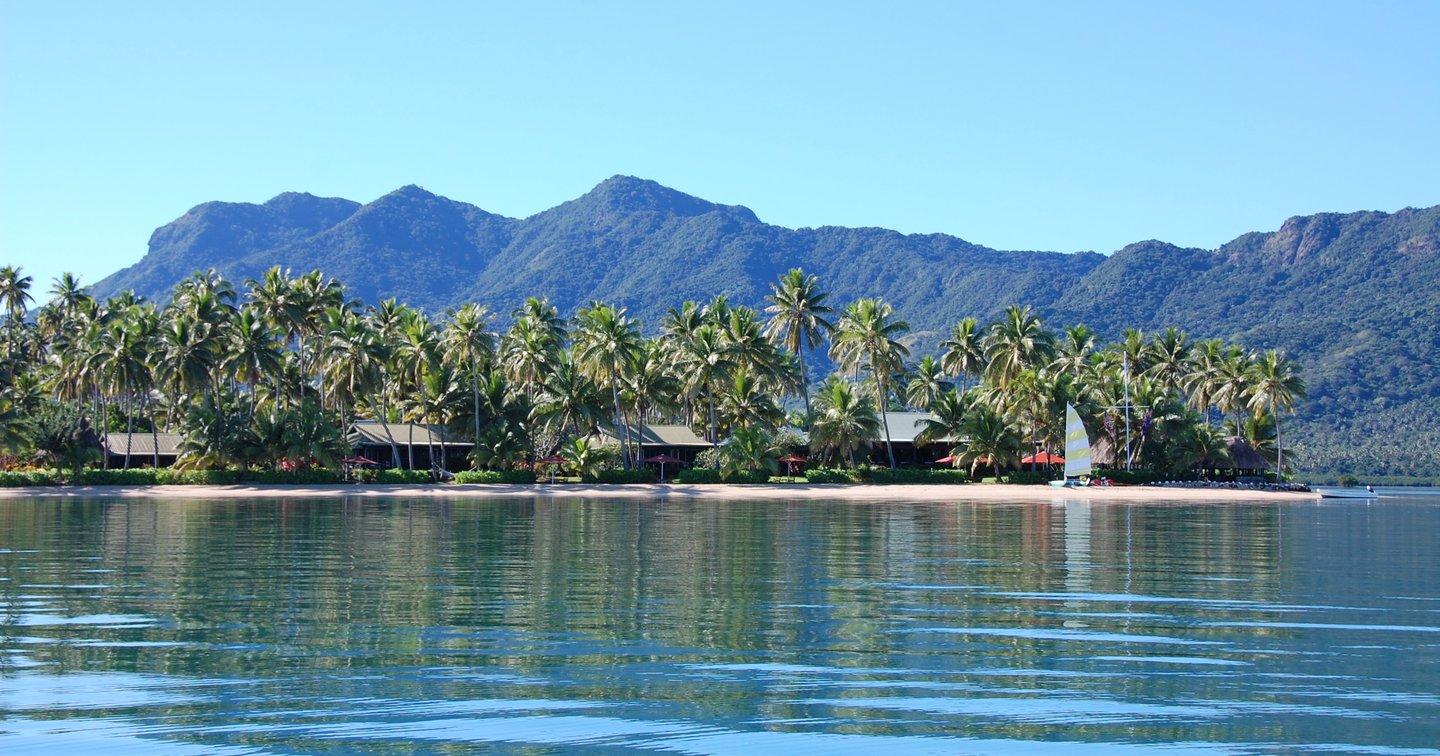

What if a Fijian resort’s local connection depends not just on its welcome or setting, but on who owns it? Finding fiji resorts that are locally owned can be harder than it sounds: terms such as “locally inspired” and “community-connected” don’t necessarily tell you who owns a property or how local people benefit.
That distinction matters if you want a stay that feels connected to Fiji while still matching your expectations for comfort, setting and activities. Local ownership can take different forms, and ownership alone doesn’t tell the whole story. A resort’s relationships with nearby communities, local suppliers and cultural traditions also help show what its connection looks like in practice.
This 2026 guide explains what local ownership means in Fiji, how to assess ownership claims and which resorts may suit different travel styles, from family escapes to adults-only retreats. Use the comparison steps to separate ownership evidence from community involvement, then build a shortlist around both your values and the holiday you want.
Key Takeaways
- Local staffing and cultural activities can show local connection, but they don’t establish who owns a resort.
- Compare ownership, resort operations and community relationships as separate factors.
- Explore fiji resorts that are locally owned, including Malolo Island Resort, using ownership evidence and travel style to guide your shortlist.
- Match your choices to the holiday you want, whether that means family time, quiet, diving or cultural experiences.
- Balance ownership preferences with practical trip fit, then use specialist Fiji planning to shape your stay.
What does locally owned mean when choosing a Fiji resort?
A resort stay can feel more connected to Fiji when ownership has a tangible link to the country, rather than relying only on a Fijian name, ocean view or locally inspired design. That connection may matter if you want your holiday choices to support businesses rooted in Fiji while still finding the comfort and style you’re looking for.
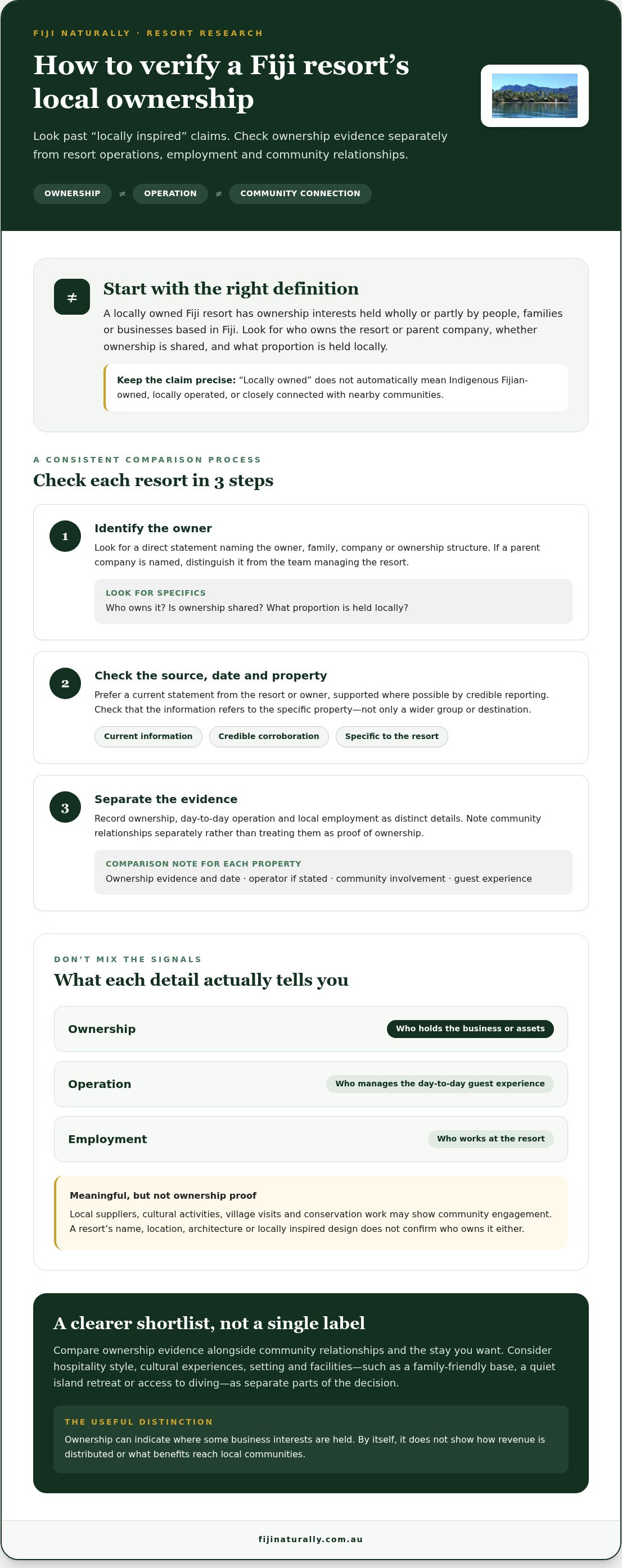
A locally owned Fiji resort is one whose ownership interests are held wholly or partly by people, families or businesses based in Fiji, with the extent and structure of that ownership clearly stated. The phrase can describe different arrangements, so look for specifics: who owns the resort or its parent company, whether ownership is shared, and what proportion is held locally. Locally owned doesn’t automatically mean Indigenous Fijian-owned, nor does it establish how the resort is operated or how closely it works with nearby communities.
That distinction has a broader context. Tourism is a leading economic activity in Fiji, as outlined in this overview of the Economy of Fiji. Ownership can indicate where some business interests are held, but it doesn’t, on its own, show how revenue is distributed or what benefits reach local communities.
Local ownership, local operation, and local employment are different
Ownership is about who holds the business or resort assets. Operation is about who manages the day-to-day guest experience. Employment describes who works there. These can overlap, but none proves the others. A locally operated resort may be managed by a Fiji-based team on behalf of owners elsewhere, while local jobs don’t establish who owns the property or business.
Cultural activities, local suppliers and conservation work may show meaningful community engagement. They’re worth considering in their own right, but they aren’t evidence of ownership. Keep these questions separate to get a more accurate picture of a resort’s connection to Fiji.
What evidence can travellers use?
Start with direct, current sources. Look for an ownership statement from the resort, a credible profile of its parent company or owners, and reliable reporting that corroborates the details. Prefer precise wording over broad claims: “100% owned by a Fijian family” says more than “locally inspired.” Check the publication date because ownership and operating arrangements can change independently.
When comparing fiji resorts that are locally owned, note the source and date for each claim. A resort’s location, name, architecture or cultural programme may create a strong sense of place, but none confirms who owns it. Clear evidence lets you weigh ownership alongside community relationships and the kind of stay you want.
How to compare Fiji resorts by ownership and community connection
A polished villa, a village visit and a locally owned business can all be part of a Fiji stay, but they describe different things. Compare them separately. Ownership tells you who holds the business; community involvement tells you how the resort relates to people and places around it. One doesn’t prove the other.
A practical checklist for assessing ownership claims
Use the same process for each resort so evocative marketing language doesn’t blur the facts:
- 1. Identify the owner. Look for a direct statement naming the owner, family, company or ownership structure. If a parent company is named, distinguish it from the team managing the resort.
- 2. Check the source and date. Prefer a current statement from the resort or owner, supported where possible by credible reporting. Confirm that it refers to the specific property, not just a wider group or destination.
- 3. Separate the evidence. Record ownership, day-to-day operation and local employment as distinct details. Treat community partnerships, cultural activities and conservation initiatives as separate attributes, not proof of who owns the resort.
This gives you a clearer comparison than relying on a single “authentic” or “sustainable” label. A property may describe cultural performances or reef-care work, for example, but those details don’t establish whether its owners are based in Fiji. They may still be valuable parts of the guest experience and worth weighing in their own right.
Compare the guest experience without reducing it to a label
Ownership is only one part of choosing a stay. Read about the hospitality style and cultural experiences, then consider whether the setting and facilities fit your priorities: a family-friendly base, a quiet island retreat or access to diving. A resort’s luxury level, architecture or remote location doesn’t reveal its ownership structure, so compare those qualities on their own merits.
For a broader perspective on what makes a stay feel connected to place, explore this authentic Fiji resort experience guide. It can help you look beyond appearance and consider the character of the experience you want.
As you shortlist fiji resorts that are locally owned, keep a simple note for each property: ownership evidence and date, operator if stated, community involvement, and guest experience. This makes differences visible without treating one feature as a shortcut for the rest. Fiji Naturally’s specialist Fiji resort planning can help bring these priorities together with your preferred travel style. Explore Fiji resort planning.
Locally owned Fiji resorts to consider, with ownership evidence
A useful shortlist starts with evidence tied to the resort or its owner, not the atmosphere created by its island setting. The examples below have stated ownership information available as of October 2026. Ownership and operation are shown separately where the available evidence supports both. Guest style is included to help you judge practical fit, not to imply anything about ownership.
| Resort | Ownership evidence | Travel style | Notable connection |
|---|---|---|---|
| Malolo Island Resort | The resort’s website states that it is 100% owned by a local Fijian family. The statement was rechecked in October 2026. | Family-friendly | The resort’s story highlights Fijian hospitality, history and culture. Ahura Resorts owns and operates it. |
| Likuliku Lagoon Resort | Ahura Resorts is identified as 100% Fijian-owned and as the resort’s owner and operator, as of October 2026. | Adults-only luxury | Part of the same locally owned resort group as Malolo Island Resort. |
| Plantation Island Resort | Owned by Raffe Hotels & Resorts, a Fijian family-owned group, according to current ownership information reviewed for this guide. | Family-friendly | Raffe Hotels & Resorts owns and manages the property. |
| Lomani Island Resort | Owned by Raffe Hotels & Resorts, the Fijian family-owned group. | Boutique, adults-only | Its ownership connects it to the same Fijian family-owned group as Plantation Island Resort. |
Malolo Island Resort: a stated local family ownership example
Malolo is a clear example because its own website makes a specific ownership statement, rather than relying on broad language about local character. The resort also presents Fijian hospitality, history and culture as part of its identity. Those details add context to its guest experience, but the ownership claim is separate evidence of its local family ownership. Since ownership can change, check the resort’s current statement before relying on it for a booking decision.
Building a wider shortlist without overstating ownership
Oneta, Namale, Nukubati and Maqai may appeal for their setting or style, but a Fiji location or cultural character alone doesn’t establish local ownership. Include them under that label only when a current, reliable source identifies the owner or ownership structure. Apply the same distinction to ownership, operation and community relationships for every property you consider.
For family-friendly alternatives beyond this ownership-led comparison, see the Fiji family resorts guide. It can help you weigh the setting and style of a stay alongside the evidence behind fiji resorts that are locally owned.
Choose a locally owned Fiji resort that fits your kind of escape
Once you’ve assessed ownership evidence, let the holiday itself guide your shortlist. A locally owned resort still needs to suit the people travelling, the pace you want and the experiences you hope to have. Treat ownership as one important preference, not a substitute for choosing the right island, accommodation and activities.
Match resort style to the holiday you want
- For families: Look at room suitability, activities for different ages and experiences you can share. Malolo Island Resort is described as family-friendly, making it a useful starting point for comparing family stays with stated local ownership.
- For couples: Consider how much privacy you want, whether you prefer a lively or slower pace, and what kind of setting feels restorative. Likuliku Lagoon Resort is adults-only, offering a different style of escape from a family resort.
- For divers: Compare the diving experiences a resort describes with your interests and comfort level, including how diving fits into the broader stay. Fiji Naturally specialises in scuba dive resort holidays, including stays focused on sites such as Rainbow Reef, the Great White Wall and Namena Marine Reserve. A resort’s dive focus doesn’t tell you who owns it, so assess ownership evidence separately.
- For cultural immersion: Read how the property describes its cultural experiences and relationships with local communities. Look for specifics about what guests can experience instead of relying only on broad claims of authenticity.
Look beyond the ownership label
Two resorts with similar ownership evidence can offer very different stays. Compare accommodation, setting, access to activities and the hospitality style described by each property. Consider practical details too, including how the resort fits your itinerary and the needs of your travel group. A remote island escape may be appealing, but the travel connections and daily rhythm should work for you.
Keep each claim in its own lane. Cultural programming can add context and connection to a stay, but it doesn’t prove ownership. Conservation statements also deserve a separate look: consider what the resort says it does and whether it provides specific information to support the claim. Don’t assume a local ownership label guarantees a particular environmental outcome or level of community benefit.
The strongest shortlist balances verified ownership with personal fit. If you’re weighing family time against diving, quiet against cultural experiences, or one island setting against another, Fiji Naturally’s specialists have personally visited more than 100 locations and can help shape a stay around your priorities. Plan a Fiji resort itinerary that brings your ownership preferences and travel style together.
Plan a Fiji stay with local ownership in mind
A thoughtful shortlist brings two questions together: what ownership evidence can you verify, and what kind of holiday do you want? Keep the details distinct. Record who owns the resort, who operates it if that information is available, and what the property says about its community relationships. Then weigh those facts alongside the setting, accommodation, travel connections and experiences that suit your plans.
Turn your shortlist into a coherent itinerary
Ownership preferences are most useful when they help guide a stay that works as a whole. A family may want suitable accommodation and shared activities; a couple might favour a quieter pace, while divers may prioritise experiences available around their chosen base. Consider how each resort fits your route and the time you want to spend travelling between places, as well as how its style aligns with your idea of Fiji.
Fiji Naturally is a Virtuoso-affiliated specialist travel agency. Its experts have personally visited more than 100 locations and can bring resort bookings, flights and travel insurance together around your priorities. Their Fiji knowledge can help you compare stays with different settings and travel styles. Fiji Naturally plans and books trips; it doesn’t own or operate the resorts.
Take the next step toward a thoughtful Fiji escape
Before you decide, return to the evidence: does a current, reliable source identify the resort’s owner, and does the claim refer to that specific property? Keep ownership separate from operation, employment, cultural experiences and conservation. Then consider whether the resort’s facilities, atmosphere and location suit the people travelling and the experiences you hope to share.
The aim isn’t to let one label make the decision for you. It’s to find a stay where verified ownership preferences and practical fit sit comfortably together. For help shaping your shortlist into a considered itinerary, Plan your Fiji escape with Fiji Naturally.
Shape a Fiji escape that reflects what matters to you
The best choice isn’t defined by an ownership label alone. Look for current evidence that identifies who owns the resort, then weigh that information alongside the setting, guest experience and practical fit for your trip. That’s a clearer way to find fiji resorts that are locally owned without assuming local staffing, cultural activities or conservation claims prove ownership.
With your priorities in view, a specialist can help bring the pieces together. Fiji Naturally is a Virtuoso-affiliated travel agency whose experts have personally visited more than 100 locations. They can help plan resort stays, flights and travel insurance, matching your preferred travel style with a considered Fiji itinerary.
Ready to turn your shortlist into a holiday? Plan a thoughtful Fiji escape with Fiji Naturally, and shape your days around the experiences and connections you value.
Frequently Asked Questions
What does locally owned mean for a Fiji resort?
A locally owned Fiji resort has ownership interests held wholly or partly by people, families or businesses based in Fiji. The claim is clearest when a current source identifies the owner and explains the ownership structure. It’s different from local operation, local employment or cultural programming: these may show other kinds of local connection, but none independently proves who owns the resort.
Which Fiji resort is owned by a local Fijian family?
Malolo Island Resort states on its website that it is 100% owned by a local Fijian family. Its resort story also highlights Fijian hospitality, history and culture. Since ownership details can change, look for the resort’s current statement before relying on the claim. Likuliku Lagoon Resort is another example: current information identifies it as 100% owned by a local Fijian family through Ahura Resorts.
How can I verify whether a Fiji resort is locally owned?
Start with a current statement from the resort or its owner that names the owner or ownership structure and refers to the specific property. A credible owner profile or reliable reporting can provide additional support. Note the source and publication date, and keep ownership separate from operation, local jobs, cultural experiences and conservation claims. A resort’s name, island setting or Fijian-inspired design isn’t ownership evidence.
Does locally owned mean a resort is locally operated?
No. Ownership describes who holds the business or resort assets; operation describes who manages day-to-day services and guest experiences. A Fiji-based family or company may own a resort while another organisation handles its operations. The reverse is also possible: a resort may be locally operated without locally owned assets. Look for separate, specific evidence for each claim rather than treating one as proof of the other.
Can a locally owned Fiji resort still offer a luxury stay?
Yes. Local ownership doesn’t determine a resort’s comfort level, facilities, accommodation style or service offering. Assess the guest experience on its own merits: consider the setting, room options, dining and activities, then compare those details with your expectations for luxury. Ownership can be one selection priority alongside practical fit. The label alone doesn’t guarantee a particular standard or style of stay.
How does choosing a locally owned resort support local communities?
Local ownership can help keep ownership interests and some business activity connected to Fiji, but it doesn’t by itself show how benefits are shared with nearby communities. To understand community involvement, look separately at stated local partnerships, suppliers, employment and cultural experiences. Treat these as distinct claims and favour specific information over broad promises. A resort’s community connection can matter, but shouldn’t be assumed from ownership alone.
Are Fiji’s locally owned resorts suitable for families?
Some may suit families, but ownership doesn’t determine whether a resort is family-friendly. Malolo Island Resort, for example, is described as family-friendly and states that it is locally family-owned. Compare each property’s accommodation, activities and experiences for different ages with your family’s needs. Also consider the setting and travel arrangements. A good match depends on the resort’s specific offering, not simply its ownership label.


